Workforce disruption is coming – here’s how to stay ahead of it
| Tempo di lettura:


Workforce disruption risk is no longer a fringe concern buried in HR reports. It sits at the center of some of the most consequential decisions business leaders face right now. Skill obsolescence is accelerating, labor markets are tightening, and technology is reshaping entire categories of work faster than most organizations can adapt. Companies that treat this risk as a people problem rather than a strategic one will consistently find themselves on the back foot. Those that confront it directly, with clear frameworks and forward-thinking plans, will find competitive ground others have abandoned.
Why workforce disruption risk deserves a seat at the strategy table
Most organizations have well-developed frameworks for managing financial, operational, and market risk. Workforce risk, by contrast, often gets treated as a human resources issue rather than a board-level priority. That disconnect is increasingly costly. When workforce disruption strikes without early warning systems in place, the consequences show up in delayed strategic initiatives, inflated recruitment costs, productivity loss, and reduced competitive agility. By the time the symptoms are visible, the damage is already done.
The scale of current labor market shifts makes this urgency hard to overstate. According to the World Economic Forum’s Future of Jobs Report, labor market changes will affect 22% of all jobs between 2025 and 2030, creating 170 million new roles while displacing 92 million others. Only 29% of employers expect talent availability to improve over that same period. Against that backdrop, treating workforce disruption as a secondary concern is not a conservative stance. It is an operational liability.
Organizations that embed workforce risk management into their strategic planning gain something valuable: the ability to pivot quickly. Real-time workforce intelligence enables rapid talent redeployment, smarter scenario planning, and the kind of adaptive capacity that turns market volatility into an advantage rather than a threat.
What is workforce disruption risk?
At its core, workforce disruption risk refers to any condition that threatens the stability, capability, or continuity of an organization’s human capital. It includes sudden talent losses, widening skill gaps, demographic shifts, technology-driven role obsolescence, and the cultural or leadership conditions that make teams fragile under pressure. It is distinct from general operational risk because its primary variable is people, and people are neither predictable nor easily replaced.
General business risk frameworks are built to model financial exposure, regulatory compliance, and market volatility. They are useful, but they were not designed to capture how a sudden departure in a critical role, a skill gap in an emerging capability area, or a cultural breakdown in a key department can undermine strategy just as surely as a market downturn. A company might model its exposure to currency fluctuation with precision while having almost no visibility into whether its workforce has the skills required for a transformation initiative launching in six months.
Traditional risk models also favor lagging indicators. Turnover rates and headcount variances tell you what already happened. The qualitative dimensions of people risk, such as declining engagement, leadership credibility erosion, or quiet exits from high-potential employees, rarely appear in standard risk dashboards until it is too late to respond effectively. Managing people risk requires a lens that blends behavioral signals, skills intelligence, and cultural data into a continuously updated picture of workforce health.
The forces driving workforce disruption in 2026
The current disruption environment is not driven by a single cause. It is the product of converging external and internal pressures that compound each other in ways that are difficult to predict and even harder to reverse. Understanding both dimensions is the first requirement for building a credible risk response.
External drivers: Market, demographic, and technological shifts
The macroeconomic backdrop for 2026 is one of fragility. Large enterprises shed 18,000 jobs in January 2026 amid a private-sector hiring slowdown, with only 22,000 total jobs added across all employers combined. Professional and business services alone lost 57,000 jobs in January 2026, tied to AI disruptions and corporate cost-cutting. These are not isolated signals. Job growth dropped nearly 80,000 jobs per month from the first to second half of 2024, and another 80,000 from the first half of 2024 to the first half of 2025, reflecting broad-based labor demand fragility across industries.
Technology is perhaps the most visible accelerant. AI-linked layoffs in 2025 reached 48,414 cuts, as organizations moved to consolidate roles and extract efficiency from automation. The WEF identifies five interconnected macrotrends reshaping the labor market through 2030: technological change, the green transition, geoeconomic fragmentation, economic uncertainty, and demographic shifts. Approximately 30% of entry-level task composition is ripe for automation, signaling significant structural displacement ahead. Looking further ahead, total U.S. employment growth is projected at just 3.1% from 2024 to 2034, far below the prior decade’s 13% expansion. For any organization planning workforce growth at historical rates, that projection alone warrants a strategy review.
Internal drivers: Culture, leadership, and operational gaps
External forces get the headlines, but internal dysfunction is often what causes organizations to break under pressure rather than bend. Managers influence 70% of employee engagement, yet manager engagement itself is falling, creating a cascading effect on team stability. Middle managers are simultaneously absorbing pressure from AI integration requirements, burned-out teams, and executive expectations, all while their own motivation declines. That is a structural vulnerability, not an individual performance issue.
Culture misalignment compounds the problem. While 77% of executives say culture is “very important”, only 37% of entry-level employees agree, and just 36% of workers overall feel their organizational culture is clearly defined or performance-driving. Meanwhile, 63% of all employee exits in 2024 were preventable, primarily driven by career stagnation and weak management support. Add to that the finding that only 34% of employees report their organization has clearly communicated how AI will affect their role, and you have a retention risk hiding in plain sight.
How to identify and assess workforce disruption risk in your organization
Assessing workforce disruption risk begins with structured visibility, not gut feel or anecdotal observation. Organizations need a systematic process for cataloging, measuring, and monitoring the conditions that create exposure. Without this foundation, risk management remains reactive and episodic rather than predictive and strategic.
Building a workforce risk inventory
A workforce risk inventory is a living document that catalogs the people-related risks most likely to affect your organization’s ability to execute its strategy. It should cover turnover risk in critical roles, skills obsolescence across key functions, succession gaps in leadership pipelines, cultural or engagement vulnerabilities within specific teams, and compliance or regulatory exposure tied to workforce practices. Building this inventory effectively requires cross-functional input. HR brings engagement and retention data, finance brings cost-of-vacancy and productivity modeling, and operations brings ground-level insight into where execution is fragile.
The metrics that actually signal risk
The metrics that matter most are not always the ones that appear in standard HR dashboards. Turnover rate tells you what happened. What you want are leading indicators that signal what is about to happen. High-quality risk metrics include internal mobility rates, the ratio of internal promotions to external hires, time-to-fill for critical roles, skill coverage across strategic capability areas, manager engagement scores alongside their team’s sentiment, and succession bench strength at the director level and above.
Skills gap coverage is particularly important. If 63% of employers identify skill gaps as a major barrier to transformation through 2030, then measuring your organization’s current skill distribution against future capability requirements is foundational to workforce risk management. Platforms like SkillPanel make this continuous measurement possible by combining self-assessments, peer reviews, manager input, and technical evaluations into a unified, searchable skills database that updates in real time.
Once you know where vulnerability concentrates, you can stop spreading risk mitigation resources evenly and start deploying them where they generate the most protection.
Core strategies to manage and mitigate workforce disruption risk
Managing workforce disruption risk well requires a coordinated set of strategies that address both near-term exposure and long-term resilience. No single initiative will be sufficient. Before diving into the full strategy set, it helps to identify where your organization currently stands. If you have no formal workforce risk process yet, the most valuable starting point is a workforce risk inventory combined with one leading-indicator metric per critical function. If you have HR analytics but no strategic integration, the priority is connecting workforce data to board-level risk reporting. If you have risk frameworks but lack skills visibility, focus on continuous skills assessment and predictive gap modeling. What follows covers all three stages.
Address labor scarcity before it becomes a crisis
The organizations most exposed to labor scarcity are those that wait until a role is open to start thinking about how to fill it. Proactive talent planning means mapping your critical roles against both internal bench strength and external market conditions before a vacancy appears. This includes identifying skills you will need in 12 to 24 months, building relationships with early-career talent pipelines, and developing your employer brand as a long-term asset rather than a recruiting campaign.
Accenture offers a documented example of this approach in practice. Facing AI-driven restructuring that risked displacing employees and eroding domain expertise, the firm prioritized internal redeployment over external backfilling. Using skills adjacency mapping, they identified where existing employees could be reassigned into adjacent roles without the knowledge loss and cost that come with external hiring. The result was reduced external hiring costs and a more stable transition through a period of significant workforce redesign, preserving institutional knowledge that would have been expensive to rebuild from outside. It is a practical illustration of what proactive talent planning looks like when it is operationalized at scale rather than managed as an exception.
The labor market data reinforces the urgency. With 70% of CEOs at disrupted companies reporting high disruption levels in 2026 and nearly half fearing personal skill obsolescence, the competition for capable talent is intensifying at exactly the moment supply is tightening. Organizations that treat talent acquisition as a strategic function rather than a transactional one will hold a structural advantage in that competition.
Close skills gaps through continuous learning
Closing skills gaps is not a project with an end date. It is an ongoing operational requirement. The 85% of employers planning to prioritize upskilling their workforce through 2030 are responding to a clear signal: the skills required to compete are changing faster than traditional hiring cycles can address. The organizations that close gaps fastest are those with the clearest picture of what skills they currently have and what they will need next.
This is where skills intelligence becomes a strategic asset. SkillPanel’s predictive gap analysis identifies which internal employees are closest to readiness for emerging roles, generating personalized learning paths and training recommendations based on actual skills data rather than job titles or tenure. According to a 2024 Forrester Total Economic Impact study, organizations deploying skills intelligence platforms achieve an average ROI of 287% over three years, including an average savings of $18,500 per role filled internally rather than through external hiring, a 41% reduction in irrelevant training consumption, and a34% reduction in time-to-fill for critical roles. Organizations using skills intelligence consistently report faster capability development, reduced external hiring costs, and a 28% improvement in internal mobility rates by developing talent that was already within reach.
Strengthen workforce stability with retention and succession planning
Given that 63% of exits in 2024 were preventable, retention is not primarily a compensation problem. It is a career development and management quality problem. Employees who see a credible path forward within their organization, have managers who support their growth, and work in cultures that feel coherent and purposeful are far less likely to leave. Building that environment requires intentional investment, not periodic surveys.
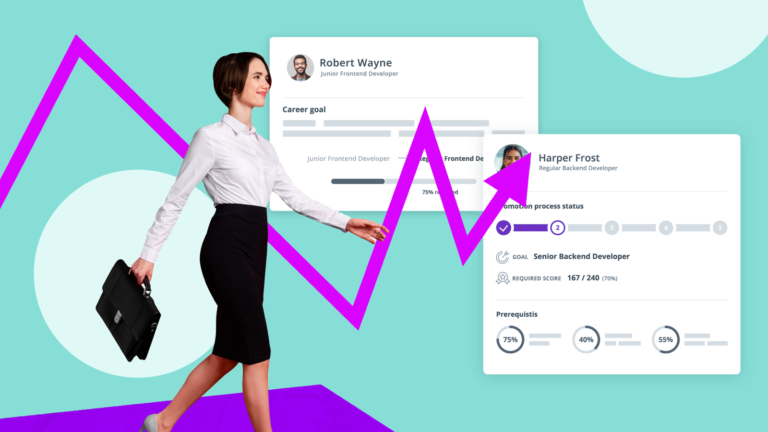
Succession planning addresses a different failure mode: the sudden loss of capability in critical roles. Organizations that map their succession gaps clearly can identify which senior exits would cause the most strategic damage and build development plans to reduce that exposure. SkillPanel’s career pathing tools support this by connecting current employee skill profiles with future role requirements, turning succession planning from a spreadsheet exercise into a continuously updated strategic resource.
Build adaptive structures that flex under pressure
Rigid organizational structures do not absorb disruption well. They transfer it. When a market shift, technology change, or talent loss hits an organization without flexible operating models, the impact concentrates in a way that damages execution across multiple functions simultaneously. Building adaptive structures means creating cross-functional capability, reducing single points of failure in critical workflows, and designing roles with enough flexibility to be reassigned or reconfigured as priorities change.
Nearly 40% of leaders identify redefining process flows as the top lever for efficiency amid complexity, with two-thirds reporting that current structures are overly inefficient. Restructuring alone does not solve that problem. Simplifying handoffs, decision rights, and coordination mechanisms does. The goal is an organization that can reallocate talent to where it is needed most without requiring a complete reorganization each time the environment shifts.
Lead through disruption: Behaviors that sustain team resilience
Leadership behavior is the variable that most directly determines how a team performs under pressure. Psychological safety, transparent communication, and visible empathy from leaders enable teams to surface problems early, adapt quickly, and maintain performance even when circumstances are difficult. A McKinsey-cited case study of a large travel company demonstrated that leaders who actively prioritized psychological safety alongside business results saw better risk management outcomes, more innovative team ideas, and improved retention and engagement scores.
The evidence for investing in human-centric leadership is quantitative as well. Organizations that prioritize this approach see 56% boosts in employee satisfaction and retention, strengthened trust, and 40% greater adaptability and resilience across the workforce. Similarly, a pharmaceutical company that implemented resilience and adaptability training across more than 9,000 employees in structured waves saw dramatic improvements in adaptability and well-being compared to a control group.
Governance and oversight: Making workforce risk management stick
Strategy without governance erodes. Organizations that invest in identifying and planning for workforce disruption risk but fail to embed accountability structures will find that those plans are not consistently executed under pressure. Governance is what turns a good plan into an organizational habit.
The COSO ERM framework recommends securing board and executive leadership commitment as the foundation for effective risk governance, defining risk appetite and tolerance thresholds, documenting oversight responsibilities, and establishing clear escalation protocols. Applied to workforce risk, this means someone at the executive level owns the overall workforce risk picture, with defined accountability cascading into business units and HR functions for monitoring and response. Without that clarity, workforce risk tends to fall into a responsibility gap between HR and operations, where everyone is loosely aware of it and nobody is truly accountable.
Workforce risk also needs to be integrated into enterprise risk frameworks rather than managed as a standalone concern. It intersects with financial risk when talent losses drive cost overruns, with operational risk when skill gaps delay execution, and with strategic risk when leadership pipeline gaps leave the organization without succession options at critical moments. When workforce risk appears alongside financial and reputational risk in board reporting, it receives the scrutiny, resources, and strategic attention it deserves.
How to measure whether your risk management strategy is working
Effective measurement requires establishing baseline metrics before interventions begin, selecting indicators that reflect both leading and lagging dimensions of workforce health, and reviewing those metrics on a defined cadence that allows for responsive adjustment.
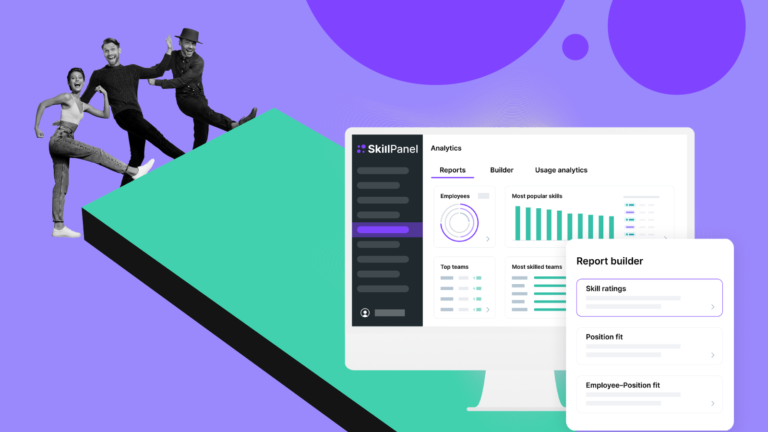
Useful metrics include succession readiness ratios, internal fill rates for open positions, skills coverage scores across strategic capability areas, time-to-productivity for newly placed employees, manager engagement scores and their correlation with team retention, and training completion rates tied to identified skill gaps. Organizations using SkillPanel’s analytics suite can track skill composition trends, internal mobility rates, reskilling progress, and high-potential identification in real time, connecting workforce data directly to business performance outcomes rather than managing it in a separate HR reporting silo. The Forrester data cited above offers a useful benchmark: payback periods for enterprise skills intelligence deployments run 14 to 22 months, with a 23% reduction in regrettable attrition among adopters. Tracking outcomes like these creates a feedback loop that reinforces good practice and helps leaders calibrate where additional investment is needed.
Building long-term workforce resilience: From risk mitigation to strategic advantage
Organizations that execute workforce risk management well eventually move past defensive posture. They stop managing disruption reactively and start using their workforce intelligence capabilities to create strategic options that less-prepared competitors simply do not have.
Research makes the value of this shift tangible. Firms that emphasize people investment alongside AI and technology, specifically those spending around $5 on people development for every $1 on technology, are 4x more likely to sustain top-tier financial performance over the next decade. The organizations building that capability now, through automated skills intelligence, predictive gap modeling, and internal talent marketplaces, are building a structural advantage that will compound over time.
SkillPanel was built for exactly this transition. The platform moves HR functions from reactive hiring and ad-hoc fixes toward structured, skills-based talent strategies, supporting internal mobility, succession planning, and scalable capability building. Its integration with existing HR technology stacks, combined with real-time skills visibility and multi-source assessment capability, gives organizations the foundation they need to shift from managing workforce disruption risk defensively to using it as a lens for proactive growth. The organizations that will lead their industries through the labor market volatility of the late 2020s are not the ones with the biggest recruiting budgets. They are the ones that know precisely what capabilities they have, where their gaps are, what conditions put their workforce at risk, and how to act on that intelligence faster than anyone else. Building that capability starts now, with a clear view of what workforce disruption risk actually means for your organization and the strategic will to manage it seriously.