
Succession planning best practices: What works, what doesn’t, and why it matters
| Reading time:


Leadership transitions shape an organization’s future more than any other strategic decision. When key executives depart without qualified successors ready to step up, companies face disruption, knowledge loss, and financial consequences that ripple across operations. Yet despite these high stakes, most organizations struggle to build effective succession pipelines that actually work when tested by reality.
Over 2,200 CEOs departed in 2024, marking a 16% increase from the prior year and setting a new record. This surge in leadership turnover, driven by economic uncertainty and activist pressure, has forced boards and executives to confront an uncomfortable truth: succession planning can no longer remain a sporadic initiative dusted off only when departure dates loom. The organizations that thrive through transitions treat succession planning as a continuous strategic discipline rather than an episodic response to pending retirements.
This guide presents succession planning best practices grounded in data, real-world implementation experience, and the evolving demands facing organizations in 2026. Whether you’re building your first formal succession plan or refining an existing program, these practices provide a roadmap for developing leadership pipelines that strengthen rather than strain your organization when transitions occur.
Why succession planning best practices matter in 2026
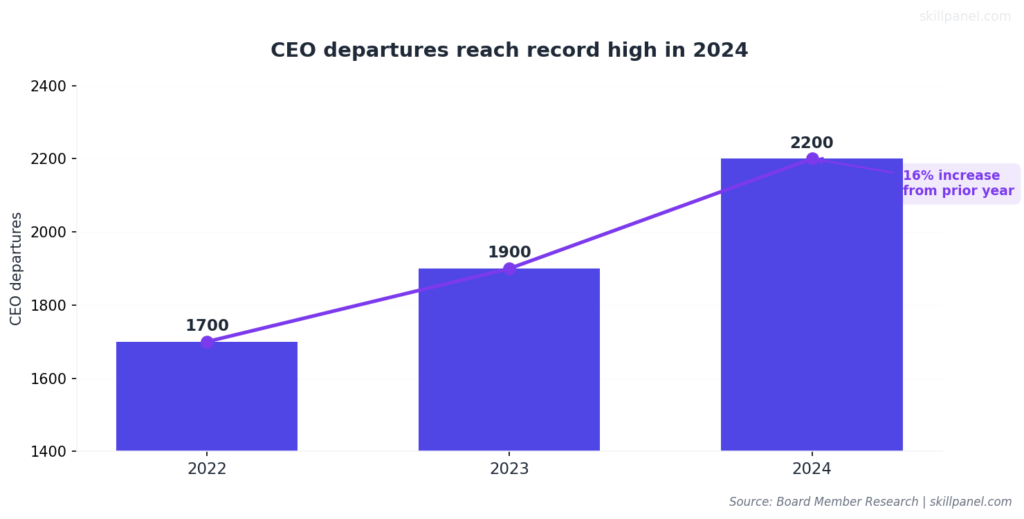
The business case for robust succession planning has never been clearer or more urgent. Poorly managed CEO transitions cost nearly $1 trillion in market value annually among S&P 1500 companies, representing massive shareholder destruction that results from leadership gaps and bungled transitions.
What makes succession planning especially critical now is the convergence of multiple pressures. Baby boomer retirements continue removing experienced leaders from the workforce, while younger generations expect transparent career paths and development opportunities. Organizations also face accelerating business model changes that require different leadership capabilities than those that drove success even five years ago. Skills in digital transformation, data fluency, and adaptive leadership now matter as much as traditional operational expertise.
The cost of poor succession planning
Financial impacts represent just one dimension of the costs organizations incur when succession planning falls short. Performance disruption begins the moment key leaders depart without prepared successors. Teams lose direction, strategic initiatives stall, and institutional knowledge walks out the door. External hires brought in to fill leadership voids require months to become productive while drawing premium compensation and potentially bringing cultural misalignment.
The human costs compound these operational challenges. When employees see no clear advancement paths or watch external candidates fill senior roles they aspired to reach, engagement drops and retention suffers. High-potential talent leaves for organizations that invest visibly in internal development. The resulting turnover perpetuates talent shortages and forces organizations into reactive hiring cycles that sacrifice quality for speed.
Knowledge gaps emerge as perhaps the most insidious cost of poor succession planning. Retiring executives take decades of experience, client relationships, and operational understanding with them. Without structured knowledge transfer and development of internal successors, organizations spend years rebuilding capabilities that should have transferred seamlessly.
What makes succession planning effective
Effective succession planning transcends simple replacement planning by building organizational capability rather than just filling vacancies. The best programs share several defining characteristics that distinguish them from ineffective initiatives.
Research from Deloitte shows that organizations prioritizing skills-based strategies are 63% more likely to achieve successful leadership transitions. This skills-first mindset moves beyond traditional role-based approaches to focus on the specific capabilities leaders need for future business challenges, not just current requirements.
Successful programs embed continuous assessment and development into normal business operations. Succession planning becomes part of how the organization operates rather than an annual event. Leaders at all levels participate in identifying potential, providing development opportunities, and tracking progress. Academic research rooted in transformational leadership theory emphasizes HR’s role in distinguishing high-potentials from high-performers through targeted development like leadership programs and mentoring to build agile pipelines.
Effective succession planning also balances rigor with flexibility. Structured processes ensure fairness, objectivity, and comprehensive coverage of critical roles. Yet the best programs avoid rigidity that prevents adaptation or narrows candidate pools prematurely.
Core succession planning best practices
Start early and plan continuously
Treating succession planning as a continuous, standing agenda item rather than a one-time event represents the foundational principle underlying all effective programs. Organizations that wait until retirement announcements or performance issues emerge before addressing succession needs find themselves with insufficient time to develop qualified successors.
Starting early means initiating succession conversations and development activities years before anticipated transitions. This extended runway allows high-potential employees to build necessary capabilities through progressive responsibility, mentorship, and targeted learning.
Continuous planning means succession planning never concludes. SkillPanel’s framework emphasizes ongoing monitoring phases that track progress, adapt to business changes, and ensure development plans remain relevant. Organizations should establish regular review cadences, typically quarterly or biannually, where leadership teams assess readiness levels, adjust development priorities, and identify emerging risks.
Align succession planning with business strategy
365 Talents outlines alignment with strategic objectives via OKRs as a critical best practice, noting that organizations leveraging AI for predictive analytics reduced planning time by 30% in recent implementations. Strategic alignment begins by translating business objectives into leadership requirements. If digital transformation represents a strategic imperative, succession planning should prioritize candidates with technology fluency and change leadership skills.
The alignment extends to timing and sequencing. Organizations anticipating major strategic shifts may accelerate leadership transitions to position change-oriented leaders before transformation initiatives launch. Companies in stable markets might emphasize continuity and deep operational expertise. Strategic context should shape not just who becomes identified as successors but when transitions occur and what development experiences prepare them.
Identify critical roles and required competencies
Comprehensive succession planning addresses critical roles throughout the organization rather than focusing exclusively on executive positions. While 34% of U.S. public company directors rank CEO and C-Suite succession as their top priority for 2025, mid-level specialists, key technical experts, and business unit leaders also warrant succession planning because their departure creates operational risks.
SkillPanel’s approach to identifying critical positions involves building a comprehensive role inventory through enterprise-wide analysis and impact assessment. Organizations should evaluate each position’s impact on business objectives, revenue generation, operational continuity, and strategic initiatives. Collaborative leadership meetings bring cross-functional perspectives to these assessments, ensuring critical roles across all departments receive appropriate attention.
Once critical roles emerge, defining required competencies and creating detailed success profiles becomes essential. These profiles should specify technical skills, leadership capabilities, behavioral attributes, and performance standards necessary for success in each role. Success profiles should reflect future requirements, not just current job demands, accounting for how roles will evolve as business conditions change.
Build talent pools, not just replacement lists
Traditional succession planning often creates one-to-one replacement charts showing a single named successor for each key position. This narrow approach proves brittle when designated successors leave, underperform, or lack necessary skills when transitions actually occur. Best succession planning practices instead develop talent pools containing multiple candidates with readiness for several potential roles.
Talent pools provide flexibility and depth that replacement lists cannot match. When organizations cultivate several high-potential leaders with overlapping capabilities, they can respond effectively to unexpected departures, changing requirements, or shifts in individual aspirations.
Building robust talent pools requires systematic identification of high-potential employees across the organization. Similar to other leading succession platforms, SkillPanel supports collective nomination processes where multiple leaders contribute perspectives on emerging talent. This multi-source approach reduces bias and ensures diverse candidates receive consideration. The platform’s bench strength matrix then organizes successors by position and readiness levels, creating visibility into pipeline depth and highlighting areas requiring additional development investment.
Prioritize internal development with external perspective
Organizations embedding capability building in transformations are 2.5 times more likely to succeed, demonstrating strong returns from internal development efforts. Prioritizing internal successors provides continuity, preserves institutional knowledge, and boosts employee engagement by demonstrating growth opportunities.
The most effective succession plan strategy balances internal pipeline development with selective external recruitment when transformation demands it. Organizations should develop internal candidates as the primary succession source while maintaining awareness of external talent that might bring needed capabilities. Benchmarking internal candidates against external standards helps calibrate development needs and ensures internal successors truly possess competitive leadership capabilities.
External perspectives also enrich development without requiring external hires. Organizations can engage external mentors, advisory board members, or consultants who provide high-potential employees exposure to different viewpoints and best practices.
Embed diversity and inclusion into successor development
Diverse leadership teams consistently outperform homogeneous ones in decision quality, innovation, and financial results. Yet succession pipelines often perpetuate existing leadership demographics through unconscious bias and narrow definitions of potential. 365 Talents research shows that organizations prioritizing diversity through rotational programs achieve 92% more innovation, according to LinkedIn data.
Organizations should monitor pipeline diversity at every stage, tracking representation of women, racial and ethnic minorities, and other underrepresented groups among high-potential designations, development participants, and actual successions. This visibility surfaces where biases narrow pools and enables targeted interventions. Industry analysts note that effective succession tools should include diverse perspectives in nomination committees and decision forums to counteract groupthink.
Equitable succession planning also requires examining development opportunities for access barriers. If high-potential programs require extensive travel, geographic relocation, or time commitments that disadvantage caregivers, talented individuals may opt out or receive less preparation.
Secure executive sponsorship and governance
Only 21% of boards rate their succession planning as ‘excellent’, with 17% deeming it poor. This gap reflects insufficient executive engagement and governance oversight in many organizations. Executive sponsorship lends credibility, ensures resource allocation, and signals to the organization that succession planning represents a strategic priority rather than an HR checkbox.
William J. Rothwell proposes a seven-point enhancement model for formalizing succession planning that emphasizes visible commitment as the first critical step, followed by assessing current work and HR needs, performance appraisal, forecasting future business and HR needs, assessing individual potential, closing development gaps, and evaluating the program.
Senior leaders should participate directly in succession planning activities rather than delegating them entirely to HR. This means executives should nominate high-potential candidates, provide mentorship, sponsor development programs, and participate in talent reviews. SkillPanel’s guidance emphasizes forming dedicated succession committees with clear roles, charters, and regular meeting cadences.
Board involvement in CEO and senior executive succession planning has become standard practice, but effectiveness varies widely. Boards should establish succession as a standing agenda item, conduct regular reviews of internal successor readiness, and maintain updated emergency succession plans.
Create transparent career development paths
Transparency in succession planning remains a delicate balance. Organizations that operate succession planning in complete secrecy miss opportunities to engage high-potential employees and clarify advancement criteria. Yet excessive transparency that publicly identifies specific succession slots can create destructive competition and disappointment when plans change.
Effective transparency focuses on career development paths rather than specific succession decisions. Organizations should clearly communicate the competencies, experiences, and performance standards required for advancement to senior levels. This allows employees to understand what preparation they need and make informed decisions about pursuing leadership tracks.
When organizations identify individuals as high-potential or include them in successor pools, direct communication about this designation allows candid development conversations. Leaders should discuss specific development needs, provide feedback on progress, and clarify that succession considerations remain fluid based on performance and organizational needs.
Implement formal mentoring and knowledge transfer
Knowledge transfer represents one of succession planning’s most critical yet frequently overlooked objectives. Retiring leaders possess vast expertise accumulated over decades that formal training programs cannot replicate. Without structured knowledge transfer, this invaluable organizational resource vanishes when leaders depart.
Formal mentoring programs pair high-potential successors with experienced leaders to facilitate knowledge sharing and leadership development. Effective mentoring transcends casual advice-giving to include structured knowledge capture, shadowing opportunities, and progressive delegation of responsibilities.
LegalOn’s crisis-driven knowledge transfer system
LegalOn’s tech firm experienced the dangers of knowledge concentration firsthand when their CTO’s serious illness in 2023-2024 created an immediate leadership vacuum. Engineers paused projects awaiting direction, client deliverables faced delays, and strategic partners encountered confusion about decision-making authority. The disruption exposed how deeply the organization depended on individual expertise without backup systems.
CEO Daniel Lewis implemented a comprehensive response that transformed crisis into systematic resilience. The solution centered on three interconnected mechanisms: knowledge pods pairing senior leaders with rising talent for structured information sharing, quarterly leadership simulations testing decision-making under pressure scenarios, and a living wiki documenting critical processes, client relationships, and operational procedures.
The primary challenge involved overcoming high-performer resistance to knowledge sharing. Technical experts initially viewed documentation and mentoring as burdensome distractions from their core work. Lewis reframed knowledge transfer as legacy-building rather than obligation, appealing to cultural values around lasting impact. This shift in perspective gained buy-in across leadership.
The measurable outcomes included minimized power vacuum effects when the CTO eventually stepped back, with operational continuity maintained throughout the transition. More significantly, LegalOn created what they termed a “succession engine,” a scalable system ensuring no single departure could create similar disruptions. While specific metrics like recovery timelines or ROI weren’t quantified, this mid-market example highlights how crisis can catalyze rapid succession planning maturation.
Plan for emergency succession scenarios
While best succession planning practices emphasize long-term development, organizations must also prepare for unexpected leadership departures. Medical emergencies, sudden resignations, ethical breaches, or other unforeseen circumstances can remove key leaders with little or no notice. Emergency succession plans ensure business continuity when standard succession timelines prove impossible.
Emergency succession planning identifies interim leaders who can assume critical roles immediately should unexpected vacancies occur. These designated backups need not represent long-term successors but must possess sufficient capability to maintain operations and make time-sensitive decisions during transition periods.
Regular review and testing of emergency succession plans ensure they remain current and actionable. Organizations should include scenario planning exercises where leadership teams walk through emergency succession procedures, identify gaps, and refine response protocols.
How to create a succession plan: The implementation process
Understanding what constitutes best succession planning practices provides necessary foundation, but implementation determines whether those practices deliver results. Organizations asking how to create a succession plan need structured processes that translate principles into action while adapting to their specific contexts and constraints.
Conduct a succession risk assessment
Succession risk assessment identifies where leadership vulnerabilities threaten organizational performance and prioritizes succession planning efforts accordingly. Not all positions warrant equal succession planning investment. Organizations should focus resources on roles where leadership gaps create the most significant operational or strategic risks.
SkillPanel’s framework begins the assessment phase by conducting enterprise-wide role inventories and impact analyses. This systematic evaluation examines each critical position’s contribution to revenue, strategic initiatives, operational continuity, and competitive advantage. Collaborative leadership meetings bring diverse perspectives to impact assessments, preventing individual blind spots from skewing priorities.
The risk assessment should also consider succession timing factors. Positions currently held by leaders nearing retirement or expressing departure intentions require more immediate attention than roles with stable, long-tenured incumbents. Organizations can create risk matrices that plot position criticality against succession readiness, highlighting where urgent action is needed versus where longer-term development suffices.
Evaluate current talent against future needs
Talent evaluation forms the core of any succession plan. Organizations must assess their current workforce objectively to identify employees with potential to fill critical roles and understand gaps requiring development o[r external recruitment.
](https://skillpanel.com/blog/talent-management-evaluation-tools/)SkillPanel’s platform enables comprehensive talent assessment through multi-source evaluation combining self-assessments, peer reviews, manager input, and technical skill evaluations. This diverse data creates robust skill profiles that go beyond limited performance review perspectives. The platform’s dynamic skills maps and predictive gap analysis compare employee capabilities against role requirements systematically, identifying specific development needs rather than relying on subjective impressions.
Organizations should assess technical skills, leadership competencies, behavioral attributes, and cultural fit when evaluating potential successors. The bench strength matrix organizes assessment results visually, showing readiness levels for each critical role and highlighting pipeline depth. Color-coding can indicate diversity representation, retention risks, and readiness timelines, providing leadership teams comprehensive talent visibility at a glance.
Design individual development plans
Assessment insights mean little without translation into action. Individual development plans transform gap analyses into personalized roadmaps that prepare successors for target roles. Effective IDPs specify priority capabilities requiring development, identify high-impact learning activities, assign responsibilities for execution, and establish clear timelines with measurable milestones.
Each plan should address the specific gaps identified during assessment, prioritizing capabilities most critical for target role success. Development activities should span multiple learning modalities including formal training, mentoring relationships, stretch assignments, job rotations, and cross-functional projects. This variety ensures comprehensive capability building rather than overreliance on classroom learning.
High-impact development activities provide the most value. Experiential learning through progressively responsible assignments builds capabilities that training alone cannot deliver. Organizations should design stretch assignments that challenge successors while providing support and coaching to ensure success.
Establish review cycles and accountability
Succession plans fail when they become static documents that leaders complete once and then ignore. Establishing regular review cycles and clear accountability mechanisms ensures succession planning remains dynamic and responsive to changing conditions.
SkillPanel’s monitoring phase emphasizes tracking progress against metrics, gathering stakeholder feedback, and conducting regular HR-leadership meetings. Quarterly reviews typically provide appropriate cadence for most organizations, though annual reviews may suffice for stable environments while monthly reviews might suit rapidly changing situations. Review meetings should examine each critical role’s succession status, discuss development progress for key successors, identify emerging risks, and adjust plans accordingly.
Accountability requires clear ownership for succession planning activities and outcomes. CEOs and business unit leaders should own succession planning for their organizations with HR providing process facilitation and expertise. Individual development plan execution responsibility should rest with successors themselves, their managers, and assigned mentors.
Succession planning tools and technology
Technology increasingly enables succession planning sophistication that manual processes cannot match.The global market was valued at approximately $1.43 billion in 2024 and is expected to reach $3.06 billion to $3.7 billion by 2033. This rapid growth reflects organizations’ recognition that succession planning tools provide capabilities essential for managing complex talent pipelines at scale.
Essential features in succession planning software
Effective succession planning software should provide several core capabilities that elevate program quality beyond what spreadsheets and manual processes deliver. Skills mapping functionality allows organizations to define role competencies systematically and compare current workforce capabilities against requirements.
Talent assessment tools should integrate multiple data sources to create comprehensive capability profiles. SkillPanel combines self-assessments, peer reviews, manager evaluations, and technical skill assessments into unified views. This multi-perspective approach reduces bias and provides richer understanding than single-source evaluations.
Visualization capabilities help leadership teams understand pipeline health at a glance. Succession bench strength matrices, readiness timelines, and gap analyses presented visually enable faster, better-informed decisions than text-heavy reports. These dashboards surface issues requiring attention while confirming areas with strong succession coverage.
Workflow and collaboration features ensure succession planning involves appropriate stakeholders without creating administrative burden. Platforms should support nomination processes, facilitate review meetings with shared visibility, track action items, and provide notification reminders for assessment updates.
Integrating succession planning with your HR tech stack
Succession planning effectiveness multiplies when integrated with broader HR technology ecosystems rather than operating as an isolated system. Integration with human resource information systems provides succession planning tools access to current workforce data on demographics, performance, compensation, and tenure.
SkillPanel’s platform integrates with existing HR systems, payroll platforms, and learning management systems to deliver real-time insights without workflow disruption. Learning system integration allows succession planning to trigger development activities automatically when gaps emerge, recommend relevant courses based on IDP objectives, and track completion of assigned learning.
Performance management integration connects succession planning with ongoing performance evaluations and goal-setting processes. High-potential designations and succession readiness assessments should consider performance trends, not just point-in-time snapshots.
Measuring succession planning effectiveness
Organizations cannot improve what they don’t measure. Effective succession management strategies include robust measurement frameworks that quantify program health, identify improvement opportunities, and demonstrate value to senior leadership and boards.
Key metrics and KPIs to track
High-performing succession planning programs differentiate themselves through superior bench strength, internal fill rates, faster time-to-fill, stronger successor readiness, and robust post-transition performance. Research from Visier and Proten International establishes that organizations with mature succession programs achieve dramatically better outcomes than the 81% of organizations lacking formal plans.
Bench strength ratio represents a fundamental succession planning metric. Organizations should track what percentage of critical roles have at least one successor ready now, multiple successors at various readiness levels, or no identified successors. Industry benchmarks target 75%+ bench strength, where three-quarters of critical roles have at least one ready successor. Top performers aim for 3+ qualified successors per role to ensure depth and reduce vulnerability. Roles lacking successors signal urgent development needs or external recruitment requirements.
Internal fill rates for critical positions demonstrate succession planning’s impact on talent development and retention. Research shows that 25%+ of management positions filled internally indicates strong succession planning, with high performers achieving consistent gains far exceeding zero baselines in average programs.SHRM’s 2023 report highlights up to 50% cost reduction in recruitment and onboarding expenses when prioritizing internal fills. While external hiring remains necessary for specific situations, consistently high external fill rates suggest succession planning isn’t developing adequate internal readiness.
Time-to-fill for critical positions indicates pipeline preparedness. Organizations with strong succession planning fill key roles faster because successors stand ready to transition. High performers minimize this metric to industry-competitive levels, often under external benchmarks, through proactive pipelines that contrast average programs’ prolonged gaps. Extended vacancies or interim assignments lasting months signal insufficient successor preparation.
Successor readiness levels provide forward visibility into pipeline development. Organizations should track distribution as ready-now (immediate), ready-soon (1-2 years), or future-ready (3+ years).At least 3 ready-now candidates per critical role represents the target for elite programs, with balanced progression through development stages. This depth protects against front-runners leaving or failing to develop as expected.
Post-transition performance measures whether successors perform effectively when promoted into target roles. Organizations should track new leader performance, tenure in role, and achievement of objectives during their first two years. High performers sustain 75%+ success rates via productivity uplifts, contrasting sharply with average programs suffering the 70% failure rate within two years that industry research documents. This metric reveals whether identification processes and development programs truly prepare successors.
Benchmarking your leadership pipeline health
Internal metrics provide important feedback, but benchmarking against external standards reveals how succession planning compares to other organizations and industry best practices. The Institute of Corporate Productivity found that 70% of succession plans fail within two years, establishing a sobering benchmark that effective programs should beat decisively. Organizations should target success rates above 70% by tracking whether successors identified actually transition into target roles successfully and perform effectively.
Retention rates for high-potential employees designated as successors serve as a critical health indicator. If successor candidates leave at higher rates than general employee populations, succession planning practices likely require review. Strong programs retain identified successors at substantially higher rates than workforce averages because visible investment in development increases engagement and commitment.
Diversity representation in successor pools compared to overall workforce demographics reveals whether succession planning perpetuates or corrects leadership diversity gaps. Organizations should benchmark successor pool diversity against both internal workforce composition and industry diversity standards. Succession planning that narrows diversity from broad workforce to homogeneous successor pools requires intervention to eliminate bias and expand candidate identification.
Common succession planning mistakes to avoid
Even well-intentioned succession planning efforts fall short when organizations make predictable mistakes. Understanding common pitfalls enables organizations to design programs that avoid these traps from the outset rather than learning through costly failure.
Treating succession planning as a reactive or emergency-only activity rather than an ongoing process heads the list of critical mistakes. Organizations that launch succession planning initiatives only when key departures loom lack sufficient time to develop qualified successors. This forces compromises that weaken leadership quality, increases external recruitment costs, and perpetuates reactive cycles.
Focusing succession planning exclusively on executive roles while ignoring mid-level and specialized positions creates dangerous vulnerabilities. C-suite succession rightfully receives significant attention, but organizations depend on technical experts, business unit leaders, and key individual contributors whose departures also disrupt operations.
Neglecting development of identified high-potential successors represents perhaps the most common and damaging mistake. Organizations that identify promising talent but fail to provide tailored development, mentorship, and growth opportunities watch potential successors leave for competitors who invest in their advancement.
Excluding senior stakeholders from succession planning processes undermines program effectiveness and sustainability. When CEOs, executives, and boards treat succession planning as an HR responsibility rather than a strategic priority they own, programs lack necessary resources, attention, and integration with business strategy.
Bias and lack of objectivity in successor selection perpetuate homogeneous leadership that lacks diverse perspectives. Favoring familiar profiles, confusing current performance with leadership potential, or relying on subjective impressions produces narrow candidate pools that overlook qualified diverse talent.
Failing to establish clear timelines, criteria, and regular reviews allows succession planning to drift into irrelevance. Without defined benchmarks, accountability, and scheduled reassessments, plans become outdated, get deprioritized amid competing demands, and fail to adapt to changing needs.
Real-world succession planning examples
Mid-market success: Embedded planning from inception
Roof Maxx: Autonomous operations through proactive leadership development
Roof Maxx, a sustainable roofing company with 350+ franchise partners, demonstrates how embedding succession planning from inception creates resilient organizations capable of weathering crises without founder dependency. Rather than waiting for growth pressures to force succession considerations, founder Todd Feazel built leadership development into the company’s DNA from the start.
The implementation involved systematically identifying emerging leaders in operations, dealer support, and marketing, then deliberately granting them autonomy to build decision-making capabilities. Feazel mentored these leaders while progressively removing himself from daily operations, creating genuine independence rather than superficial delegation. This approach emphasized developing leaders who could operate without constant founder input.
A significant challenge emerged around vision alignment. As leaders gained autonomy, tensions surfaced between product-focused growth versus sustainability mission priorities. Some emerging leaders pushed aggressive expansion strategies that potentially conflicted with the company’s environmental values. Feazel addressed this by facilitating intensive discussions that defined a shared purpose, ensuring all leaders understood how product and mission intertwined rather than competed.
The succession plan’s effectiveness proved itself twice before any permanent transition occurred. When a 2024 supply chain disruption threatened operations, the developed leadership team managed the crisis independently, implementing creative solutions without requiring founder intervention. More tellingly, during Feazel’s 2023 temporary absence for family reasons, business growth continued uninterrupted. New dealer onboarding proceeded, marketing campaigns launched on schedule, and operational challenges got resolved, all demonstrating the plan had created genuine organizational capability rather than hollow processes. The company sustained its growth trajectory throughout both disruptions, validating that succession planning had achieved its core objective: building an organization that no longer depended on any single individual.
Mid-market success: Decade-long financial firm transition
Seely-Butler, pellish and associates: $200M firm’s methodical succession
Seely-Butler, Pellish and Associates, a financial planning firm managing $200 million in assets, executed a 10-year succession plan that culminated in the founder’s complete retirement while retaining all staff and clients. This extended timeline allowed careful preparation that preserved the firm’s value and client relationships.
The firm’s approach involved quietly onboarding potential successors and evaluating their fit over several years before making final decisions. This extended evaluation period revealed capabilities that interviews alone couldn’t uncover, particularly around client relationship management and regulatory compliance. After thorough assessment, the founder selected two successors to lead together rather than designating a single replacement.
The two-leader structure addressed a critical challenge discovered midway through the plan. The first successor, while technically excellent, struggled with the complexity of managing alone. Rather than abandoning the succession plan or forcing an inadequate solution, the founder added a second leader whose strengths complemented the first. Training both successors side-by-side for the firm’s complex operations, including compliance requirements and sophisticated client management, created a more robust leadership foundation.
The firm hosted two large client events with 1,200 total attendees to introduce successors and build confidence in continuity. This visible transition preparation reassured clients that their relationships and service quality would persist. Financing the buyout with oversight rights and insurance protections addressed transition risks while allowing the founder to exit.
The measurable ROI manifested clearly: the business thrived at peak performance levels without founder intervention. The firm retained its entire client base, avoided staff turnover, and ensured timely buyout payments to the founder. This financial services example demonstrates how mid-market firms can execute sophisticated succession planning that preserves value through methodical, patient implementation.
Fortune 500 succession excellence
National Grid’s May 2025 CEO transition from John Pettigrew after 34 years to Zoë Yujnovich exemplifies structured external succession planning in global energy utilities. The formal board-led search emphasized deliberate transition and deep sector experience, avoiding disruptions seen in unstructured changes. Operations continued without noted dips, demonstrating ROI through strategic stability.
Nike’s 2024-2025 leadership restructuring following President Heidi O’Neill’s departure after 26 years redistributed responsibilities across multiple internal leaders, reducing single-point risks. This internal mobility approach restructured leadership for scale, with maintained business momentum and enhanced resilience reflecting concrete ROI in distributed accountability.
Walmart’s 2026 transition from Doug McMillon to John Furner exemplifies planned internal succession’s benefits. Furner’s progression through key operational roles provided direct experience essential for leading the retail giant, ensuring continuity while bringing fresh perspective from someone deeply familiar with the business.
Berkshire Hathaway’s generational transition on January 1, 2026, showcases long-term succession planning’s ultimate test. Greg Abel assumed CEO responsibilities after Warren Buffett’s six decades of leadership. Abel’s prior role leading the company’s noninsurance businesses exemplified deep internal development and progressive responsibility that prepared him for this historic transition.
Toll Brothers’ March 2026 succession illustrates another successful internal development approach. Karl K. Mistry, a 22-year company veteran and EVP managing homebuilding operations, became CEO succeeding Douglas C. Yearley Jr., who transitioned to Executive Chairman after 16 years as CEO. This pattern shows long-term internal development combined with the predecessor remaining in an advisory capacity to support the transition.
Lessons from succession planning failures
LegalOn’s experience, while ultimately successful, began with a cautionary tale about knowledge concentration risks. The crisis forced implementation of knowledge pods, leadership simulations, and documentation systems that should have existed proactively. The lesson: don’t wait for crisis to implement knowledge transfer processes.
Succession planning failures often stem from delayed action rather than dramatic missteps. Organizations that postpone succession planning until retirement announcements find themselves with insufficient development time. Recent data shows that half of S&P 500 CEO replacements come from external hires, frequently reflecting inadequate internal pipeline development rather than genuine need for outside perspective.
The widespread dissatisfaction with succession planning effectiveness tells its own story. When only 21% of boards rate succession planning as excellent despite near-universal recognition of its importance, the gap between intention and execution remains vast. This disconnect reflects insufficient investment in continuous processes, inadequate development resources, and failure to treat succession planning as the strategic priority it represents.
Your succession planning action plan
Transforming succession planning best practices into organizational reality requires a structured action plan that progresses from assessment through full program implementation. Organizations starting from scratch should focus on establishing foundational elements before attempting comprehensive coverage.
Begin by securing executive sponsorship and establishing governance structures. Schedule initial discussions with the CEO and senior leadership team to align on succession planning objectives and business strategy connections. Form a succession planning committee with clear charter, membership, roles, and meeting cadence. This governance foundation ensures necessary leadership engagement and resources.
Conduct your initial succession risk assessment to prioritize efforts. Start with a manageable scope, perhaps 5-10 of the most critical roles rather than attempting enterprise-wide coverage immediately. SkillPanel’s framework emphasizes this focused approach, building momentum through early successes before expanding scope. Assess each prioritized role’s impact on business objectives and current succession readiness using documented criteria.
Launch talent assessment for prioritized roles using structured evaluation approaches. Implement multi-source assessment methodology combining manager evaluations, peer input, self-assessments, and skills data from HR systems. Create succession bench strength matrices that visualize current pipeline depth and identify gaps requiring immediate attention.
Design and launch individual development plans for identified successors in priority roles. Focus initial IDPs on highest-impact development activities that address critical capability gaps. Assign clear ownership for IDP execution to successors, their managers, and mentors. Establish tracking mechanisms that monitor progress and surface obstacles requiring escalation.
Implement supporting processes including formal mentoring programs, knowledge transfer initiatives, and review cycles. Schedule quarterly succession reviews where leadership evaluates progress, updates readiness assessments, and adjusts plans based on business changes. Create emergency succession plans for priority roles to ensure business continuity if unexpected departures occur.
Select and implement succession planning tools that provide assessment, planning, and tracking capabilities aligned with your program’s complexity. Prioritize integrations with existing HR systems to minimize administrative burden and ensure data accuracy.
Establish measurement frameworks and begin tracking key metrics including bench strength ratios, time-to-fill, internal promotion rates, and successor retention. Set targets based on current baseline performance and benchmark data, then track progress over time. Use metrics to identify program strengths worth celebrating and gaps requiring additional attention.
Expand program scope progressively as initial implementations stabilize and demonstrate value. Extend succession planning to additional critical roles in phases rather than attempting complete coverage immediately. Refine processes based on lessons learned during initial implementations, adapting practices to fit your organizational culture and needs.
The succession planning best practices outlined here provide a roadmap, but each organization must adapt approaches to its unique context, culture, and constraints. Start with fundamentals, build momentum through visible successes, and expand sophistication over time. Organizations that commit to continuous succession planning as a strategic discipline rather than an episodic project position themselves to navigate leadership transitions smoothly while developing the deep leadership bench needed for sustained success.