The succession planning tools worth using when leadership transitions actually matter
| Reading time:


About This Guide: This comparison was developed by the SkillPanel team. We’ve evaluated all platforms using a consistent framework. Where SkillPanel’s own capabilities are relevant, we’ve noted our platform with a clear disclosure. Our goal is a genuinely useful evaluation, not a sales document.
Leadership gaps are expensive. Research cited in a 2026 review shows that 50% to 70% of executives fail within 18 months of stepping into a new role, and poorly managed CEO transitions wipe out nearly $1 trillion in market value each year among S&P 1500 companies. Yet despite those numbers, just 21% of HR professionals report having a formal succession plan, while 56% say they have no plan at all.
The gap between knowing succession planning tools matters and actually executing it well is real. Only 14% of organizations describe their succession planning process as “robust.” And while 86% of global business leaders say succession planning is critical to organizational success, 70% admit that long-term succession planning feels futile in today’s fast-changing environment.
That tension, between strategic urgency and operational paralysis, is exactly where the right succession planning tools can make a decisive difference. The right platform doesn’t just digitize your org chart. It turns talent data into actionable readiness insights, flags leadership pipeline risks before they become crises, and ties individual development directly to strategic role requirements.
This guide covers what to look for before you buy, a comparison of the top succession planning tools for 2026, and a practical framework for choosing the solution that fits your organization’s specific context and goals.
What to look for in succession planning tools before you compare
Before evaluating any specific platform, you need a clear picture of what good actually looks like. Succession planning software spans a wide spectrum, from basic replacement charting modules embedded in legacy HR systems to sophisticated AI-powered talent intelligence platforms that map skills, predict flight risk, and recommend development paths in real time. Knowing which capabilities genuinely move the needle helps you filter out the noise.
Core features that drive real succession outcomes
The most effective succession planning tools don’t just manage data; they generate insights that drive real workforce decisions. Four capability clusters consistently separate high-impact platforms from glorified spreadsheets.
Talent pool management and readiness tracking
Static “name in a box” succession charts are a liability. When a key leader exits unexpectedly, a single named replacement gives you one option and no context. Modern succession management systems move beyond that model by supporting dynamic talent pools, groups of candidates organized by skills, experience, leadership potential, or readiness level, that update automatically as employees grow, complete training, or shift roles.
Readiness tracking adds the time dimension that replacement charts miss entirely. Rather than simply naming a successor, effective tools allow you to categorize candidates as “ready now,” “ready in one to two years,” or “ready in three to five years,” with clear rationale tied to competency gaps and development progress. This pipeline view gives HR leaders and executives a live read on bench strength, coverage ratios, and where succession risk is actually concentrated.
Organizations using structured succession frameworks and tools are better able to identify bench strength and future skills shortfalls, which in turn reduces time-to-fill for critical roles and mitigates leadership-vacancy risk. That connection between pool-based succession planning and measurable business outcomes is why talent pool management should be a non-negotiable capability in any platform you evaluate.
Succession planning dashboard and reporting
A succession planning dashboard is only as valuable as the decisions it enables. The best platforms provide configurable, role-based dashboards that give HR teams, line managers, and the C-suite different views of the same underlying talent data. HR sees pipeline health and risk exposure across the organization. Executives see coverage for their most critical roles. Line managers see readiness indicators and development needs for their direct reports.
Look for reporting capabilities that quantify succession risk, internal fill rates, bench strength ratios, time-to-ready estimates, and diversity representation within successor pools. These aren’t just reporting conveniences; they’re the KPIs that allow you to measure whether your succession planning process is improving over time and where targeted investment is most needed.
Real-time analytics matter here too. Succession data refreshed only during annual talent review cycles creates false confidence. Organizations that integrate succession planning with performance management, skills data, and learning systems are better positioned to align development investments with future role requirements, but only if that data stays current between formal review cycles.
Development planning and skills gap analysis
Succession planning that stops at identifying candidates and never develops them isn’t succession planning; it’s a wishlist. The tools that deliver the most value embed individual development planning directly into the succession workflow, connecting identified readiness gaps to specific learning content, stretch assignments, mentoring relationships, and project rotations.
Skills gap analysis is the engine that makes this work. Platforms should allow you to define competency models for critical roles, map current employee skills against those requirements, and surface specific gaps that must be closed before a candidate can be considered ready. This is where succession planning software is increasingly being used to map competencies against roles and identify talent gaps in critical positions, enabling targeted development and hiring rather than reactive backfilling.
AI-driven candidate matching and flight risk alerts
AI is rapidly becoming a baseline expectation in enterprise succession planning tools rather than a premium differentiator. Two capabilities deserve particular attention: candidate matching and flight risk prediction.
AI-driven candidate matching analyzes skills, experience, performance history, career trajectory, and mobility preferences to recommend best-fit successors for specific roles, often with a readiness score or match percentage. This surfaces non-obvious candidates, including talent from underrepresented groups that manager-nomination-only processes consistently miss.
Flight risk alerts address the retention side of the equation. Identifying a strong successor does nothing if that person leaves before they’re ready to step into the role. Unclear advancement paths are a significant driver of attrition among senior talent, which means succession platforms that make career pathways visible to employees serve a dual purpose: developing future leaders and retaining the talent you’ve already invested in.
Integration, scalability, and security considerations
Even the most feature-rich succession planning solution creates more problems than it solves if it sits in isolation from the rest of your HR technology stack. Seamless integration with your core HRIS/HCM, performance management system, learning management platform, and talent acquisition tools is foundational. Without it, succession data quickly becomes stale, inconsistent, and untrustworthy.
Scalability is easy to underestimate when you’re evaluating tools during a period of relative organizational stability. The World Economic Forum forecasts that 44% of workers’ core skills will change within five years, which means the competency models underpinning your succession plans will need continuous updating. Choose a platform that can handle increasing complexity in terms of roles, geographies, business units, and languages without degrading performance or requiring expensive re-implementation.
Security and privacy controls are non-negotiable given the sensitivity of succession data. Potential ratings, successor nominations, and readiness assessments are among the most politically sensitive information in any organization. Platforms must offer granular role-based access controls, data encryption, audit trails for changes, and compliance with applicable data protection regulations.
Top succession planning tools for 2026: Compared
The market for succession planning software spans enterprise-grade talent management suites, standalone succession specialists, and skills-focused platforms redefining how readiness gets measured. The table below gives a fast orientation before the detailed entries.
| Plataforma | Company Size Fit | AI Capability | Skills Assessment Depth | Implementation Complexity | Pricing Tier | |
| SkillPanel (our platform) | Mid-market to Enterprise | High | High | Moderate | Mid-market / Enterprise | |
| SAP SuccessFactors | Large Enterprise | High | High | High | Enterprise | |
| Cornerstone OnDemand | Enterprise | High | High | High | Enterprise | |
| TalentGuard | Mid-market / Enterprise | Moderate | High | Moderate | Mid-market | |
| PeopleFluent | Enterprise | Moderate | Moderate | High | Enterprise | |
| iMocha | Mid-market / Enterprise | Moderate | High | Moderate | Mid-market / Enterprise | |
| PageUp | Mid-market / Enterprise | Moderate | Moderate | Moderate | Mid-market | |
| Deel | Mid-market / Enterprise | Moderate | Low | Low–Moderate | Mid-market / Enterprise | |
| Paycor | SMB / Mid-market | Low | Low | Low | SMB | |
| Empxtrack | SMB / Mid-market | Low | Moderate | Low | SMB | |
| Bullseye Engagement | Mid-market | Low | Moderate | Low | Mid-market |
1. SkillPanel (disclosure: This is our platform)
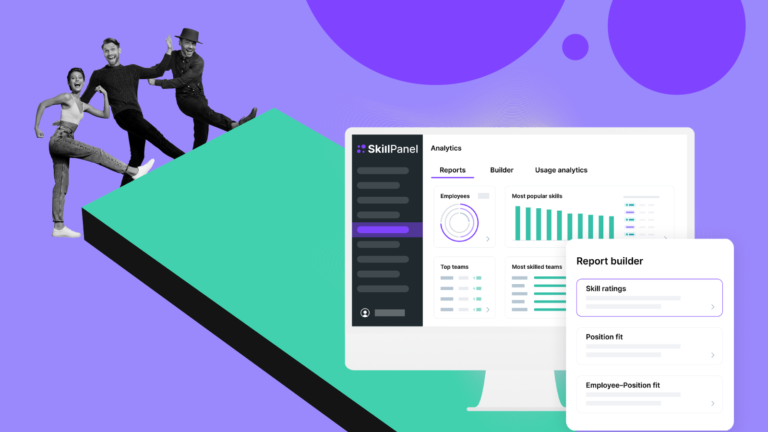
SkillPanel is an AI-powered skills intelligence platform built to map workforce capabilities and turn talent data into actionable succession and workforce planning decisions. Its core differentiator is multi-source assessment: rather than relying on manager nominations or self-reported skills alone, SkillPanel triangulates self-assessments, peer reviews, manager input, and technical evaluations into a dynamic skills map with predictive gap analysis.
The platform’s succession workflow connects skills gaps directly to role requirements, surfaces best-fit internal successors based on assessed capabilities, and supports readiness tracking with development actions tied to specific competency shortfalls. This gives HR teams a more objective and auditable basis for succession decisions than traditional talent review processes.
Best for: Organizations that want to build succession planning on verified, multi-source skills data rather than manager preferences alone; teams that need strong skills intelligence and gap analysis as the foundation for readiness decisions.
Limitations to consider: SkillPanel is a focused skills intelligence platform rather than a full HCM suite. Organizations that require deep integration with a broad ecosystem of performance, compensation, and learning modules within a single vendor relationship may need to evaluate fit with their existing stack. As with any skills intelligence tool, the quality of outputs depends heavily on the quality and completeness of assessment data collected during rollout.
2. SAP SuccessFactors
SAP SuccessFactors Succession and Development is one of the most comprehensive enterprise succession planning tools available, built for large, complex organizations with global workforces and demanding governance requirements.
The platform’s key differentiator in 2026 is the convergence of its Talent Intelligence Hub and Joule AI copilot. The Talent Intelligence Hub uses AI to analyze workforce skills and recommend internal successors for critical roles based on competencies and job architecture. Joule, SAP’s native AI assistant, allows HR teams and managers to query talent data and succession pipelines in natural language, with responses constrained by existing role-based permissions. Recent 2026 enhancements have also introduced a “link assignments” feature on development goal pages, connecting successors directly to the SAP Opportunity Marketplace so employees can find and link stretch assignments to their development goals without leaving the goal-tracking workflow.
Best for: Large enterprises already invested in the SAP HCM ecosystem seeking deep integration between succession, performance, learning, compensation, and workforce planning within a single vendor relationship.
Not ideal for: Organizations without existing SAP infrastructure. Implementation complexity and cost are significant, and user-reported feedback from 2023–2025 G2 and Gartner Peer Insights reviews consistently flags three friction points: setting up succession org charts, talent pools, and permissions is not intuitive and typically requires specialist support; consolidating performance, potential, and competency data into a usable manager view often requires IT or partner help for custom analytics; and new half-year product releases can break existing configurations, requiring additional testing and re-training cycles. For organizations without a dedicated SAP HR implementation partner, these tradeoffs represent real ongoing operational cost.
3. Cornerstone OnDemand
Cornerstone OnDemand positions succession planning as part of a unified Talent Experience Platform combining learning management, performance, skills intelligence, and career development in one environment. Its learning heritage gives it a distinctive advantage in connecting succession readiness to development execution, and its Skills Graph is the engine driving AI-powered successor matching using a large skill ontology.
Cornerstone’s what-if scenario modeling capability allows organizations to simulate leadership moves and see the real-time impact on bench strength and succession coverage. Successors can be connected to curated academies, digital learning programs, and coaching resources directly within the succession workflow, with completion data flowing back into readiness metrics automatically.
Best for: Organizations where closing the gap between “identified successor” and “ready successor” is the primary challenge, particularly where learning-driven development is as prominent as succession analytics.
Not ideal for: Organizations without a dedicated HRIS admin capable of managing ongoing configuration. Reviewers on G2 and Gartner Peer Insights from 2023–2025 consistently flag that customizing succession workflows, nine-box criteria, and talent pool rules typically requires Cornerstone services or external partners, increasing cost and slowing iteration. The succession interface is also described as less intuitive than newer HR tools, and pulling integrated views across Learning, Performance, and Succession for leadership reporting often requires manual exports. As an enterprise-priced platform with custom-quote annual contracts, Cornerstone’s total cost of ownership depends heavily on modules, user count, and services spend, and implementation timelines are measured in months, not weeks.
4. TalentGuard
TalentGuard is a talent management platform with a strong focus on career pathing, competency management, and skills-based succession planning. It allows organizations to define competency frameworks for every role, map current employee capabilities against those frameworks, and build succession pipelines based on objective skills data rather than manager preferences alone. The succession module supports talent pool management, readiness scoring, and individual development planning, with particular emphasis on making the connection between skill gaps and development actions explicit and trackable.
Best for: Mid-market and enterprise organizations that want to build succession planning on rigorous competency and skills architecture, particularly those looking to reduce the subjectivity that often creeps into manager-driven nominations.
Limitations to consider: User reviews from 2023–2025 highlight that out-of-the-box succession dashboards are limited; slicing data by business unit, diversity segment, or risk of loss typically requires custom work in external tools. Integrating TalentGuard with core HRIS or ATS systems can be technically demanding and requires ongoing IT effort to keep people data fresh in succession pipelines. Larger organizations have also reported performance slowdowns at scale, and the UI, while functional, is described as less polished than leading enterprise HCM suites.
5. PeopleFluent
PeopleFluent brings deep configurability and visual succession planning to complex, matrix-structured organizations. Its graphical succession planning interface, featuring visual org charts, nine-box grids, and drag-and-drop talent mapping, makes it easier for HR teams and executives to engage with pipeline data in calibration sessions. PeopleFluent also positions succession alongside talent mobility, feeding succession candidates into internal mobility and external recruiting workflows to support the broader career development culture that retains high-potential employees.
Best for: Large enterprises with complex governance models that need to operationalize a consistent succession methodology across diverse business units without forcing every function into a rigid template.
Limitations to consider: Reviews from 2023–2025 describe the succession module as visually dated and not intuitive for manager self-service, which tends to keep succession processes HR-driven rather than enabling distributed manager participation. Configuration changes to rating models, readiness categories, or grid layouts are regularly cited as requiring vendor or technical support, slowing iteration. Native reporting also receives consistent criticism for not easily providing executive-ready visuals of pipeline risk, bench strength, or diversity, pushing teams toward manual spreadsheet exports for leadership presentations.
6. iMocha
iMocha approaches succession planning through the lens of skills intelligence and objective assessment. The platform enables organizations to assess employee capabilities using a comprehensive library of skills assessments spanning technical, functional, and leadership competencies, providing a more rigorous basis for succession decisions than self-reported skills data or manager ratings alone. Rather than relying on qualitative judgments about whether someone is “almost ready,” iMocha’s assessment engine produces scored, data-driven readiness profiles that can be compared across candidates and tracked over time.
iMocha integrates with major HRIS and LMS platforms and is particularly valuable for organizations in technical industries where specific skill requirements for critical roles are complex and where subjective succession decisions carry higher risk. Adoption of dedicated succession planning tools as a way to centralize talent data, calibrate performance and potential, and generate data-driven readiness scores is accelerating in these environments.
Best for: Technical industries and organizations that need objective, assessed skills data as the foundation for succession decisions rather than nomination-based processes.
Not ideal for: Organizations looking for a broad talent management suite; iMocha’s strength is assessment depth, not end-to-end HCM functionality.
7. PageUp
PageUp is a talent management platform serving mid-market to enterprise organizations, with particular strength in the Asia-Pacific region. Its succession module connects talent identification, career development, and performance management within a unified platform experience, and its clean interface and guided workflows improve manager adoption rates, making succession less of an exclusively HR-driven exercise.
PageUp is well-suited for organizations that struggle with low manager engagement in succession processes, where interface usability directly affects the quality of succession data generated from talent reviews.
8. Deel
Deel is primarily known as a global workforce management and employer of record platform, but its expanding HR product suite includes succession and talent management capabilities for organizations with distributed international workforces. Its approach integrates workforce data across global employment arrangements, including employees, contractors, and EOR-employed workers, giving organizations a more complete view of their talent pool than platforms covering only direct employees.
Deel is best considered by organizations whose primary succession planning challenge is cross-border talent visibility and compliance rather than deep assessment or competency-based readiness tracking.
9. Paycor
Paycor is a human capital management platform serving small to mid-sized businesses, offering succession planning as part of its broader talent management suite. For organizations building a succession planning process for the first time and wanting to consolidate HR, payroll, and talent management within a single vendor relationship, Paycor offers a pragmatic starting point.
Its succession features include talent identification, readiness tracking, and basic development planning. Implementation is considerably faster and lighter than enterprise-grade platforms, making it appropriate for growing businesses that need to move beyond spreadsheets without the cost or complexity of a full enterprise deployment.
10. Empxtrack
Empxtrack is a flexible HR software platform offering succession planning as part of a broader suite that includes performance management, learning, and employee self-service. It supports talent pool building, readiness assessments, and development plan tracking with configurable workflows that allow organizations to adapt the platform to their existing succession governance processes. For organizations that have outgrown manual succession processes but aren’t yet ready for enterprise-scale investment, Empxtrack offers a solid middle-ground option.
11. Bullseye Engagement
Bullseye Engagement is an employee performance and engagement platform that includes succession planning capabilities within a suite designed for mid-sized organizations. The platform emphasizes connecting performance data, goal-setting, and succession planning in a way that makes succession a continuous outcome of ongoing performance management rather than an annual standalone exercise.
For organizations where succession planning has historically been disconnected from day-to-day performance conversations, Bullseye Engagement’s integrated approach can help bridge that gap and improve the quality and currency of succession data over time.
How to choose the right succession planning solution for your organization
Selecting succession planning software is ultimately a strategic decision, not a features checklist exercise. The tools that deliver the most value are those configured to support a well-designed succession planning process, not those with the longest feature list. Organizations that implement tools without first clarifying their succession methodology often end up automating broken processes, which raises total cost of ownership without improving outcomes.
Matching tool capabilities to your succession planning strategy
Start with your succession planning strategy, not the software catalog. What roles are truly critical to your business continuity? What competency profile does each of those roles require? How do you currently assess potential, and how do you want to improve on that? Are you building succession pipelines for C-suite roles only, or do you need coverage across multiple leadership levels and technical expert positions?
Your answers should directly shape which capabilities matter most. An organization focused on building deep technical succession pipelines needs strong skills assessment and competency mapping. One focused on executive-level succession in a complex matrix structure needs sophisticated scenario modeling and configurable governance workflows. A fast-growing company expanding internationally needs breadth of workforce visibility and scalable multi-country support.
Organizations moving from ad-hoc spreadsheets to a defined succession planning process should use the tool selection decision as an opportunity to codify that process: define what “ready” means for each critical role, establish consistent criteria for potential assessment, and design talent review cadences before you configure the software.
It’s also worth considering internal mobility alignment. Succession planning that’s disconnected from career pathing creates a frustrating experience for high-potential employees who are being developed for future roles but can’t see how those investments connect to their career trajectory. Platforms that support employee-facing career paths and internal opportunity visibility reinforce retention as well as readiness, addressing what Wharton’s 2026 research identified as a significant driver of senior talent attrition.
Evaluating vendor support, implementation, and total cost
Many organizations underestimate total cost of ownership when evaluating succession planning software, focusing on license costs while underweighting change management, data cleansing, training, and internal admin capacity needed to keep the system current.
The implementation complexity gap between enterprise and mid-market platforms is significant. Enterprise platforms like SAP SuccessFactors and Cornerstone OnDemand require multi-month rollouts, experienced HR technology partners, and ongoing configuration support. Mid-market platforms like Paycor, Empxtrack, and PageUp typically offer faster time-to-value with lighter implementation requirements and lower first-year cost, which can be decisive for organizations that need to build succession planning capability quickly. Enterprise suites justify their higher upfront and recurring spend when you need broader HCM integration, deeper governance controls, and enterprise-scale analytics; mid-market tools are the right call when speed, simplicity, and lower total cost of ownership are the priority.
Ask prospective vendors specific questions about implementation methodology, typical timelines for organizations of your size, available training resources, and ongoing support after launch. Organizations that implement tools without designing metrics and governance to improve succession KPIs seldom demonstrate clear ROI regardless of how capable the platform is.
Frame your succession planning investment as a business continuity decision rather than an HR technology purchase. The cost of an unfilled critical role, a failed executive transition, or the departure of a high-potential employee who saw no clear advancement path far exceeds the cost of a well-implemented succession solution. Building that ROI story with specific KPIs, including internal promotion rates, time-to-fill for critical roles, and high-potential retention rates, gives you both a clearer evaluation framework and a stronger business case for the investment.
Building a stronger leadership pipeline beyond the software
Technology is a powerful enabler of succession planning, but it can’t compensate for organizational cultures that treat leadership development as an afterthought. Well-executed succession planning improves employee retention by creating visible career paths and demonstrating meaningful investment in internal talent growth. That outcome depends on culture and process as much as it depends on software.
Mentorship and sponsorship programs accelerate successor readiness in ways that formal learning programs often can’t. Pairing high-potential employees with senior leaders gives them exposure to strategic decision-making, organizational context, and professional networks that structured development plans alone don’t provide. The SHRM finding that 83% of HR managers believe training is beneficial for attracting talent, and that 48% of employees say development opportunities influenced their choice of employer, reflects how deeply development culture affects talent dynamics beyond the succession planning process itself.
Stretch assignments and cross-functional rotations are among the most effective tools for closing readiness gaps in critical-role successors. Placing a high-potential candidate in a role that requires them to develop new competencies under real conditions accelerates growth in ways that formal learning content rarely matches. Succession planning software that supports the assignment and tracking of these experiences makes it far easier to manage multiple successors across multiple roles without losing visibility into who’s progressing and where development is stalling.
Regular talent review cadences beyond the annual succession planning cycle are what separate organizations that maintain strong pipelines from those that find themselves in crisis mode when a critical leader exits unexpectedly. Companies with mature succession planning supported by technology experience fewer unplanned vacancies in critical roles and less disruption when leaders leave, and that stability is the product of ongoing process discipline as much as it is of platform capability.
Frequently asked questions
What is the difference between succession planning and replacement planning?
Succession planning is a strategic, future-oriented process that identifies critical roles, defines the capabilities required for each, and deliberately develops a pipeline of talent over a 12 to 36-month horizon to ensure leadership and operational continuity. It builds a broad bench of high-potential candidates, includes individual development plans, and tracks progress against readiness milestones aligned to long-term business strategy.
Replacement planning is a tactical, short-term exercise that identifies one or two backup candidates for specific positions, usually at the executive level, to cover immediate or emergency vacancies. It typically involves little or no structured development and assumes the role and org structure remain largely unchanged. Organizations that only scramble to fill sudden vacancies are effectively doing replacement planning, not true succession planning. Modern succession planning is not about pre-selecting one person for one job; it’s about ongoing talent pipeline and capability building across multiple levels and role types.
How does AI improve succession planning tools?
AI improves succession planning in several meaningful ways. For talent identification, AI models analyze performance, skills, career history, mobility signals, and engagement data at scale to surface non-obvious, high-potential successors, going beyond manager nominations that tend to favor visible, well-networked candidates. For skills and role matching, AI maps current and inferred employee capabilities against future role requirements, identifying skills adjacencies and gaps to recommend best-fit successors and alternative candidate scenarios.
AI also powers personalized development recommendations, suggesting targeted learning content, stretch assignments, mentors, and career moves based on identified gaps, and dynamically adjusting those recommendations as employees develop. On the risk side, AI-driven workforce analytics predict retirement and turnover risk, bench strength gaps, and time-to-ready estimates for critical roles. Finally, AI helps maintain data quality by automatically updating talent profiles with new role moves, skills signals, and learning completions, reducing the manual administrative burden that causes succession data to become stale between formal review cycles.
How often should succession planning data be updated?
At minimum, succession data should be reviewed and refreshed annually as part of a formal strategic talent review cycle. For critical roles and senior leadership pipelines, many organizations conduct formal calibration and review cycles every six to twelve months, aligning succession updates with performance review timelines.
Modern guidance also calls for event-based updates whenever a critical role changes significantly, a potential successor leaves the organization, performance or potential ratings shift materially, or major restructuring or acquisition events occur. Waiting for the next scheduled review cycle to update succession data in these circumstances creates dangerous blind spots. AI-enabled platforms increasingly support near-real-time maintenance by automatically ingesting job changes, skills updates, and learning completions, but formal governance reviews with HR and business leaders should still occur on a defined cadence to ensure succession decisions reflect current strategic context.
What features should succession planning software include at minimum?
At minimum, succession planning software should include the ability to define and map critical roles with required competencies and risk indicators. It should support talent pools with multiple successors per role, readiness labels, and mobility and retention risk flags, rather than a single named replacement. Consolidated talent profiles with performance, potential, skills, and career interest data combined with a nine-box or equivalent calibration grid are standard requirements for supporting objective succession decisions.
Individual development plans for successors, with assignments linked to specific competency gaps and progress tracking, are essential for turning succession from a data exercise into an actual readiness engine. Analytics covering bench strength, coverage gaps, internal fill rates, and pipeline diversity should be available by role, level, and business unit. Configurable governance workflows with role-based access controls and audit trails protect the confidentiality of succession data. Integration with core HRIS, performance management, learning, and recruiting systems ensures data stays current. In 2026, basic AI-assisted candidate matching and skills-gap recommendations are also becoming a standard baseline expectation rather than a premium add-on.