The leadership development program that turns good managers into leaders people actually follow
| Reading time:


The modern workplace demands a new breed of leaders. Over 90% of organizations experience major or minor leadership skills gaps, yet leadership development remains underutilized despite being a critical strategic lever. Organizations racing toward 2026 face AI transformation, hybrid work complexities, and widening capability gaps that threaten competitive advantage. This guide provides a blueprint for building programs that transform potential into performance.
What is a leadership development program?
A leadership development program is a structured initiative enhancing skills and capabilities of current and future leaders through research-based methods, experiential learning, and targeted training. These programs create personalized growth pathways aligning individual development with organizational strategy.
Effective programs combine multiple elements: formal training, coaching relationships, stretch assignments, peer learning cohorts, and real-world application. Leadership development integrates self-awareness building, skill acquisition, behavioral change, and strategic thinking into a cohesive journey preparing leaders for increasing responsibility.
Core components of effective leadership development programs
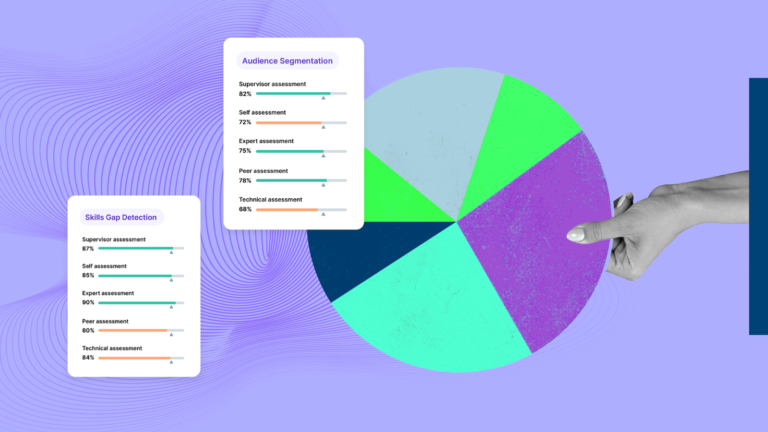
Successful programs share foundational elements. Multi-source assessments combine self-assessments with supervisor, peer, and expert feedback to build comprehensive skill profiles, addressing perception gaps and providing credible baselines for development decisions.
AI-powered skills gap analysis identifies deficiencies in current role requirements and growth edges representing new capabilities needed for expanded effectiveness. This prioritizes targeted learning paths maximizing developmental impact.
Individualized development plans outline specific competency gaps alongside stretch assignments, coaching, mentoring, and training opportunities with timelines and metrics. Competency mapping links gaps to SMART objectives using interactive skills maps tailored to leadership levels.
Progress tracking monitors development through quantitative KPIs like skill growth and engagement scores combined with qualitative reviews. 360-degree feedback conducted before and after interventions ensures development remains visible and accountable. Leadership pipeline building identifies high-potentials using 9-box grids and readiness scores, supporting succession planning through bias-reduced evaluations.
Types of leadership development programs
Leadership development takes varied forms addressing different needs. Executive coaching pairs senior leaders with experienced coaches for personalized guidance on strategic challenges and organizational influence. These intensive relationships address complex scenarios requiring confidential exploration.
Mentorship programs connect emerging leaders with experienced executives providing career guidance and organizational navigation support. Rotational assignments expose leaders to cross-functional operations, building broader business acumen while testing capabilities in unfamiliar contexts.
Cohort-based programs bring peer groups together for shared learning, creating support networks extending beyond formal sessions. Action learning initiatives assign teams to solve real business challenges, integrating skill development with organizational impact. Virtual academies deliver scalable training through digital platforms, enabling global reach and flexible scheduling.
Organizations increasingly blend these approaches. Some create fast-track programs for high-potential talent, while others democratize access to develop leadership throughout the organization. The choice depends on strategic priorities, resources, and culture.
Why leadership development programs matter in 2026
33% of organizations prioritize leadership development as a future talent priority, with 58% ready to tackle it immediately. This urgency reflects recognition that leadership capability directly influences organizational performance.
The 2026 business environment demands leaders who navigate constant change, manage distributed teams, and drive innovation while maintaining engagement. Traditional command-and-control approaches fail in environments requiring agility, collaboration, and rapid adaptation. 27% of talent development professionals identify leadership development as a top organizational challenge, signaling both recognized need and complex undertaking.
Business impact and ROI
Leadership development delivers measurable returns across multiple dimensions. Organizations with strong development see improved employee engagement correlating directly with productivity, customer satisfaction, and profitability. Succession planning becomes more robust when organizations systematically develop internal talent, reducing reliance on external hires while preserving institutional knowledge.
Decision-making quality improves as leaders develop strategic thinking and analytical capabilities. Better decisions compound over time, steering organizations from costly missteps while identifying opportunities competitors miss. Team performance rises under skilled leaders who set clear direction, remove obstacles, and maintain motivation, with one effective leader elevating performance across dozens of team members.
Cost and ROI benchmarks: Cohort-based programs range $1,500-$5,000 per participant,executive coaching $10,000-$25,000+ for 6-12 months, and enterprise platforms $35-$500 monthly. Poor leadership costs 1.5-2x salary in turnover, while effective programs often deliver payback under one year through retention and productivity gains.
Budget guidance: Allocate 5-10% of a leader’s annual salary to development, with 58% of organizations spending >$1,000 per year per senior learner.
Addressing the leadership skills gap
60% of first-time managers received no training upon transitioning to leadership roles. This preparation gap creates painful transitions where newly promoted managers struggle, teams suffer, and organizations lose productivity during extended learning curves.
Critical skill shortages plague organizations across levels. Managing change emerges as one of the greatest gaps alongside setting strategy. The ability to function in constant change gained importance, withemotional intelligence showing a 48% increase in priority for remote and hybrid environments. Managing conflict gained priority, with 53% viewing it as more important in 2024 versus 2023.
The gap between needed skills and current capabilities creates strategic vulnerability. Organizations lacking leadership depth struggle to execute growth strategies, navigate disruptions, or capitalize on market opportunities.
Real-world impact: Leadership development success stories
Hitachi Energy: Reversing high turnover through leadership behavior change
Hitachi Energy faced high employee turnover due to unstable leadership and unsupportive work environments. The program emphasized behavior change linked to team culture using Human Synergistics’ Leadership/Impact® tool, with structured follow-ups at 3-12 months post-training tracking habits and business outcomes. Implementation integrated coaching and manager check-ins aligning leadership behaviors with organizational stability goals.
Results: Salaried turnover decreased by 80%, and hourly turnover dropped 25% within one year. The key lesson: measure ripple effects on teams with baseline comparisons and design evaluation from program start to tie learning to business goals.
Microsoft: Cultural transformation through human-centered leadership
Microsoft addressed stagnation and siloed culture through a leadership overhaul under CEO Satya Nadella. The “Model, Coach, Care” framework structured development around empathy, growth mindset, and coaching at all levels, embedding values organization-wide through coaching-driven initiatives.
Results: Employee engagement scores rose significantly, contributing to a $2 trillion market cap increase. The program modeled emotional intelligence-driven leadership as a benchmark, demonstrating that human-centric frameworks yield sustained business growth.
Adobe: Continuous feedback replacing annual reviews
Adobe tackled limitations of rigid annual reviews hindering agility in fast-paced environments. The “Check-In” model replaced traditional reviews with ongoing coaching, goal alignment, and development discussions, rolled out as blended leadership training promoting frequent, empathetic interactions.
Results: Improved retention and performance metrics aligned with industry trends of 59% retention gains from leadership programs, alongside higher engagement and promotion readiness. The lesson: shifting to continuous feedback boosts leadership effectiveness and workforce agility.
Cross-industry insights: What high-impact programs deliver
Research across sectors shows 80% business outcome improvements in aligned programs,59% retention gains, and25% better overall business performance. Coaching led to 85% outperformance in resilience. High-impact programs use blended methods tied to goals with 3-12 month checkpoints, combining instructor-led training preferred by 56% of leaders with follow-ups for sustained application.
Key takeaway: align with strategy from inception, track long-term behavior via team metrics like promotion rates and engagement, and leverage tools like AI for 20% faster skill gains to close gaps.
Common implementation challenges and how to overcome them
Understanding obstacles helps organizations avoid expensive failures. Research identifies five persistent challenges based on practitioner experiences from 2023-2025.
Top 5 implementation obstacles
Disconnect between content and business strategy represents the most widely reported issue. Generic training on communication skills fails to address strategic priorities. Solution: Anchor competencies to priorities through executive involvement, shifting from “skills training” to outcome-focused plans with real business challenges.
Lack of on-the-job application creates a persistent challenge where theory-focused programs yield no behavioral change. Leaders complete training but revert to old habits in unsupportive environments lacking coaching. Solution: Use experiential methods like role-plays and simulations with spaced learning, coaching, and performance-linked expectations for continuous practice.
Difficulty measuring ROI makes proving impact beyond completion rates challenging. Without systems tracking long-term change, stakeholders redirect funds despite investments. Solution: Adopt tools and dashboards tracking behavior and business KPIs, focusing on competencies like problem-solving tied to productivity and team morale.
Poor technology integration causes resistance as rapid tech evolution outpaces HR capabilities. Leaders resist digital tools due to poor evaluation or misalignment. Solution: Prioritize goals before tools; blend AI personalization and VR with human coaching, integrating performance data.
Insufficient personalization occurs when one-size-fits-all approaches ignore individual needs and lack coaching support. Solution: Tailor via assessments, pair with mentoring for real-world application, and foster lifelong learning cultures.
As one practitioner notes: “Leadership development is no longer about checking boxes; it’s about delivering measurable business results.” Another observes: “Traditional training often focuses on theory rather than practice, leading to gaps between learning and application.”
Essential elements of a successful leadership development curriculum
A curriculum for program success balances breadth and depth across competency domains. 70% of respondents rate mastering wider ranges of effective leadership behaviors as important for meeting business needs, requiring integrated capabilities addressing complex challenges.
Effective curricula structure content around adult learning principles, connecting concepts to participants’ real work contexts. Content progresses from awareness to practice to mastery with reinforcement supporting behavioral change. The curriculum should address both technical challenges with known solutions and adaptive challenges requiring experimentation and new approaches.
Strategic leadership skills
Strategic leadership forms the foundation for organizational direction-setting. Leaders must think beyond immediate demands to anticipate trends, identify opportunities, and position organizations for sustained advantage. Scenario planning helps prepare for multiple futures rather than betting on single forecasts. Leaders develop capabilities in business acumen, competitive analysis, and strategic planning while learning resource allocation decisions balancing competing priorities.
Vision development and communication enable leaders to inspire commitment to long-term direction. Leaders craft compelling visions balancing aspiration with credibility, translating vision into actionable strategies. Communication skills ensure vision cascades throughout organizations, guiding daily decisions.
Interpersonal and communication skills
Leadership effectiveness hinges on interpersonal capabilities building trust, fostering collaboration, and inspiring performance. Active listening forms the foundation, requiring leaders to suspend judgment and demonstrate genuine curiosity about perspectives, building psychological safety where teams share concerns freely.
Feedback delivery represents a critical skill many struggle to master. Effective feedback is specific, timely, balanced, and behavior-focused. Leaders deliver developmental feedback maintaining relationships while driving improvement, addressing issues directly without creating defensiveness.
Conflict resolution skills enable constructive navigation of disagreements. Rather than avoiding conflict, skilled leaders surface differences early, facilitate dialogue exploring underlying interests, and guide teams toward solutions honoring multiple perspectives.
Operational excellence and decision-making
Operational leadership ensures strategies translate into execution and results. Leaders understand how work gets done, identify bottlenecks, and continuously improve processes while managing risks. Decision-making frameworks help navigate complex choices with incomplete information and time pressure, distinguishing between reversible decisions requiring speed and irreversible decisions demanding analysis.
Performance management enables leaders to set clear expectations, monitor progress, and course-correct. This includes selecting meaningful metrics, establishing accountability, and conducting performance conversations developing rather than judging. Leaders diagnose performance issues accurately, distinguishing between skill gaps, motivation challenges, and systemic obstacles.
Change management and innovation
Change management represents one of the most critical capabilities. Leaders must build change readiness, communicate effectively, engage stakeholders, and sustain momentum. Roughly 70% of transformations fail due to senior leaders’ deficiencies in engagement and human connection.
Change leadership begins with building the case for change, helping people understand why current approaches no longer suffice. Leaders create urgency without panic, painting compelling future pictures while acknowledging transition difficulty. They anticipate resistance, recognizing it often contains valuable information about implementation challenges.
Innovation leadership creates environments where experimentation thrives. Leaders balance innovation with operational stability, allocating resources for exploratory projects while maintaining core performance. They develop rapid prototyping mindsets testing ideas quickly, learning from failures without punishing them.
Building a leadership development program: Step-by-step framework
Creating programs requires systematic planning aligning development with organizational strategy while addressing capability gaps. This framework ensures programs deliver business impact rather than checking training boxes. Each step builds on previous ones, creating integrated approaches moving from assessment through design to implementation and measurement.
Step 1: Assess current leadership capabilities and organizational needs
Comprehensive assessment creates the foundation for targeted development. Conduct multi-source assessments combining self-assessments, supervisor evaluations, peer feedback, and expert input identifying strengths, gaps, and high-potentials. Use skills profiles, 9-box grids, and readiness indicators for objective evaluations reducing bias.
Assessment should examine current state and future requirements. What capabilities exist today? What will the organization need in three to five years given strategic direction and environmental trends? The gap determines development priorities.
Multiple assessment methods provide richer insight. 360-degree feedback reveals how leaders are perceived. Behavioral assessments identify natural tendencies and blind spots. Simulations test capabilities in controlled environments. Patterns across the leadership population inform program design about content, audience targeting, and resource allocation.
Step 2: Define clear program goals and success metrics
Program goals translate assessment insights into specific, measurable targets. Define role-specific competencies, such as “develop three-year business plans” for managers, using customizable career maps aligning skills with leadership levels.
SMART goals provide clarity and accountability. Rather than vague aspirations, effective goals specify “increase strategic thinking scores by 20% within 12 months as measured by 360-degree feedback and demonstrated through business plan development.”
Success metrics should span multiple levels. Leading indicators track participation, engagement, and immediate skill acquisition. Lagging indicators measure behavior change, business impact, and ROI. Balanced approaches recognize leadership development produces results over time.
Step 3: Design the learning experience and curriculum
Curriculum design translates goals into learning experiences building targeted capabilities. Outline gaps and activities including stretch assignments, training, coaching, and mentoring with timelines and metrics. Automated career paths, gap analysis, and recommended learning enable personalization at scale.
Effective curricula balance multiple learning modalities. Workshops build foundational knowledge, simulations enable safe practice, stretch assignments provide real-world application, and coaching offers personalized guidance. Content should be sequenced for progressive skill building, beginning with self-awareness and progressing to mastery.
Trade-off consideration: Organizations face fundamental tension between standardized programs scaling efficiently and customized approaches addressing specific needs. Best practice involves creating “core + custom” models where 60-70% of content remains consistent while 30-40% adapts to business unit or level-specific challenges.
Step 4: Select delivery methods and learning formats
Delivery method choices significantly impact accessibility, engagement, and effectiveness. In-person programs create immersive experiences with strong peer bonding but require travel. Virtual programs offer flexibility and scalability but demand disciplined facilitation. Hybrid approaches blend advantages while managing complexity.
Cohort-based programs build peer learning communities where participants support each other beyond formal sessions. Self-paced digital learning provides flexibility for busy leaders through microlearning modules delivering focused content in short segments. Format should match content and objectives—strategic thinking develops through extended reflection, while skill practice requires repetition and feedback.
Step 5: Secure executive sponsorship and resources
Executive sponsorship proves essential for success. 71% of organizations offer leadership training, yet 75% rate programs as not very effective. This gap often stems from insufficient executive engagement beyond initial approval.
Active sponsorship means executives participate in design, attend sessions, share leadership insights, and visibly champion development. This signals importance while providing participants access to senior perspectives. Resource allocation must be sufficient and sustained, with adequate investment in facilitators, coaches, materials, platforms, and participant time.
Choosing the right approach: Decision framework and alternatives
Selecting appropriate leadership development requires evaluating organizational context, needs, and constraints. No single program works universally.
When to consider different approaches
Organizations under 200 employees may find cohort-based programs more cost-effective than enterprise platforms, while enterprises with 1,000+ leaders benefit from scalable technology solutions enabling personalization at scale.
Organizations new to leadership development should start with focused cohort programs before investing in comprehensive technology. This builds foundational capability and organizational learning about what works. Mature organizations with established programs can leverage AI-powered platforms to enhance personalization and measurement.
High-growth companies requiring rapid leadership pipeline building benefit from blended approaches combining accelerated cohorts with digital learning and coaching. Stable organizations focusing on continuous improvement may emphasize mentoring and rotational assignments developing breadth.
Alternatives and considerations
Traditional leadership development approaches include external executive education programs from institutions like Harvard or Wharton offering prestige and networking but at premium costs. Consulting-led custom programs from firms like DDI or CCL provide tailored content with expert facilitation yet require significant investment. Internal development initiatives offer maximum customization and culture fit but demand substantial internal expertise and resources.
Build vs. buy decisions hinge on multiple factors. Building internal programs provides customization and ownership but requires expertise, time, and ongoing maintenance. Buying external solutions offers proven frameworks and faster implementation yet may lack organizational specificity. Many organizations blend approaches, using external frameworks as foundations with internal customization.
AI-powered platforms like SkillPanel excel at scale and personalization through skills intelligence mapping workforce capabilities. However, smaller organizations or those new to leadership development may find greater value starting with focused cohort programs before comprehensive technology investments. Platform selection should consider integration with existing HR systems, user experience, analytics capabilities, and total cost of ownership.
Leadership development programs in companies: Implementation best practices
Implementation quality determines whether well-designed programs deliver intended results. Organizations should align design with organizational needs through assessments, conduct skills gap analyses, and review business priorities targeting role-specific leadership skills.
Structured, multi-modal pathways with spaced learning and real-world application work better than one-off events. Sequence development over time through blended formats including interactive courses, simulations, action projects, and coaching. Include role-specific milestones for first-time managers to senior leaders matching development to responsibility levels.
Securing executive sponsorship while integrating with performance and career systems embeds development into organizational fabric. Gain visible CEO participation, allocate resources, and link programs to individual development plans, performance metrics, succession planning, and promotions for sustained commitment.
Measurement focused on behavior change and business outcomes rather than completion metrics demonstrates value. Track leading and lagging indicators like skill application, peer feedback, engagement scores, retention, and team performance. Iterate based on pilots and continuous feedback improving programs over time.
Creating leadership development programs for different levels
Programs for managers, emerging leaders, and executives require distinct approaches reflecting different responsibilities. Entry-level programs build foundational capabilities, mid-level programs emphasize operational excellence and team leadership, executive programs focus on strategic leadership and organizational influence.
Hyundai Motor India launched its ASE Core Talent Programme in July 2025 targeting 100 high-potential employees. Developed with IIM Tiruchirappalli and MDI Gurgaon, the program features phased modules including business case simulations, leadership labs, cross-functional problem-solving, and role plays building resilience, agility, and readiness.
Cirque du Soleil integrated the HBDI framework addressing real business challenges like team alignment. This experiential approach involved action learning tied to strategic priorities, achieving improved alignment, boosted credibility, and 80% transfer rates compared to traditional training.
Employee leadership development programs for emerging leaders
Emerging leader programs target individual contributors showing leadership potential and early-career managers transitioning from technical expert to people leader roles. Programs emphasize self-awareness, interpersonal effectiveness, and fundamental management capabilities like delegation, feedback, and goal-setting.
Participants often struggle with identity transitions from doing work themselves to achieving results through others. Programs should address this psychological shift explicitly. Experiential learning proves particularly valuable, with simulations, role plays, and case studies enabling skill development without real-world consequences.
Leadership development programs for managers
Mid-level manager programs address unique challenges of leading through others while executing strategy within constrained resources. These leaders translate executive direction into team action while advocating for team needs with senior leadership.
Strategic thinking becomes increasingly important as managers influence unit direction and resource allocation. Programs develop capabilities in business acumen, competitive analysis, and planning. Team development represents a core responsibility, addressing talent acquisition, performance management, and creating high-performance cultures.
Only 15% of employees say their manager helped build career development plans in the past six months, showing declining managerial support. Programs must equip managers with coaching capabilities and time management approaches prioritizing development despite operational demands.
Executive leadership development initiatives
Executive programs focus on enterprise leadership—setting vision, shaping culture, driving transformation, and building organizational capabilities. Participants lead large, complex organizations where decisions impact thousands of people. Development needs are highly individualized given diverse backgrounds and unique challenges.
One-on-one executive coaching often proves more effective than classroom training at this level. Coaches provide confidential sounding boards for complex decisions and offer perspective based on experience with other senior leaders. Peer learning with other executives creates valuable networks and insight-sharing opportunities.
Leveraging technology and digital learning platforms
Technology enables scalable, personalized development impossible through traditional approaches alone. Digital platforms deliver content on-demand, accommodate different learning paces, and provide analytics improving program effectiveness. However, technology should enhance rather than replace human interaction critical for development.
Learning management systems organize content, track completion, and manage logistics at scale, enabling blended approaches combining virtual and in-person experiences. Virtual classroom technologies enable live interaction despite geographic dispersion through breakout rooms, polls, and chat functions.
Mobile learning apps deliver microlearning content fitting into busy schedules. Brief videos, podcasts, and articles can be consumed between meetings or during commutes, making development more accessible. AI-enhanced platforms provide personalized recommendations based on assessment results, learning history, and career goals, augmenting human judgment for more targeted development at scale.
Measuring leadership development program effectiveness
Measurement demonstrates value, enables improvement, and maintains stakeholder support. However, measuring leadership development proves challenging because outcomes emerge over time and multiple factors influence results.
The Kirkpatrick Model provides a foundational framework with four levels. Level 1 measures reaction through participant satisfaction. Level 2 assesses learning through knowledge and skills gain. Level 3 examines behavior through on-job application via observations and 360-degree feedback three to six months post-training. Level 4 evaluates results through organizational outcomes via KPIs.
Recent updates emphasize starting evaluation at Level 4 ensuring alignment with business outcomes. This forces clarity about desired results before designing programs. The model now incorporates the performance environment—external factors influencing training transfer—recognizing that even effective development may not translate into behavior change if organizational systems create barriers.
Key performance indicators and success metrics
Leading indicators provide early signals of effectiveness. Participation rates and completion rates show engagement levels. Pre-assessment and post-assessment score changes demonstrate immediate learning. Participant satisfaction scores indicate whether experiences resonate.
Application metrics track whether participants use new skills on the job, requiring observation, self-reporting, or manager verification. Behavior change represents the ultimate individual-level outcome, requiring multi-source feedback collected over time comparing baseline to post-program evaluations. Meaningful change typically takes six to 12 months.
Business impact metrics connect development to organizational results. Team engagement scores, retention rates, productivity measures, quality indicators, and financial performance all potentially link to leadership capability. Attribution challenges require careful analysis separating leadership development effects from other factors.
Assessment methods and evaluation tools
360-degree feedback provides comprehensive perspective on leadership effectiveness by gathering input from supervisors, peers, direct reports, and sometimes customers. This multi-source approach reveals perception gaps and demonstrates behavior change over time.
Behavioral observations involve trained evaluators watching leaders during simulations, real work situations, or recorded interactions. This direct observation reduces self-report bias while providing specific feedback on observable behaviors.
Competency assessments measure capabilities against defined standards for specific leadership levels through case studies, business simulations, or structured interviews. Skill demonstration requirements ask participants to apply learning to real work challenges and present results, verifying capability transfer while creating business value.
Longitudinal tracking follows participants over extended periods assessing career progression, promotion rates, and retention. Leaders completing development programs should show stronger career trajectories than comparable leaders who don’t participate, requiring careful control group design to isolate program effects.
Common pitfalls and how to avoid them
Leadership development initiatives often fall short despite good intentions and investment. Recognizing pitfalls enables proactive prevention.
Failing to challenge outdated paradigms limits adaptability. Leaders rely on past successes and fixed styles no longer fitting complex situations. Programs must address mental models shaping behavior, not just teach new techniques applied through old thinking patterns.
Neglecting to manage polarities leads to either-or choices in contradictory situations. Effective programs help leaders hold tension between competing demands like outcomes versus efforts, developing both-and thinking rather than false choice frameworks.
Over-relying on narrow skill sets contributes to only 53% of leaders being rated very effective. Traditional skills fall short in uncertain environments requiring broader behaviors. Programs should expand leadership repertoires rather than deepening existing strengths alone.
Generic, one-size-fits-all programs ignoring individual needs and organizational context waste resources. Leaders need development tailored to specific gaps, leadership level, business context, and learning style.
Insufficient follow-through after formal training allows participants to revert to old behaviors under pressure. Programs need reinforcement mechanisms—coaching check-ins, peer accountability, manager support, measurement systems—sustaining focus beyond initial learning.
Lack of alignment between leadership development and other talent systems creates conflicting messages. If programs emphasize collaboration but performance management rewards individual achievement, leaders face mixed signals about desired behaviors.
Emerging trends in leadership professional training for 2026
Leadership development evolves continuously to address emerging challenges and leverage new capabilities. Organizations building programs for 2026 must anticipate trends shaping future requirements.
AI-enhanced leadership development
AI strategy integration into people-first leadership represents a critical shift. Leaders must move AI from technology rollouts to human-centered strategies, focusing on upskilling, workflow redesign, and governance driving enterprise-wide trust. 74% of executives expect AI to redefine roles by 2030, requiring leaders navigating this transformation.
40% of CHROs cite insufficient AI knowledge as a concern. HR priorities include addressing these gaps, recruiting talent comfortable with AI, and balancing efficiency gains with maintaining long-term talent pipelines weakened by entry-level cuts.
Human-centered AI leadership emphasizes developing leaders treating AI as collaborators while questioning outputs for bias. Leaders champion adoption, boosting employee positivity from 15% to 55% when AI receives leadership support. Programs must address high leader stress at 71% while building capability to lead AI-enhanced teams.
Hybrid and remote leadership competencies
Distributed work environments demand new leadership capabilities beyond traditional in-person management. Leaders must build team cohesion across distance, maintain culture without physical proximity, and support wellbeing when work-life boundaries blur.
Virtual communication skills become essential as leaders conduct more interactions through video, chat, and asynchronous channels. Remote team engagement requires deliberate effort to maintain connection and motivation. Leaders develop skills in one-on-one coaching through video, celebrating wins virtually, and creating interaction opportunities replacing spontaneous office conversations.
Asynchronous collaboration management enables productivity across time zones and flexible schedules. Leaders establish norms for response times, documentation standards, and decision rights. Performance management shifts from presence-based assessment to outcome-focused evaluation, measuring results rather than activity.
Focus on inclusive leadership and DEI
Inclusive leadership capabilities enable organizations to leverage diverse talent while creating equitable opportunities. Leaders learn to recognize and mitigate biases, create psychologically safe environments where all voices are heard, and ensure systems produce fair outcomes.
Cultural competence helps leaders navigate global teams and multicultural environments, understanding different communication styles, decision-making norms, and values shaping professional behavior. Equity-focused leadership addresses systemic barriers creating unequal access to opportunities and advancement.
Allyship and sponsorship skills help leaders actively support colleagues from underrepresented groups through advocacy, visibility, and access to opportunities. This moves beyond passive support to active intervention when bias or exclusion occurs.
Getting started: Your leadership development program action plan
Launching successful initiatives requires methodical planning and disciplined execution. This action plan provides a roadmap for organizations ready to transform leadership capabilities.
Begin with comprehensive needs assessment combining multiple data sources. Multi-source assessments integrate self-evaluations, supervisor input, peer feedback, and expert reviews building comprehensive skill profiles. Add business strategy analysis, competitive benchmarking, and stakeholder interviews understanding development priorities from multiple angles.
Define specific, measurable goals aligned with strategic priorities. What leadership capabilities would most accelerate strategic execution? Where do current gaps create greatest risk or opportunity cost? Translate these insights into SMART objectives guiding program design while enabling measurement.
Design the development experience using blended approaches combining formal learning with experiential application. Create individualized development plans outlining specific competency gaps, stretch assignments, coaching, mentoring, formal training, and self-directed learning with timelines and metrics.
Pilot programs with carefully selected cohorts before full rollout. Start with 15 to 25 participants representing target audience diversity while showing strong engagement likelihood. Gather extensive feedback, measure outcomes rigorously, and refine approaches based on lessons learned before scaling.
Secure visible executive sponsorship through active participation rather than passive approval. Involve senior leaders in program design, ask them to share leadership lessons with participants, and ensure they reinforce development priorities through their own behaviors and decisions.
Launch with clear communication about program purpose, expectations, and benefits. Help participants understand why this development matters for them and the organization. Set realistic expectations about time commitment, challenge level, and expected outcomes building commitment.
Monitor progress through leading and lagging indicators tracking participation, learning, behavior change, and business impact. Use data to identify struggling participants needing additional support and refine program elements not achieving desired results.
Build sustainability through integration with existing talent systems. Connect leadership development to succession planning, performance management, promotion decisions, and compensation. Create alumni networks and refresher opportunities maintaining development momentum beyond initial programs.
Scale thoughtfully as pilot results demonstrate effectiveness. Expand to additional cohorts while maintaining quality and customization. Leverage technology platforms enabling personalization at scale rather than defaulting to generic programs as volume increases.
This comprehensive approach to leadership development transforms organizational capability systematically. By following the frameworks, best practices, and action steps outlined here, organizations build leadership pipelines driving sustained competitive advantage through 2026 and beyond. Leadership development is not a one-time initiative but an ongoing commitment that compounds value as capabilities strengthen throughout the organization.