AI readiness for HR teams: How to know if your people operations are ready for what’s already here
| Reading time:


Most HR leaders say they’re preparing for AI. But preparation looks very different from actual readiness. Deploying a chatbot for FAQs or running a one-hour AI awareness session does not make your team ready for what’s coming. Real AI readiness for HR teams means your people, data, processes, and governance are all aligned well enough to extract genuine value from AI, at scale, without creating new risks along the way.
The numbers tell a sobering story. According to the Cisco AI Readiness Index 2025, only 13% of organizations globally qualify as “Pacesetters,” meaning fully prepared to deploy and scale AI responsibly across strategy, infrastructure, data, talent, and governance. Meanwhile, the 2025 Stanford AI Index reports that 78% of organizations are already using AI in some form. That gap between adoption and readiness is exactly where HR teams are getting stuck.
This article works through what genuine AI readiness looks like for HR functions, how to assess where your team stands today, and how to build a practical path forward.
What AI readiness actually means for HR teams
AI readiness is not a technology question. It is a workforce question. The distinction matters because most maturity frameworks focus on IT infrastructure, data architecture, and software governance. Those dimensions matter, but they bypass the issue that HR leaders face most directly: which roles are changing, which employees can adapt, and what needs to happen before those people fall behind.
SkillPanel, the platform behind this article, defines AI readiness specifically at the intersection of role-level AI risk and employee readiness. Role-level AI risk measures how automatable or impacted a given role is by AI. Employee readiness covers three human dimensions: the skills an employee has, their perception of AI (whether they see it as opportunity or threat), and their willingness to change how they work. The combination of those two data sets determines which workforce path is right for each person and team, whether that means accelerating, supporting, or redeploying them.
This framing shifts AI readiness from a static maturity score to an operational decision engine. It answers not just “are we ready?” but “who specifically needs to move in which direction, and when?”
Why HR must lead AI adoption — not just implement it
There is a meaningful difference between HR implementing AI tools and HR leading AI adoption. Implementation is a technical act. Leadership is a strategic one. When HR limits itself to running software rollouts and policy compliance, it cedes influence over arguably the most important organizational transformation of the decade.
According to McKinsey, almost 90% of leaders expect AI deployment to drive revenue growth over the next three years, with 51% anticipating a revenue increase of over 5% from generative AI. Realizing that growth requires workforce adoption, reskilling, and governance, all of which sit inside HR’s remit. If HR is not at the table when those priorities are set, someone else will define them without the people expertise those decisions demand.
The risk of HR sitting on the sidelines
When HR stays passive, AI implementation tends to be disjointed. Tools get adopted function by function, without coherent data standards, consistent policies, or any structured support for employees navigating role changes. Deloitte’s [2026 Global H](https://skillpanel.com/blog/human-capital-planning/)uman Capital Trends finds that 84% of companies have not redesigned jobs around AI, leaving workers in roles misaligned with the tools now expected of them.
The governance risks compound this. Without HR shaping how AI is used in hiring, performance, and promotion decisions, organizations are exposed to bias, privacy violations, and compliance failures. Research on AI deployment also finds that 37% of organizations are using AI only at a surface level, with little change to underlying business processes. Surface-level AI generates surface-level returns, and building the foundation twice is considerably more expensive than building it correctly the first time.
What it looks like when HR leads confidently
HR teams that lead define the AI use case strategy alongside business leaders, not after the fact. They build workforce readiness plans that segment employees by skills, perception, and willingness before launches begin. They design governance frameworks that protect employees and the organization in tandem. And they track progress against business outcomes, not just training completion rates.
A 2024 Gartner survey found that 88% of HR leaders reported their organizations had not realized significant business value from AI tools, despite active deployment, and noted that AI deployment decisions were frequently made without HR’s involvement. The connection is direct. When HR leads, AI delivers.
The 5 pillars of AI readiness for HR teams
Building AI readiness is not a single initiative. It is the cumulative result of strengthening five interconnected areas. Each one is necessary, and weakness in any one tends to limit progress in the others.
Real organizations have had to navigate these pillars under pressure. Zillow’s HR and people leaders recognized in 2023 that generative AI would significantly change how employees worked, but adoption was low and uneven. According to i4cp’s case study, the CHRO framed AI as a strategic capability and created cross-functional governance covering HR, L&D, technology, and business leaders to set guardrails and use policies before any broad rollout. Alongside this, Zillow built a company-wide AI learning program with role-based use cases and internal champions curating AI playbooks for different teams. The result was rapid growth in everyday generative AI use, measurable time savings on content creation and analysis, and improved employee confidence with AI tools. Johnson & Johnson took a different entry point. Facing limited visibility into current skills and job-based workforce planning that was too slow for AI-era disruption, J&J’s HR team implemented an AI-based skills inference system that derived employee capabilities from roles, experience, and learning history. Per i4cp’s documentation, this produced measurable gains in closing priority skills gaps and better alignment between learning spend and strategic capabilities. Together, these cases show that there is no single correct entry point into AI readiness; what matters is having a structured plan that connects the pillars.
Strategic alignment: Does leadership have a clear AI vision?
AI initiatives without strategic alignment are expensive experiments. The McKinsey 2026 organizations report is explicit: AI delivers measurable value when it is clearly linked to strategic goals and business outcomes, and when organizations define an AI vision that is actively adopted. For HR, strategic alignment means knowing which people processes AI should touch first and why. That requires a clear answer to which business outcomes HR AI initiatives are meant to support. Is the priority faster hiring? Reduced attrition? Faster time-to-competence for critical roles? Without that anchor, AI investments scatter across disconnected pilots that each prove something but add up to very little.
Data readiness: Is your HR data clean, accessible, and trustworthy?
Even the most capable AI model is only as good as the data fed into it. For HR, this is a persistent and frequently underestimated problem. A 2024 global study found that while 60% of organizations say AI is a key influence on their data programs, only 12% report their data has sufficient quality and accessibility for effective AI implementation. In the same study, 64% named data quality as their top data integrity challenge.
HR data is particularly prone to these issues. Skills data is often self-reported and unverified. Employee records sit across multiple disconnected systems. Performance data is inconsistently structured across teams and geographies. Before AI can help HR make better workforce decisions, the underlying data must reflect reality. SkillPanel addresses this by using verified skills data grounded in actual tasks and outputs rather than self-attestation, giving HR a more reliable foundation for AI-driven workforce planning.
Skills and capability: Can your team actually use AI effectively?
Confidence and actual capability are two different things. The same 2024 study found that 60% of respondents cited a lack of AI skills and training as a significant challenge in launching AI initiatives. Within HR specifically, HR AI adoption rose from 26% in 2024 to 43% in 2025 according to SHRM 2025 research, showing meaningful progress but also a substantial gap still being closed.
The capability gap is not just about knowing which tools exist. It is about understanding how to interpret AI outputs, identify where AI recommendations should be questioned, and make decisions that combine data with human judgment. These skills require structured practice, not just awareness sessions.
Process maturity: Are your HR processes structured enough for AI to enhance?
AI does not fix broken or inconsistent processes. It amplifies them. If your recruitment process has unclear qualification criteria, an AI screening tool will apply those unclear criteria at scale. If your performance review process lacks standardized competency definitions, AI-generated insights will reflect that inconsistency throughout.
Process maturity means having HR workflows that are documented, consistently applied, and structured well enough for AI to add precision rather than confusion. Personio’s four-step HR AI readiness model advises teams to identify manual, repetitive, and error-prone processes as the first candidates for AI enhancement. These are the areas where AI delivers the clearest lift and where early wins build internal confidence for broader adoption.
Governance and ethics: Do you have guardrails in place?
Governance is often treated as a final step in AI deployment, but it should be a precondition. A 2025 enterprise HR meta-analysis reports that 86% of companies have clear AI policies in place. However, having a general AI policy is different from having HR-specific governance that addresses the particular risks of using AI in hiring, promotion, and employee performance decisions.
HR AI governance needs to address bias risk in candidate screening algorithms, data privacy in employee records processing, explainability requirements when AI informs people decisions, and clear accountability for outcomes when AI is involved. These guardrails need to exist before AI tools go into production, not after the first compliance incident.
How to assess your current AI readiness level
The most important thing to know before building an AI roadmap is where your team actually stands, not where you think it stands and not where you hope it stands after the next training cycle, but where it is right now across each of the five pillars.
The AI readiness spectrum: From awareness to advanced adoption
Most frameworks organize AI readiness along a spectrum. Cisco’s model classifies organizations as Pacesetters, Chasers, Followers, or Laggards. Deloitte describes organizations as operating in a status quo mode, a cost-efficiency automation stage, or a value-creation transformation stage. For HR teams, McKinsey’s 2025 workplace AI report found that only 1% believe they have reached AI maturity, while SHRM’s 2026 data shows 39% of HR professionals report AI adoption in their function, with another 23% still piloting or experimenting.
Understanding where your team sits determines which investments will have the most leverage. Teams in early awareness need fundamentals. Teams in active piloting need structure and governance. Teams approaching scale need measurement and adaptation systems.
Scored self-assessment: Audit each pillar
Answer yes (1 point) or no (0 points) to each question across the five pillars. Total your score to identify where to focus first.
Strategic Alignment
- Does your leadership have a documented AI vision for HR?
- Can you name the top three business outcomes your HR AI initiatives are meant to support?
- Is there a cross-functional sponsor who owns AI adoption beyond IT?
Data Readiness
- Is your employee data integrated across systems with no major orphaned records?
- Has your skills data been verified against actual performance in the past 12 months?
- Do you know which data sets would feed your highest-priority AI use cases?
Skills and Capability
- Has more than half your HR team completed role-specific AI training?
- Can your HRBPs critically evaluate AI-generated recommendations rather than simply accept them?
- Is there a defined, ongoing learning path for HR professionals to build AI fluency?
Process Maturity
- Are your core HR processes fully documented and consistently applied across the organization?
- Have you identified which manual, repetitive workflows generate structured enough data for AI interpretation?
- Do you have at least one HR process that has been AI-enhanced and is being actively measured?
Governance and Ethics
- Is there an HR-specific AI use policy covering hiring, promotion, and performance decisions?
- Is there a review process before any AI tool is deployed in a people decision?
- Is accountability clearly assigned when an AI output proves inaccurate or biased?
Interpreting your score:
0 to 5 points (Early Awareness): Focus on fundamentals before deploying tools. Prioritize getting leadership alignment, auditing your data quality, and establishing a basic governance policy. Piloting AI before these are in place typically produces a failed experiment rather than a proof of concept.
6 to 10 points (Active Exploration): You have building blocks in place but gaps in governance, data, or capability are limiting scale. Prioritize whichever pillar scored lowest, as it is most likely the bottleneck. Structured governance and verified skills data tend to be the most common unlocks at this stage.
11 to 15 points (Scaling): Your organization has the foundation to move from pilots to programs. Invest in measurement systems that track AI adoption and business outcomes, and design adaptable infrastructure so you can incorporate new AI capabilities as they emerge without rebuilding from scratch.
Warning signs your team is less ready than you think
Some warning signs of low AI readiness are obvious: no AI policy, no skills data, no executive sponsor. Others are subtler. If your AI pilot projects consistently stay as pilots without scaling, that often signals a process maturity or governance gap rather than a technology problem. Phenom’s 2024 State of AI and Automation for HR report evaluated nearly 500 organizations and found that 83% fell into the lowest two maturity categories, while less than 1% reached high intelligence maturity.
Other warning signs include HR teams celebrating tool deployment rather than outcome improvement; AI outputs being used to confirm existing decisions rather than challenge them; and training programs that measure completion rather than capability change. These patterns signal that AI has been adopted in name, but not in practice.
Where generative AI creates the most value in HR
Generative AI in HR is not a single capability. It is a category of tools that can reshape how HR professionals work across multiple functions. The key to capturing that value is understanding where generative AI creates leverage versus where it introduces risk without sufficient payoff.
Talent acquisition and candidate screening
Generative AI for HR is already transforming talent acquisition, particularly in high-volume hiring environments. AI can draft job descriptions calibrated to target skills, generate screening questions aligned to role requirements, and analyze candidate responses at a scale no human team can match. The Phenom study noted that 88% of retail organizations still lack advanced automated screening despite high-volume hiring needs, highlighting how much untapped potential remains in this space.
The most important readiness requirement for AI in talent acquisition is bias governance. Screening models must be regularly audited against demographic outcomes, and human review should remain part of any final selection process that affects employment decisions.
Onboarding and employee experience
Generative AI in human resources is particularly effective in onboarding, where personalization has historically been difficult to deliver at scale. AI can generate role-specific onboarding plans, surface relevant knowledge resources based on the new hire’s background, and adapt pacing based on engagement signals. The result is a faster, more confident ramp-up for new employees and significantly less manual coordination from HR.
SkillPanel supports this kind of personalization by connecting verified skills data with role requirements, enabling HR to generate onboarding experiences that reflect what a new hire already knows and what they specifically need to build first.
Learning, development, and skills gap analysis
This is where generative AI HR applications have shown some of the most compelling early results. When Siemens deployed an AI-powered learning platform, it achieved a 25% increase in course completions within key technical curricula and approximately 30% faster time-to-competence for targeted engineering roles. KPMG UK’s AI-embedded learning tools delivered a 29% reduction in time to find relevant learning resources for practitioners.
These outcomes depend on having accurate skills data to start from. Without a reliable picture of what employees actually know today, AI learning recommendations default to generic suggestions rather than targeted development. SkillPanel’s skills intelligence layer, which combines self-assessment, peer input, manager feedback, and technical evaluations, gives AI learning systems the verified input they need to generate genuinely useful recommendations.
The WEF Future of Jobs 2025 report makes the scale of this challenge clear: 39% of workers’ skills will be transformed or obsolete between 2025 and 2030, and 85% of employers plan to prioritize upskilling by 2030. Skills gap analysis cannot remain a manual, periodic exercise. It must be continuous and AI-assisted to keep pace with the rate of change.
HR operations and administrative automation
For many HR teams, the clearest initial value from generative AI in human resources comes from automating administrative tasks. Benefits queries, policy explanations, employee document generation, and scheduling coordination are all strong candidates. These use cases carry lower risk than AI in performance or promotion decisions, deliver measurable time savings quickly, and build internal confidence in AI-assisted work.
The caution here is scope. Automating administrative tasks is necessary but not sufficient to justify calling your team “AI-ready.” Administrative automation is the floor of AI value in HR, not the ceiling.
Closing the gaps: Building an AI-ready HR team
Identifying gaps is only useful if you close them. Most HR teams already know their readiness weaknesses. The harder challenge is building a structured path to address them without disrupting ongoing operations or waiting for perfect conditions that will never arrive.
Upskilling HR professionals for an AI-augmented role
McKinsey’s 2025 workplace research found that regular AI use is significantly higher when workers receive at least five hours of training combined with in-person coaching, yet only about one-third of employees report being properly trained. For HR professionals specifically, this gap is particularly consequential because they are simultaneously responsible for leading AI adoption across the organization and often the least well-supported in building their own AI capability.
Effective upskilling for HR professionals means more than one-off webinars. It requires role-specific AI literacy for recruiters, HRBPs, and L&D specialists; hands-on practice with real HR workflows; and ongoing coaching as tools evolve. The PwC 2025 Global AI Jobs Barometer found that workers with AI skills earn on average a 56% wage premium over peers without AI skills, and that skills in AI-exposed jobs are changing 66% faster than in non-AI-exposed roles. The programs you build today need to be designed for a moving target.
SkillPanel supports this by connecting verified skills data to targeted learning paths, closing the loop between identifying gaps and delivering the development interventions that address them.
Establishing governance before you scale
The most common governance mistake is treating policy development as a post-deployment task. It is far more expensive to remediate a bias incident or a privacy violation than to build the framework that prevents them. HR-specific AI governance should cover data privacy in employee records, algorithmic transparency in hiring and performance decisions, human oversight requirements for high-stakes people decisions, and regular bias audits for any model that affects employment outcomes.
A 2025 global survey found no clear consensus on who owns AI strategy across organizations, with 37% of CIOs, 30% of CTOs, and 23% of CEOs each claiming primary responsibility. That fragmentation is exactly the environment in which HR needs a clear governance mandate and documented policies to operate confidently.
Securing leadership buy-in and cross-functional alignment
McKinsey’s 2025 research identifies leaders, not employees, as the primary bottleneck to AI adoption. When leaders do not set clear direction, teams default to cautious experimentation rather than committed adoption. For HR leaders, the practical approach is to connect AI investment to outcomes that executives already care about: productivity growth, cost reduction, compliance risk, and talent retention. Tie your AI proposals to specific business problems with measurable success metrics and a governance plan that addresses predictable concerns. That framing converts abstract AI enthusiasm into fundable, executable programs. PwC’s 2025 Responsible AI survey supports this: 58% of executives say Responsible AI improves ROI and organizational efficiency, which gives HR a concrete business case for investing in governance and enablement together.
Deloitte’s 2026 Human Capital Trends emphasizes that an always-on learning and skill-building model is a measurable operating advantage for AI adoption at scale. HR is uniquely positioned to build that model, but only with the leadership mandate and cross-functional alignment to do so.
How to build your HR AI roadmap
A roadmap gives structure to ambition. Without one, AI readiness efforts tend to be reactive, shaped by vendor pitches and internal requests rather than a coherent strategy for building capability over time.
Start with a pilot: Choose one high-impact use case
The best first pilot is not the most sophisticated AI application available. It is the use case that combines high business impact with relatively low risk and high data availability. Common strong candidates for HR include AI-assisted job description drafting, personalized learning path recommendations, or skills gap analysis for a specific team or function.
The pilot’s purpose is not to prove that AI works in theory. It is to generate specific, measurable evidence about what AI delivers in your organization, with your data, in your workflows. That evidence becomes the foundation for the business case that enables broader investment.
Define success metrics before you launch
Establishing success metrics after a pilot launches is a common error that makes results impossible to interpret clearly. Before any AI initiative goes live, define exactly what improvement you expect to see and how you will measure it: time to fill a role, hours saved per week on a specific task, change in quality-of-hire scores, or reduction in time-to-competence for new hires.
SkillPanel’s board-ready AI skills scorecard supports this kind of measurement by tracking real skill growth, AI adoption benchmarks, and performance signals across teams and functions, enabling HR to report on AI ROI in business terms rather than activity metrics.
Design for adaptability as AI capabilities evolve
Generative AI capabilities are developing faster than most organizations can absorb them. An HR AI roadmap designed around today’s specific tools will need updating within twelve to eighteen months. The more durable investment is in the underlying capabilities: clean and integrated HR data, verified skills data, structured HR processes, and governance frameworks flexible enough to accommodate new use cases as they emerge.
Personio’s guidance on HR AI readiness explicitly calls for API-first architectures and ecosystem thinking, ensuring that AI tools can be connected, updated, and extended without requiring full system replacements. That adaptability is not a technical luxury. It is a strategic requirement for any organization planning to stay competitive as AI continues to evolve.
Your next step: Turning readiness into action
The question “are we ready?” is worth asking once. But the more productive question for HR leaders to ask now is “where exactly are our biggest gaps, and what do we build first?” Readiness is not a binary state. It is a continuous process of closing gaps between current capability and what the next stage of AI adoption requires.
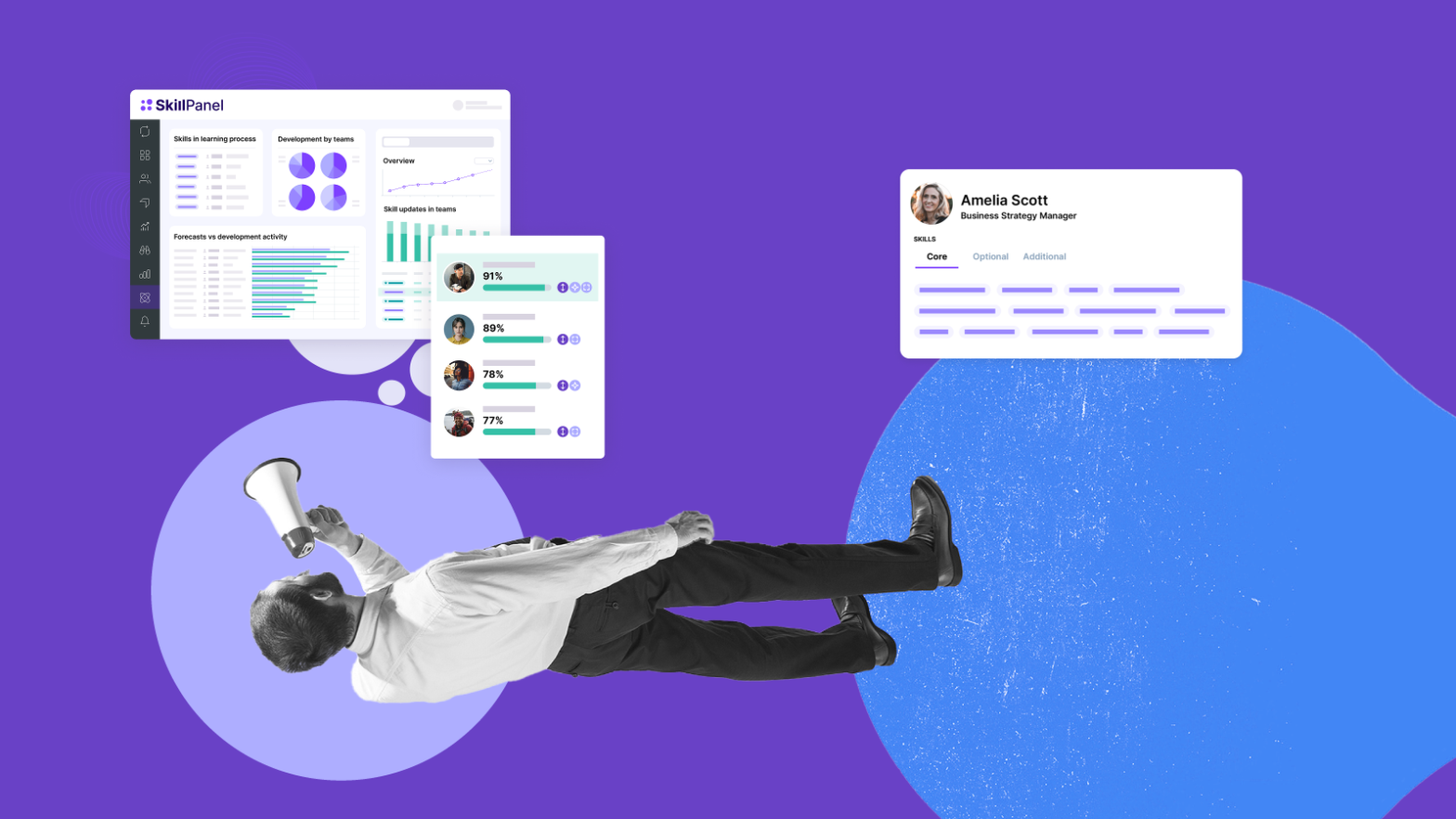
SkillPanel treats AI readiness as exactly that kind of connected process, turning assessment data into clear workforce execution. The platform shows which roles carry the highest AI disruption risk, segments employees by their skills, perception, and willingness to adapt, and automatically generates upskilling cohorts, redeployment pathways, and workforce transition plans. Insights must drive decisions, not sit in static dashboards.
The Cisco AI Readiness Index notes that 59% of organizations believe they have at most one year to implement AI strategies before losing competitive ground. That urgency is real, but urgency without structure produces the same surface-level adoption that already characterizes most of the market.
The HR teams that will lead through this period are those that treat AI readiness as a workforce intelligence problem, not just a technology upgrade. They are mapping role risk against employee capability, building governance frameworks before the pressure mounts, tracking verified skills data rather than self-reported claims, and designing learning programs tied to real work outcomes rather than course completion percentages.
If your team is ready to move from assessing readiness to acting on it, SkillPanel provides the skills intelligence, role mapping, and AI readiness analytics to turn that ambition into a concrete workforce execution plan. Get started to see where your organization stands and which moves matter most right now.