Career development software: The tools that give employees a reason to grow with you instead of leaving for someone else
| Reading time:


Skills gaps are widening even as companies pour money into hiring. Nearly two-thirds of managers doubt their teams can keep pace with future skill demands, and most employees admit they haven’t mastered what their current job already requires. That gap between what organizations need and what their people can do is exactly why career development software has moved from a nice-to-have HR tool to a core part of workforce strategy heading into 2026.
This guide breaks down what career development software actually does, the features worth paying for, and how platforms like Deel Engage, Paycor, Dayforce, Fuel50, TalentGuard, Nestor, SAP SuccessFactors, and Darwinbox stack up, trade-offs included. We’ll also walk through how to choose and roll out a platform without wasting budget on features your organization won’t use.
What is career development software, and why it matters in 2026
Career development software gives organizations the tools to assess employee skills, map career trajectories, and build personalized growth plans, all in one connected system. Instead of career growth living in scattered spreadsheets or annual review forms, a career development platform ties skills data, learning content, and internal opportunities together so both employees and managers can act on it.
The urgency here is real. Gartner reports that 64% of managers don’t believe their employees can keep pace with future skill needs, and 70% of employees admit they haven’t mastered the skills their current jobs require. At the same time, hiring externally isn’t solving the problem. ManpowerGroup’s 2026 survey found that 72% of employers worldwide struggle to fill roles, and for the first time, AI skills have overtaken every other category as the hardest to find. Building capability from within, rather than waiting for a perfect external candidate, has become the more realistic strategy.
How career development platforms differ from career pathing and career planning tools
People often use ” career pathing tools,” “career planning software,” and “career development platforms” interchangeably, but they aren’t quite the same thing. Career pathing software focuses narrowly on mapping potential role progressions, showing an employee what comes next and what skills that next step requires. Career planning tools tend to be more static, often little more than a documented goal an employee revisits once a year.
A full career development platform goes further. It combines pathing with skills assessments, personalized learning recommendations, mentoring connections, and goal tracking, creating a continuous loop rather than a one-time exercise. SkillPanel’s approach to career pathing illustrates this well: rather than a single linear track, its career pathing methodology maps multiple potential paths per role, both upward and lateral, and links each one to the specific competencies required, broken into clear, achievable milestones. That’s the difference between a static plan and a living development system.
The business case: Skills gaps, turnover, and internal mobility
The financial case for career manag ement development tools has gotten stronger, not weaker, as talent markets tighten. Gartner’s research points out that organizations lose performance gains when they insist employees demonstrate full proficiency before moving into critical roles, which argues for a more fluid, skills-based internal mobility model rather than rigid job requisitions.
The numbers back this up. Organizations that adopt structured career pathing software report 57% higher retention compared to those without formal programs, and companies implementing structured career development can save an estimated $8,053 per employee per year through increased productivity and reduced turnover. Personalization matters too: organizations that make employee skills visible and personalize development achieve a 15% higher internal mobility rate , translating to roughly 200 additional internal moves annually in a 5,000-employee company, and those with strong mobility programs see 41% longer tenure along with notably higher three-year retention.
Must-have features to look for in career development tools
Not every career development platform needs every feature under the sun, but a handful of capabilities separate serious tools for career development from glorified goal-tracking spreadsheets. Below is what to prioritize when evaluating career management software for your organization.
Career pathing and role progression mapping
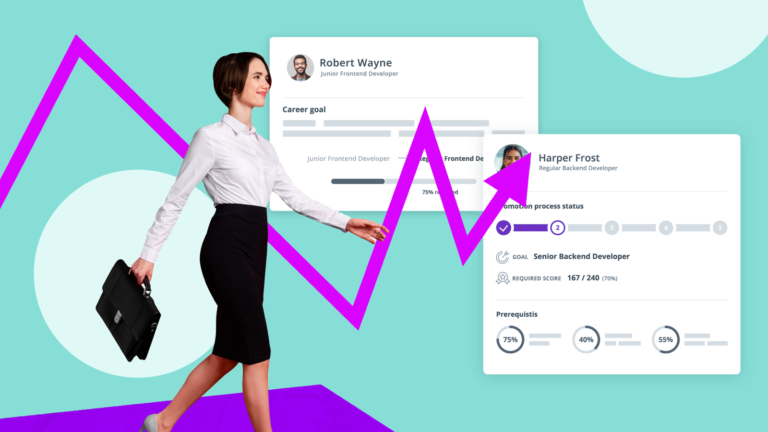
The foundation of any credible career pathing software is a clear picture of what roles exist, what they require, and how someone actually gets from one to the next. Good tools show required competencies for each step and mark realistic milestones instead of vague “grow into leadership” statements. SkillPanel’s career path templates, for example, combine skills inventories, competency gaps, milestones, and development resources in a single view, turning what used to be a vague aspiration into an actual roadmap employees can follow.
The best platforms don’t stop at a static map, either. They keep it current by layering in dynamic skills data, predictive gap analysis, and personalized plans that adjust as skills intelligence updates in real time, rather than leaving employees with a document that goes stale after the first quarter.
Skills gap analysis and competency management
Skills gap analysis is the diagnostic engine behind any serious career development platform. At its core, it’s a structured comparison between current competencies and what a target role requires , and it’s the starting point for any upskilling, reskilling, or promotion decision. Without this diagnostic layer, career pathing becomes guesswork.
Strong platforms visualize this at the organizational level too. A dynamic, interactive skills map gives leaders a real-time view of where expertise exists across the company and where gaps are forming, which supports earlier decisions about hiring versus internal development. To keep that data trustworthy, look for tools that use multi-source assessments, combining self-reviews, manager input, peer feedback, and real-world skills challenges , rather than relying on self-reported skills alone.
Internal talent marketplace and mobility matching
An internal talent marketplac e turns skills data into action by surfacing open roles that match what an employee already knows or is working toward, rather than leaving people to browse job boards manually. Platforms describe this as an “opportunity marketplace” that uses intelligent matching systems to proactively suggest roles aligned to skills and aspirations.
The payoff is measurable. Integrated career pathing paired with an opportunity marketplace is associated with 30% higher internal mobility rates and lower external hiring costs, since organizations fill more roles from within rather than restarting recruiting cycles every time a position opens.
Individual development plans and goal tracking
Individual development plans give structure to what would otherwise be an informal, easily forgotten conversation. A solid IDP includes a skills gap analysis, SMART career goals, specific upskilling or reskilling actions, a timeline, and regular review points built in from the start, not tacked on as an afterthought.
Software that supports this well lets managers define, monitor, and evaluate development paths tied to real skills and role requirements , with feedback and progress tracking built into the workflow. Pair that with a goals module that makes objectives visible and connects personal development to business impact , and you get accountability at every level, not just a document employees fill out once and forget.
Mentoring and coaching connections
Mentoring rarely happens organically at scale, especially in larger or hybrid organizations. Career development software that includes peer-to-peer mentoring options, discussion forums, and knowledge-sharing communities helps formalize these relationships instead of leaving them to chance.
This matters beyond warm feelings about workplace community. Mentoring relationships tend to accelerate promotions and extend tenure, which is why the strongest career development platforms treat social and peer learning as a core feature rather than a side add-on.
Ai-powered recommendations and personalization
AI has quietly become table stakes in this category. Rather than asking employees to guess what skills they should build next, modern tools infer skills directly from resumes, project history, and learning records, then generate tailored learning journeys that adjust as assessment results and engagement patterns change.
The more sophisticated platforms also benchmark capabilities externally. A skills intelligence layer that automatically compares individual, team, and organizational skills against market standards helps HR teams understand not just where employees stand internally, but how that compares to what the broader labor market demands, which is especially useful given how fast AI skill requirements are shifting.
Manager dashboards, analytics, and reporting
Managers can’t coach what they can’t see. Configurable dashboards that give role-specific views into workforce trends, upskilling progress, and talent metrics let managers and HR leaders act on data instead of anecdote. The best dashboards go beyond simple headcount views to offer real-time insights into the talent landscape , including predictive analytics that flag critical skill shortages before they become urgent hiring problems.
Reporting should also measure the program itself. Look for dashboards that track program effectiveness, engagement levels, and skills acquisition rates , with benchmarking against industry standards so leadership can see whether the investment in career management software is actually paying off.
Integrations with HRIS, LMS, and performance systems
A career development platform that lives in isolation from your other HR systems creates more administrative work than it saves. Modern workforce platforms need to integrate with HRIS, payroll, applicant tracking, performance management, and LMS platforms to create a single data flow instead of manual data transfers between systems.
For career pathing specifically, integration with learning management systems, performance reviews, and succession planning is what turns a career map into an actionable plan. Gap-based learning recommendations should link directly to existing training content so that identified skill gaps translate into assigned courses, not just a to-do list nobody follows up on.
How to choose the right career development software for your organization
Choosing career development software isn’t a decision to rush into based on a demo alone. The organizations that get the most value tend to follow a structured evaluation process rather than picking whatever tool has the flashiest AI features.
Audit current programs and identify gaps
Before evaluating any vendor, document what you already have. That means inventorying all positions, reporting relationships, responsibilities, and required competencies, then identifying gaps, redundancies, and inconsistencies in how career opportunities are currently perceived by employees. A structured audit should also review promotion data over the past few years to spot bottlenecks or inequities in how advancement actually happens , not just how it’s described on paper.
A more granular skills audit can sharpen this further. SkillPanel’s seven-step skills audit process covers defining scope, choosing an assessment methodology, collecting data to build a skills map, analyzing gaps, and building an action plan, giving HR teams a repeatable framework rather than a one-off exercise.
Align tool selection with business and workforce goals
Software should follow strategy, not the other way around. That means reviewing existing job descriptions and performance data to see which competencies actually predict success in your organization, then choosing tools built to support those specific competencies rather than a generic feature list. Defining success metrics early, before you even sign a contract, gives you a baseline to measure the platform against once it’s live, which is core to a sound skills architecture strategy .
Gather employee and manager feedback
The people who will use this software daily should weigh in before you buy it, not after. Surveys, focus groups, and informal conversations with both employees and managers surface friction points that vendor demos rarely reveal, and this feedback often shapes which features matter most in your specific environment.
Evaluate scalability, integration, and ease of use
A platform that works well for 200 employees might buckle at 2,000. Prioritize tools that integrate cleanly with your existing HRIS and LMS stack and that offer intuitive interfaces, since adoption rates drop fast when a tool feels clunky or disconnected from daily workflows.
Involve department heads and secure leadership buy-in
Department heads understand nuances in their teams’ career paths that HR alone might miss, so involving them early prevents rework later. Leadership buy-in matters just as much; without visible executive support, career development initiatives tend to lose momentum after the initial rollout excitement fades.
Run a pilot before rolling out company-wide
Skipping straight to a full launch is one of the most common mistakes organizations make. A phased approach that starts with configuration and manager training, moves into a pilot with selected departments , and only then scales company-wide gives you room to fix problems while the stakes are still low. Pilot groups should represent different seniority levels and business units, run for at least one full performance review cycle , and include trained pilot managers who can surface honest feedback before a broader rollout locks in mistakes at scale.
Rolling out career development software successfully
Buying the right tool is only half the battle. How you introduce it to the organization determines whether employees actually engage with it or quietly ignore it after the launch announcement fades.
Communicating the change to employees
Employees need to understand not just that a new tool exists, but why it matters to them specifically. Clear communication through meetings, emails, and dedicated training sessions helps frame the software as a genuine investment in their growth rather than another HR mandate to comply with.
Training managers to support career conversations
Managers make or break adoption. Training should focus less on scripted, one-off conversations and more on building a repeatable cadence, weaving development questions into regular one-on-ones rather than saving them for an annual review. A useful structure moves through three phases: understanding an employee’s past motivations and patterns, discussing future aspirations, and then committing to a present-day action plan with clear owners and timelines. This mirrors how many organizations are shifting from annual check-ins to a quarterly rhythm for development conversations, treating growth talks as a regular part of ongoing management rather than a once-a-year event.
Measuring impact on retention, mobility, and engagement
Rollouts need measurable proof points, not just anecdotal enthusiasm. Track internal mobility rates, retention among employees with active development plans, and engagement scores tied to growth-related survey items. Real-world results back up why this matters. Orange, using SkillPanel-powered onboarding and development, saw a 98% completion rate for onboarding sessions, a median of 13 minutes spent per employee on self-assessments, and a fourfold increase in participation once the program expanded beyond its initial pilot group. A similar pattern shows up at enterprise scale: employees at IBM who invested at least 40 hours in career development on the company’s internal platform had 1.62 times higher odds of promotion than those who didn’t, a shift that also helped reduce reliance on external hiring. Those kinds of engagement metrics tell you whether the platform is actually changing behavior, not just sitting unused in the background.
Frequently asked questions about career development software
What’s the difference between career development, career management, and career pathing software?
Career development software focuses on facilitating employee growth and skill enhancement through assessments, plans, and learning recommendations. Career management software takes a broader view, encompassing the full strategy an organization uses to manage employee careers, often including succession planning and workforce analytics. Career pathing software is the most specific of the three, focused narrowly on mapping potential role progressions and the competencies required to reach them.
How much does career development software typically cost?
Pricing tends to fall into three distinct bands . SMB and self-serve tools generally run $2 to $8 per employee per month, mid-market suites land around $8 to $20 PEPM (with bundled talent suites sometimes reaching $12 to $30+ PEPM once performance and learning modules are included), and enterprise platforms are usually custom-quoted, often starting at $50,000 or more annually depending on scope and integration requirements.
How long does implementation usually take?
Timelines scale with organizational complexity. Lightweight point solutions can be live within weeks , mid-market deployments typically take one to three months once integrations and training are factored in, and enterprise rollouts involving multiple locations, payroll systems, and change management can stretch to six months or longer .
Can small and mid-sized businesses benefit from these tools?
Yes, and the data suggests SMBs are actually the stronger adopters of standalone career development platforms. Budget benchmarks show small and mid-sized businesses actively purchasing lighter HR and development tools in the $10 to $39 PEPM range , while larger enterprises tend to bundle career development into broader HCM suites rather than buying it as a standalone product. Either way, the retention and engagement benefits apply regardless of company size.
Building a career growth culture beyond the software
No platform, however sophisticated, replaces the human behaviors that make career growth feel real to employees. Recent research on sustainable HR practices found that development-focused HR bundles only translate into stronger commitment and lower turnover intent when employees actually experience them as developmentally meaningful , not just procedurally present. That’s a distinction worth sitting with: a tool that exists but isn’t used with intention accomplishes little.
SHRM’s research reinforces the same point from a leadership angle, noting that despite rapid AI adoption across HR functions, resilience still depends on human leadership and culture . Managers who can coach, sponsor, and actively orchestrate development opportunities remain the deciding factor in whether a career development platform actually changes outcomes. Software becomes the infrastructure; it’s still people who make the culture stick.
That’s ultimately the mindset SkillPanel builds toward: giving organizations visibility into skills and career paths, not as an end in itself, but as the foundation for the coaching, mentoring, and honest development conversations that turn a tool into a genuine career growth culture. The platform provides the map. The manager conversations, leadership commitment, and organizational follow-through are what actually get people moving along it.