
This guide draws on SkillPanel’s product experience and hands-on work helping organizations build workforce capability maps.
Every workforce leader has faced the same frustrating gap: a spreadsheet full of job titles that says almost nothing about what people can actually do. Skills change faster than job descriptions get updated, and by the time HR catches up, the business has already moved on. That disconnect is exactly why AI skill mapping has become one of the most talked-about workforce strategies heading into 2026.
What Is AI Skill Mapping, and Why It Mattersbilities with the skills a business actually needs to grow. Instead of guessing who can do what, organizations get a full picture of their talent, one that surfaces gaps and highlights opportunities for development before those gaps turn into bottlenecks.
The urgency behind this shift makes sense once you consider how fast technology reshapes roles. Skills that mattered two years ago may already be obsolete, and new capabilities emerge faster than most training programs can keep pace with. Companies that put AI skill mapping into practice can move talent where it’s needed, keep employees engaged, and get ahead of market shifts before they hit.
How AI Skill Mapping Differs from Traditional Skills Inventories
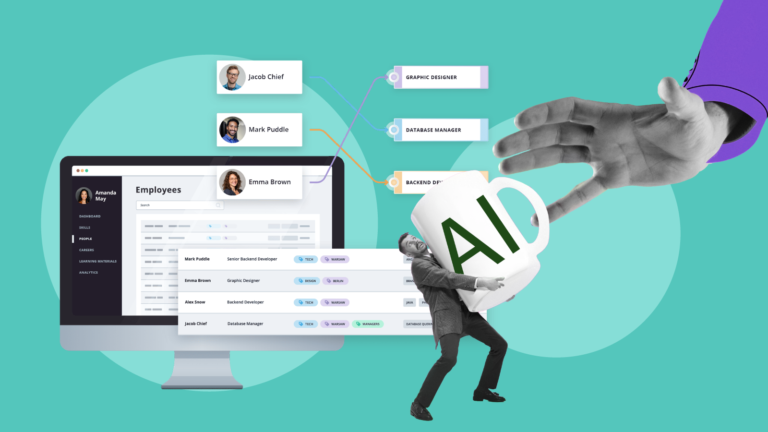
Traditional skills inventories rely on employees filling out a form once a year and hoping it stays accurate. AI skill mapping works differently. It pulls from real-time data and advanced analytics to build dynamic skill profiles that reflect what people are actually doing day to day.
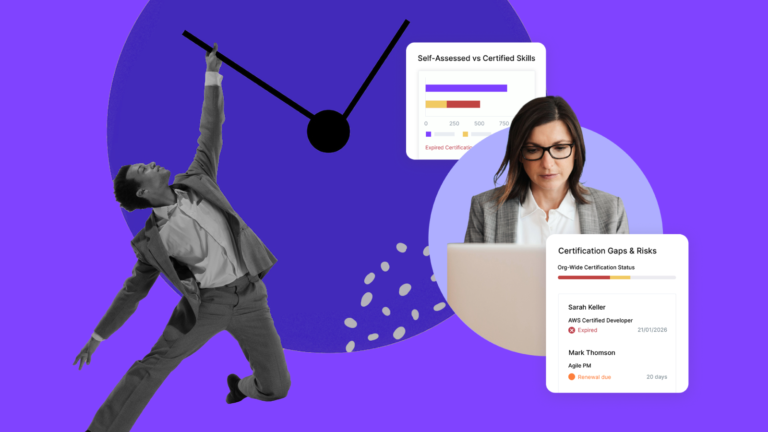
Self-reported skills are notoriously unreliable. Someone might list “project management” on a form three years ago and never update it, even after taking on a completely different role. AI-driven approaches instead analyze actual work outputs and behaviors, producing a much sharper read on employee capabilities. That distinction turns skill mapping from a static HR exercise into a living system that evolves alongside your workforce.
Key Terms: Skill Map, Skill Taxonomy, and Skill Ontology Explained
Before going further, it helps to get the vocabulary straight. A skill map is the visual output, the actual chart or dashboard showing who has which skills and at what proficiency level. A skill taxonomy is the underlying structure, the organized list of skills and categories used to classify capabilities consistently across a company. A skill ontology goes a step further, mapping the relationships between skills, such as which ones build on each other or overlap across roles.
Vendors and consultants often use these terms interchangeably, and that’s where the confusion starts. A solid skills map depends on a well-built taxonomy underneath it. Without that structural foundation, even the most sophisticated AI tool will produce messy, inconsistent results.
Why Manual Skill Mapping Exercises Fail Modern Organizations
Plenty of HR teams have run some version of a manual skill mapping exercise, and most of those efforts stall out within a year. The reasons are predictable once you look closely.
Manual approaches lean on outdated data and subjective assessments that shift depending on who’s filling out the form. Data silos make things worse. Skills information ends up scattered across HRIS systems, spreadsheets, performance reviews, and training records that never talk to each other. Employees rarely update their own skills proactively, so what looks current in the system is often months or years out of date. The result is a lack of visibility into what people can actually do right now, which makes proactive workforce planning nearly impossible.
The Hidden Cost of Outdated Job Architectures
Job architectures built five or ten years ago often describe roles that barely resemble what employees do today. A “marketing coordinator” role from 2018 might have looked nothing like the data-driven, AI-assisted version of that job in 2026. When job architecture doesn’t evolve, skill mapping efforts inherit that same staleness, and leaders end up making decisions based on outdated assumptions about what their people can actually do.