How to create a succession plan that actually works: A step-by-step guide
| Reading time:


Poor succession planning destroys nearly $1 trillion annually in market value across S&P 1500 companies. Yet despite this staggering figure, only 21% of organizations have a formal succession plan in place, while 56% have no plan at all. The gap between knowing succession matters and actually building a functional program remains enormous, and organizations that close that gap consistently outperform those that don’t.
This guide walks through exactly how to create a succession plan that works, covering every step from identifying critical roles to keeping the plan alive through regular review. Whether you’re building your first program or fixing one that stalled, this is the succession planning guide your organization needs.
What succession planning actually involves (and why most organizations get it wrong)
Most leaders can define succession planning in broad strokes: identify high-potential employees, develop them, and make sure someone is ready when a key person leaves. But that surface-level understanding is precisely what leads organizations astray.
A more complete succession plan definition frames the process as proactive identification, development, and readiness assessment of internal talent for critical roles, ensuring business continuity through documented processes, ongoing development, and alignment with strategic goals. It is not a backup plan for when someone retires. It is a continuous, living program woven into how the organization makes talent decisions every single day. Effective succession planning is a continuous process, integrated with the organization’s overall talent strategy and business strategy, to ensure leadership continuity and organizational resilience.
Where most organizations go wrong is treating succession as an HR task rather than a leadership responsibility. When HR handles it in isolation, without meaningful input from managers, executives, or functional leaders who actually understand what each role demands, the result is a plan that looks complete on paper but fails the moment it’s tested. Buy-in evaporates, development activities lose direction, and the plan quietly collects dust. Aligning succession planning with organizational strategy is essential to ensure leadership continuity and smooth leadership transitions that support long-term business health.
The second major failure point is narrowing succession planning to senior executive roles. According to ScottMadden, 72% of organizations currently focus succession planning exclusively on executives, even as 4.2 million Americans turn 65 in 2025. The roles that keep operations running, including specialized technical positions, regional leaders, and mid-level managers, rarely make the succession list, creating blind spots that only become visible during a crisis. Proactive planning is needed to identify all critical leadership roles, not just those at the top.
Effective succession planning starts with clarity about which roles are critical to business continuity and long-term success, allowing organizations to prepare for both expected and unexpected transitions. Succession planning should be regularly revisited to adapt to changing needs, ensuring both expected and unexpected transitions are managed effectively.
When to start your succession planning process
The short answer is now. There is no ideal moment that isn’t already somewhat late, because meaningful succession readiness takes time to build.
Organizations often delay because competing business pressures make succession feel non-urgent until a vacancy hits. Among family businesses, 62% cite competing pressures as their reason for falling behind on planning, despite 85% agreeing it’s critical to long-term success. This tension, acknowledging importance while deferring action, is the succession paradox that derails otherwise well-run organizations. Anticipating future needs and preparing for unexpected transitions is crucial to ensure your succession plan supports business continuity, even when leadership changes are unforeseen.
The right trigger for starting isn’t an impending departure. It’s the recognition that readiness takes months or years to build, and that waiting until a role is vacated transforms a strategic process into a reactive scramble. Replacing a highly skilled executive can cost up to 213% of their annual salary, including hiring, onboarding, and lost productivity. Organizations without succession strategies also experience 25% lower revenue growth than prepared competitors. These aren’t abstract risks. They’re measurable costs of inaction.
Start during a period of organizational stability. Performance review cycles and career development conversations are natural integration points, letting succession discussions connect to individual aspirations rather than appearing as top-down mandates. When developing success profiles for critical roles, assess what capabilities the business will need in the next 5-10 years to ensure your leadership pipeline aligns with future needs.
How to create a succession plan: Step-by-step
Step 1: Identify critical roles and define succession criteria
Before anything else, the organization needs clarity on which roles matter most. This is the foundation of the entire succession planning process, and getting it wrong distorts everything downstream. Identifying key positions, business critical roles, and critical leadership roles that are essential for business operations ensures that succession planning efforts are focused where they will have the greatest impact.
Which roles to prioritize
Critical roles are not simply the most senior ones. A role is critical when its vacancy creates operational disruption, when its knowledge is difficult to replace, or when it sits at a strategic intersection that drives outcomes. A cloud architect at a technology company may be far more critical to daily operations than several executive titles above them.
Start by reviewing each role independently of the person currently in it. Ask what would break if this seat were suddenly empty. Identify positions where there is only one qualified internal person, where knowledge is largely undocumented, or where the skill set is rare in the external market. This exercise frequently surfaces mid-level and technical roles that would never appear on a traditional succession chart but represent genuine organizational vulnerabilities.
What criteria should define a successor
Successor criteria should be future-focused, not just a replication of the current incumbent’s profile. Consider the skills, experiences, decision-making style, and cultural contributions the role will require over the next three to five years as the organization evolves. It’s essential to understand the specific skills required for future roles and use tools like skills gap analysis and workforce intelligence dashboards to identify and address skill gaps, ensuring your succession plan is aligned with organizational needs.
Criteria should include both technical competency and leadership capability, but the weighting will vary by role. A generic competency framework applied uniformly across all positions produces mismatched assessments and frustrated candidates. Build tailored role profiles that reflect what each position actually demands, and use those profiles as the benchmark against which you evaluate your talent pool. When creating tailored development plans, focus on bridging the gap between a candidate’s current skills and those needed for future roles, often following the 70-20-10 rule for effective learning and growth.
Step 2: Assess your current talent pool
With critical roles defined and criteria established, the next step is an honest assessment of the talent you already have. This stage often reveals uncomfortable gaps, and that discomfort is exactly the point. You cannot develop readiness you haven’t first measured. Evaluate your current employees and existing talent to identify gaps between present capabilities and future needs, and systematically assess leadership readiness to ensure your succession plan addresses both immediate and long-term organizational goals.
Evaluate readiness levels
A high performer in their current role is not automatically prepared for the demands of a more complex or senior position. Assessment should examine leadership potential, adaptability, learning agility, and alignment with the future profile of each critical role.
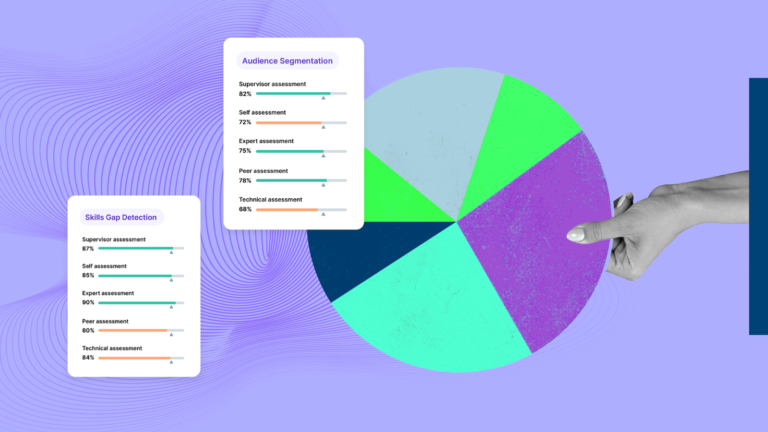
Using multi-source assessments significantly improves accuracy and reduces bias. Combining self-assessments with peer reviews, manager evaluations, and technical validations produces a more complete picture of each candidate’s actual capabilities. Tools like SkillPanel integrate these inputs into unified skill profiles, enabling talent decisions grounded in evidence rather than impression.
A useful framework is to categorize candidates by readiness: those ready now, those ready in one to two years, and those who represent longer-term pipeline investments. This segmentation clarifies where to focus development resources and helps identify coverage gaps before they become urgent.
Conduct a skills gap analysis
A skills gap analysis maps the distance between where each candidate currently stands and what each critical role requires. Predictive gap analysis takes this further by forecasting where shortfalls are likely to emerge. Platforms like SkillPanel provide this capability through dynamic skills mapping, surfacing which capabilities are trending, which are becoming obsolete, and where the organization is most exposed.
Step 3: Build individual development plans for high-potential employees
Identifying high-potential talent without a plan to develop it is one of the most commonly cited succession planning pitfalls. 70% of organizations face pipeline issues precisely because successors are named but not genuinely developed, with 48% citing budget barriers as the primary obstacle. Naming someone as a successor without investing in their readiness is planning in name only. Identifying successors is only the beginning; developing future leaders requires providing development opportunities, establishing clear development pathways, and focusing on growing talent through coaching, exposure, and hands-on experiences. Engaging with potential successors about their career aspirations increases motivation and retention within the organization. To ensure a robust pipeline, organizations must prioritize preparing future leaders through structured development plans.
Targeted training and stretch assignments
Development plans should be specific, measurable, and tied directly to the gap between a candidate’s current skills and the requirements of their target role. Stretch assignments are among the most effective accelerators available: leading a cross-functional initiative or managing a market entry builds capabilities that no classroom setting can replicate. Leadership training and ongoing leadership development efforts, such as targeted learning programs, mentorship, and hands-on experiences, are also essential for preparing high-potential employees for future leadership roles. The key is pairing these experiences with intentional reflection and feedback so that lessons from the assignment actually transfer into lasting capability.
Mentorship, coaching, and knowledge transfer
Structured mentorship connects high-potential employees with experienced leaders who can share institutional knowledge, provide honest feedback, and model judgment that comes only through experience. The relationship needs to be formalized with clear goals, regular sessions, and progress tracking.
Coaching, distinct from mentoring, focuses on unlocking individual potential and building self-awareness. For candidates approaching readiness, coaching can accelerate the final steps by addressing behavioral patterns and leadership presence that technical training doesn’t reach. Knowledge transfer is equally essential for specialized roles where expertise lives in a single person’s head, reducing organizational vulnerability through documented processes and cross-training.
Step 4: Document your succession plan
Verbal succession plans are not succession plans. When knowledge and intent exist only in the minds of a few leaders, the plan disappears the moment those leaders change. Only 23% of business owners have fully documented succession plans, a gap that exposes the majority to risks that documentation would largely prevent. Having a strong succession plan is essential to ensure leadership continuity and organizational stability.
What to include in a succession plan template
A practical succession plan template should be clear enough to guide action but detailed enough to withstand scrutiny. For each critical role, the documentation should cover the role profile and future-oriented success criteria, current and potential successors ranked by readiness level, individual development plans with timelines and milestones, backup candidates in case a primary successor becomes unavailable, and governance notes outlining who owns each element of the plan.
The stakeholder communication section defines who needs to know what and when, preserving confidentiality where appropriate while ensuring accountability is distributed appropriately. A review schedule establishes when the plan will be formally assessed, typically every six months at minimum. This documentation should live within the organization’s HR systems. Platforms that integrate succession data with performance management and learning systems, such as SkillPanel’s integration with existing HCM platforms, ensure that the plan stays connected to real-time talent data rather than becoming an outdated artifact.
Step 5: Gain stakeholder buy-in and communicate the plan
A succession plan that leadership hasn’t endorsed is a plan that won’t be executed. Executive sponsorship transforms succession from an HR initiative into an organizational priority. When senior leaders visibly advocate for the program, attend review meetings, and make resource decisions aligned with development needs, the rest of the organization takes succession seriously. Preparation for succession planning should involve securing leadership buy-in and creating a strong talent pipeline and talent pool, rather than focusing solely on one-to-one replacements. A strong talent pipeline is essential for leadership continuity, as it ensures capable leaders are ready to step into critical roles when needed, reducing transition risk and strengthening engagement.
Communication must be calibrated. Not every detail of the plan is appropriate to share broadly, particularly candidate evaluations and readiness rankings. However, the existence of the program and the career pathways available to high-potential employees should be communicated transparently. When employees understand that succession planning is active and that the organization invests in developing internal talent, it reinforces engagement and reduces the risk of high-potentials leaving for opportunities they can’t see internally.
The 42% of talent management executives prioritizing succession strategy in 2026 reflects a growing recognition that leadership depth is a competitive advantage, not just an HR obligation.
Step 6: Review, test, and update the plan regularly
Succession planning is not a project with a completion date. The plan becomes valuable not the day it’s written, but through the discipline of returning to it, testing its assumptions, and updating it as the organization evolves.
The difference between organizations that treat this seriously and those that don’t is measurable. Roof Maxx, a sustainable roofing company with 350+ franchise partners, embedded succession thinking from inception, granting teams decision-making autonomy and deliberately reducing founder dependency. When founder Michael Feazel stepped away temporarily in 2023 for family reasons, the business continued growing. When supply chain disruption hit in 2024, the leadership team managed it independently without his involvement. Contrast that with LegalOn, a legal tech company that had no succession plan when its CTO became seriously ill. Engineers paused work, clients experienced delays, and a Fortune 500 partner continued emailing the inactive CTO for months, creating a visible power vacuum. No review process had ever stress-tested the question of what happens if this seat goes suddenly empty.
Reviews should happen on a defined cadence, semi-annually at minimum. Each review should assess whether development plans are on track, whether readiness levels have shifted, whether any critical roles have changed, and whether primary successors remain available. Run scenarios: what happens if your lead candidate leaves tomorrow? These gaps are far better discovered in a review session than during an actual transition.
70% of global business leaders say long-term succession planning feels futile in fast-changing environments. The answer isn’t to abandon planning. It’s to make the plan more adaptive through regular reviews connected to real-time workforce data.
Succession planning for business owners: What’s different
Business succession planning shares many principles with enterprise succession, but the execution looks significantly different. For business owners, the process intersects with personal wealth, family dynamics, legal structures, and legacy in ways that corporate planning simply doesn’t encounter. Succession planning in family businesses is unique because it involves navigating personal history, legacy, and loyalty, making it essential to blend structure with empathy during transitions.
Unlike large organizations with formal talent pipelines, business owners often face a much smaller internal candidate pool. When the talent available doesn’t include a clear next-generation leader, the options expand to insider sales, third-party transfers, or hybrid structures, each with distinct tax, legal, and relational implications that require specialist input well beyond HR expertise. Family businesses may also turn to external leadership by recruiting experienced executives from outside the organization, bringing in fresh perspectives, industry expertise, and innovative approaches that can modernize and strengthen the business.
The emotional dimension is real and consequential. Families navigating “skip-generation” transfers or disagreements about readiness face challenges no competency framework can fully resolve, often requiring facilitated conversations, legal instruments like stockholder agreements, and clear dispute resolution mechanisms. Family businesses often utilize three main succession planning models: mass recruitment, specialized recruitment, and outside recruitment, each with its own benefits and challenges.
Despite this complexity, 66% of family businesses lack a clear succession plan, and one-third of U.S. business owners don’t view a plan as a priority. The top reasons include uncertainty about the business’s future (32%), not knowing where to start (32%), and inability to identify a successor (26%). All three barriers dissolve significantly with professional guidance and a structured planning process. Regular reviews of succession plans in family businesses are essential to keep them relevant as markets and family dynamics shift, and the successor’s role is often deeply intertwined with the family’s story, making the selection process more complex than in traditional corporate environments.
Common succession planning pitfalls and how to avoid them
Even organizations that commit to succession planning frequently fall into predictable traps.
Waiting too long to start. Every delay compounds the next. When a departure forces the issue, organizations are left scrambling for candidates who haven’t been developed, resulting in rushed assessments, underprepared successors, and expensive external hires that often underperform. Start before it feels urgent.
Focusing only on internal candidates. Internal development should be the backbone of any succession program, but anchoring exclusively to internal candidates limits the diversity of thinking that new perspectives bring. Benchmarking external talent regularly, even when no immediate hire is planned, gives organizations a realistic view of what their internal pipeline is competing against.
Building a plan without development attached. A successor list is not a succession plan. High-potential employees left without meaningful stretch experiences or mentorship eventually lose faith in the program and leave, directly undermining the pipeline the plan was meant to build. It’s essential to identify and nurture top talent and potential leaders early, providing them with targeted development opportunities to ensure a strong leadership pipeline.
Letting the plan become static. Succession plans written once and reviewed never provide false confidence while masking vulnerabilities that have grown since the plan was last touched. Build review cadences in from the beginning and assign clear ownership for keeping each section current.
Organizations that integrate succession planning with broader talent management strategies create a consistent approach to attracting, developing, and retaining the right people at the right time, enhancing overall business performance.
Succession planning best practices that separate strong programs
Effective succession planning builds talent pools rather than single-successor lists. For each critical role, developing multiple candidates with overlapping capabilities provides flexibility and creates healthy development competition. A role with only one named successor is still vulnerable the moment that individual becomes unavailable. Building a strong internal pipeline is essential for organizational resilience, as it enables you to identify high potential talent and prepare them for future leadership roles.
Strong programs use data to track program health continuously rather than relying on annual impressions. The metrics that matter most include:
- Bench strength ratio: the number of qualified successors per critical role, with three or more successors per position as a common benchmark for meaningful pipeline depth
- Ready-now successor rate: the proportion of critical roles covered by at least one immediately deployable candidate, with 75% as an effective pipeline benchmark
- Internal fill rate: the percentage of critical roles filled internally, with targets around 25% for management-level positions indicating strong talent development
- Time-to-fill for critical vacancies: shorter times reflect planning efficiency and minimize operational disruption
- High-potential retention rate: declining retention signals engagement or development failures that threaten the entire pipeline
- Succession plan execution rate: the percentage of documented plans that lead to actual transitions, revealing whether planning is translating into real action
A strong internal pipeline helps fill leadership roles quickly and effectively, benefiting both the business and its employees by ensuring continuity and supporting internal mobility.
Dashboards that surface these metrics continuously allow leadership to intervene early rather than discover gaps only during transitions. SkillPanel’s succession planning dashboards deliver exactly this visibility, tracking pipeline health and development progress in real time rather than at snapshot moments.
Diversity is a succession planning imperative, not a compliance consideration. Structured, multi-source assessments reduce bias and surface candidates who might otherwise be overlooked by informal networks.
A successful succession plan is proactive, focusing on developing a talent pipeline for critical leadership roles rather than reacting to vacancies in a crisis.
When to bring in outside help
Some succession challenges exceed what an organization can solve with internal resources alone. Knowing when to seek external support is itself a mark of mature succession planning.
Consider outside help when you recognize one or more of these conditions: fewer than one ready-now successor exists across three or more critical roles; succession planning has failed to gain traction after two or more internal attempts; political dynamics are visibly distorting candidate assessments; or the organization lacks the infrastructure to make data-driven succession decisions with any confidence.
When that threshold is reached, the type of support needed varies. Independent consultants bring process expertise and structured assessment frameworks, useful when internal planning skills are underdeveloped or when the organization needs an impartial voice to cut through political noise. Executive search firms provide market benchmarking and external candidate mapping, best suited when internal pipelines are thin for specific roles. Technology platforms support the ongoing infrastructure of succession management, centralizing talent data, tracking readiness over time, and connecting development activity to role requirements.
Smaller organizations or those with experienced, capable HR teams may not need a full platform. A consultant engagement or structured facilitation process may deliver better value for the scale involved. Honesty about that fit matters: the right solution is the one that actually gets used.
For organizations building their first formal program or rebuilding one that stalled, SkillPanel provides a middle ground between full internal management and full consulting dependency. Its dynamic skills mapping, predictive gap analysis, and multi-source assessment capabilities integrate with existing HCM platforms like SuccessFactors, keeping succession data connected to live performance and learning inputs without requiring organizations to replace their existing infrastructure. When the cost of replacing a single executive can reach 213% of annual salary, the investment in the right tools pays back quickly.
Succession planning isn’t about predicting the future. It’s about building an organization resilient enough to absorb change without losing momentum. Start now, build with rigor, and treat the plan as the living commitment it needs to be.