Small business succession planning: How to protect everything you’ve built when it’s time to hand it over
| Reading time:


Roughly 6070% of small business owners lack a formal, documented succession plan . That statistic alone should stop any business owner cold. You’ve spent years, possibly decades, building something real. Yet without a concrete plan for what happens next, that investment remains vulnerable to forces entirely outside your control: illness, market shifts, a partner dispute, or simply the passage of time. Small business succession planning is the discipline that closes that gap, and this guide walks you through every dimension of it.
Why small business owners avoid succession planning (and why that’s a costly mistake)
The reasons business owners avoid succession planning are understandable, but none of them hold up under scrutiny. According to JPMorgan Chase’s 2026 survey , the top barriers are time constraints, competing priorities, and uncertainty about where to begin. A 2025 ideas42 study found that 63% of owners believe it’s “too early” to start and 45% say they’re simply “too busy.” Meanwhile, Nationwide survey data reveals that 47% of owners without a plan believe they simply don’t need one.
That combination of procrastination and overconfidence has real financial consequences, and research shows that 48% of business owners expecting to leave lack a succession plan. Gallup’s 2024 research found that employer firms with a long-term succession or transition plan reported 50% higher median profits than those without ($90,000 versus $60,000). Owners who planned to sell showed median profits of $100,000, compared to just $20,000 for those planning to simply close. Planning ahead isn’t just good governance. It actively correlates with a more valuable, more profitable business.
The timing gap is particularly alarming. The Chase survey found that 40% of small business owners plan to retire within the next decade, yet only 8% say they are fully prepared to transition ownership. Exit planning experts estimate that a typical business transition requires two to three years of preparation, while family business transitions often take five to ten years . Delaying succession planning increases the risk of rushed decisions during emergencies. The math is unforgiving. Owners who wait too long end up accepting lower offers, closing abruptly, or transferring under duress.
The community impact extends well beyond the individual owner. A Purdue/NCRCRD analysis of 1,287 small businesses found that only 38% had any exit or succession plan, and the researchers warn that unplanned loss of these firms, especially in rural areas, carries “massive community consequences.” When they close without a plan, entire communities feel it.
What planning looks like in practice
Hi Nabor Supermarket, a family-owned chain, faced a succession dilemma familiar to many second-generation businesses: some siblings wanted to exit while others wanted to remain actively involved. Operating under COVID-era margin pressure, the family chose to pursue an ESOP structure rather than wait for a crisis. The ESOP sale, completed in March 2021 , provided liquidity for the departing siblings while preserving employee ownership benefits and maintaining operational continuity. The outcome is documented as a positive benchmark precisely because the family started planning before urgency peaked.
The Iswald-Hart family, which owned multiple auto dealerships across Texas, faced a different version of the same problem: outdated shareholder agreements, vague leadership expectations, and growing internal strain in a blended-family ownership structure. The situation, described as a “ticking time bomb” , was resolved through a structured succession process that identified a clear successor, transferred 90% of the business to the next generation, and rebuilt governance around clarified roles and updated shareholder arrangements. The business maintained operational continuity and family stability that informal planning would not have produced.
Both cases illustrate what the data confirm: advance planning doesn’t just make transitions smoother. It determines whether a transition is possible at all.
What is small business succession planning?
A business succession plan is a documented strategy for transferring both management and ownership to future leaders in a way that supports business continuity and stability during a leadership transition, while preserving the business’s value for the departing owner. It answers three fundamental questions: Who will lead the company when the current owner exits? How will ownership transfer legally and financially? And what structures are in place to protect continuity when that transition happens?
Succession planning is an active, ongoing process that connects leadership development , legal structuring, financial planning, and operational documentation into a coherent framework. As the SkillPanel platform perspective puts it, succession planning is a living strategy, not a one-time worst-case document. It should reflect where the business is going and who is best positioned to lead it there.
How succession planning differs from a will or exit strategy
These three concepts are frequently confused but serve entirely different purposes. A will governs the distribution of personal assets after death. An exit strategy describes how an owner intends to leave the business. Succession planning for businesses, by contrast, is an operational and organizational strategy concerned with leadership continuity and capability transfer, and it remains active long before any exit event occurs.
A succession plan for a business deals with questions a will never touch es: Who h as the skills to run operations? Which leadership gaps need to close before a transition? How do you retain key employees during the uncertainty of ownership change?
The right time to start: Earlier than you think
The consistent message across authoritative sources is blunt: starting early is essential, so start now. Most owners should begin succession planning 3-5 years before exit, and ideally before they think they need it. If you’re three to five years from a planned transition, you’re already in the window where serious planning should be underway. Only 21.6% of business owners have actually created or updated a written succession plan in the last three years, even though nearly all acknowledge it matters.
Early planning creates strategic options that late planning forecloses and supports long term success. You can develop successors gradually through mentoring and stretch assignments, optimize the business’s structure for a tax-efficient transfer, and build documented systems that increase valuation multiples. None of that is achievable when a transition is months away rather than years.
Your succession options as a small business owner
The right exit pathway depends entirely on what you value most: cash at closing, control through the transition, long-term legacy, tax efficiency, or the welfare of your employees. Common succession options include internal, external, or hybrid paths. What matters is making a deliberate, informed choice with a clear plan that aligns with your goals, your successor’s capabilities, and the business’s circumstances.
Transferring ownership to a family member
A family transfer often preserves legacy, maintains community relationships built over years, and offers estate-planning tools that make the transfer tax-efficient. However, family dynamics can complicate what should be business decisions. When succession is based on birthright rather than capability, the business suffers.
The practical rule here is to assess the successor’s readiness honestly, not emotionally. Does the potential family successor have the skills, the interest, and the temperament to run the business? If the answer is uncertain, that’s a reason to invest in structured leadership development before the transition, not a reason to abandon the option.
Selling to a key employee or management team
This path has a compelling logic: the buyers already understand the culture, the customers, and the operations. In many succession plans, ownership can also transfer through sales to employees or to outside third parties. Transition risk is inherently lower when insiders take the helm, which can support a smooth handoff. The challenge is financial. Key employees rarely have the capital for an outright purchase, so proceeds are often paid over time through seller financing or a management buyout structure. That means the seller may remain involved longer than planned and carries some ongoing business-performance risk during the payout period.
Selling to an outside buyer
A third-party sale offers the highest potential for upfront liquidity and a clean break. The trade-off is control. Once the business sells to a strategic buyer or private equity firm, the owner loses influence over employees, the brand, and the company’s direction. The process can also be slow and emotionally taxing, stretching over 12 to 24 months.
The BizBuySell marketplace data paints a sobering picture: only an estimated 30% of small businesses successfully sell , even though over 200,000 small businesses are listed for sale annually. That market reality helps owners and advisors set realistic expectations around marketability and deal outcomes. A business that looks organized, profitable, and operationally independent commands stronger buyer interest and better deal terms, and effective succession planning can support a higher valuation and smoother sale process.
Merging with or acquiring another business
A merger is less a traditional “exit” and more a strategic repositioning. It can create real value by combining complementary capabilities or expanding market reach, but integration risk is the central challenge. Culture, systems, leadership roles, and decision rights must be reconciled carefully, or the deal destroys the value it was meant to create.
Liquidating the business
Liquidation is typically the path taken when no buyer can be found and no internal successor exists. It’s the fastest route to exit but the most value-destructive, since assets are sold piecemeal rather than as a going concern. For rural businesses especially, liquidation can remove critical services and employment with little transition time. It should remain a last resort.
How to write a succession plan: Step-by-step
Knowing how to write a succession plan begins with understanding that a succession plan document is not a one-and-done form. It’s a set of interconnected decisions and key components, including a documented team of advisors and a transition timeline with clear milestones, each of which needs to be recorded, shared with relevant stakeholders, and revisited as the business evolves.
Step 1: Define your goals and exit timeline
Before any other work can begin, you need clarity on what you actually want. Do you want to maximize sale price, ensure employee continuity, keep the business in the family, or simply step back from day-to-day management? Each goal implies a different succession strategy and a different timeline, which shapes the transition and supports the business’s future success. Document your retirement objectives, desired legacy, financial needs, financial goals, and control preferences.
Set a specific target date for the transition, even if it’s years away. Without a timeline, succession planning has no urgency, and urgency is exactly what most owners lack.
Step 2: Get a professional business valuation
Determining business value early is non-negotiable. A qualified valuation tells you what the business is actually worth, what’s driving that value, and where the risks are, while helping you plan for the financial implications of an ownership transfer and set realistic expectations. Despite this, only 27% of business owners have completed a formal valuation. That leaves the majority negotiating in the dark.
A professional valuation also reveals where pre-sale improvements can have the biggest impact on price. Address those factors years before your target exit, not weeks before a deal closes. Regular valuations are important as succession planning progresses.
Step 3: Identify and assess successor candidates
This is where many succession plans go wrong. Identifying successor candidates requires moving past intuition and proximity and toward structured, evidence-based assessment. Identifying potential successors early reduces disruption in a critical role or position during transition. Evaluate candidates against role-specific competency profiles to determine fit for the position using performance data, multi-source feedback, and objective criteria rather than tenure or personal loyalty.
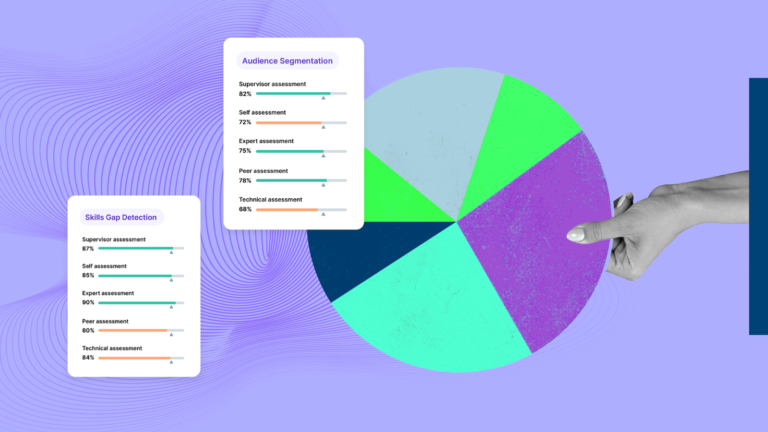
In practice, a platform like SkillPanel enables a business owner to input critical roles, such as Operations Manager, Client Services Lead, and Financial Controller, and receive a ranked skills gap analysis for each internal candidate. The output distinguishes between gaps that can be closed within six months through targeted training and structural gaps that suggest looking externally. Rather than a subjective ranking, the result is a visual readiness dashboard showing which candidates are ready now, which are 12 to 18 months away with targeted development, and where external recruitment is the more realistic path.
Step 4: Build a leadership development plan
Identifying a successor and preparing one are very different things. A structured development plan closes the gap between where a candidate is today and where they need to be when the transition happens. Visible leadership development can boost employee morale and help retain top talent. For each successor, document specific skill gaps, assign stretch assignments, establish mentoring relationships with current leaders, and set measurable milestones.
SkillPanel’s platform generates targeted learning paths tied to identified capability gaps, then tracks progress as development activities are completed. That shifts succession from a static designation to a living, measurable process that can create a competitive advantage, and businesses with formal succession plans are 2.5 times more likely to outperform competitors.
Step 5: Address legal and financial structuring
Work with an attorney, a CPA, and a tax advisor on legal, financial, and tax planning to determine the optimal transfer structure, whether that’s a stock sale, an asset sale, a gifting strategy, installment notes, or a trust arrangement. Draft or update buy-sell agreements to ensure that ownership transitions happen cleanly when triggering events occur; a buy-sell agreement outlines ownership transfer among co-owners and should be drafted with proper legal and tax structuring. Post the Connelly v. United States (2024) ruling, agreements that artificially suppress estate value through insurance structures face heightened IRS scrutiny. Using independent appraisals rather than fixed formulas is now best practice. Formal legal agreements safeguard the business during transitions, and owners should optimize tax, estate, and legal structures two to three years before the transfer.
Step 6: Document operations and institutional knowledge
Many small businesses are deeply owner-centric. The owner knows the key accounts, holds the critical vendor relationships, and carries operating knowledge that lives nowhere in writing. When that owner exits without documentation, the business becomes difficult to transfer and nearly impossible to run independently.
Document business operations, core processes, key relationships, and decision-making frameworks, and document current and future organizational structures for clarity. The more the business can operate without its owner, the more valuable and transferable it becomes.
Step 7: Create a communication strategy
Succession creates uncertainty for employees, customers, lenders, partners, and other stakeholders. Map out who needs to know what, and when. Internal leadership should be briefed before broader staff. Key customers and partners warrant personal outreach with reassurance about continuity of service. Sharing the rationale for the transition, the identity of new leadership, and specific commitments to operational continuity builds trust, preserves client confidence, and supports a smooth transition during leadership change. Succession planning also ensures business continuity and stability during leadership changes rather than triggering anxiety.
Step 8: Review and update the plan regularly
A succession plan that sits in a drawer for three years without revision isn’t a plan; it’s a historical document. Build a review cycle, ideally quarterly or at minimum annually, to keep a successful succession plan current by updating successors, readiness assessments, valuations, and legal documents. Emergency succession planning and contingency planning prepare the business for unexpected leadership changes. Test the plan periodically through temporary hand-offs or leave-cover assignments to confirm that the documented process actually works under real conditions and supports a successful transition.
Key financial considerations in business succession planning
Tax implications by exit type
Each exit pathway carries different tax consequences. A direct sale to a third party typically triggers capital gains tax, and whether the deal is structured as a stock sale or asset sale affects the tax treatment for both parties. Family transfers can use annual gift exclusions, lifetime exemption amounts, and installment note strategies to reduce immediate tax burdens. An ESOP can offer significant tax advantages but requires careful structuring and qualifies only for businesses with suitable cash flow and governance.
The central lesson is that the specific tax outcome of your succession depends heavily on how the deal is structured, not just which exit path you choose. A CPA, a tax attorney, and a wealth advisor working together, ideally two to three years before the planned transition, will identify the combination of approaches that minimizes tax drag, maximizes after-tax proceeds, and keeps decisions aligned with the owner’s long-term personal and business priorities.
Funding the transition: Buy-sell agreements and life insurance
A buy-sell agreement establishes in advance who can buy the business, under what conditions, and at what price when a triggering event occurs, including a purchase by a surviving business partner. Without one, the death or incapacitation of an owner can leave the business in legal and operational limbo. Life insurance and disability income insurance work alongside these structures by providing the liquidity needed to fund a buyout without requiring a fire sale of business assets. Funding may also come from life insurance proceeds, seller financing, or term loans for buyouts and transition costs.
How succession planning affects business valuation
A well-designed succession plan makes a business more valuable, not just more transferable, and a strategic approach to succession planning can directly strengthen valuation. When a buyer or successor sees documented systems, a trained leadership team, reduced owner dependency, clear operational continuity, and company leadership solidified before ownership transfer, they perceive lower risk and a smoother sale process. Lower risk supports higher valuation multiples. A business where the owner is the single point of failure will attract discounted offers or no offers at all. Businesses that can demonstrate objectively assessed leadership readiness and measurable development p rogress present a stronger continuity narrative to buyers and successors alike.
Family business succession plan: Special considerations
Family businesses operate at the intersection of personal relationships and commercial imperatives. According to PwC’s 2025 Family Business Survey , 44% of U.S. family businesses say succession planning affected them in the past year, yet only 57% have an established CEO succession plan. Only 30% of family-owned businesses survive into the second generation. Two-thirds of family-owned businesses lack a documented succession plan. A 2026 Deloitte survey of 300 family business executives found that 30% say their succession plan is behind schedule.
The risks of leaving this unresolved are well documented, even for successful small businesses. One case involving a family business where the founder deliberately kept succession intentions vague resulted in immediate conflict after his death: children assumed equal ownership regardless of their involvement, distributions were delayed, and lawsuits were threatened. A succession advisor eventually restructured roles and voting authority, created a family covenant and employment policy, and used life insurance to equalize inheritances for non-active heirs while preserving control for those running the business. The business avoided legal action and a forced sale, but only after considerable damage. As SeekingSuccession’s case study analysis documents, this situation is a direct product of avoided conversations rather than unavoidable conflict.
Separating family dynamics from business decisions
Decisions about who leads the company should be based on capability, performance, and strategic fit, not birth order or emotional bonds. An advisory board with external members who have no family stake can provide objective input on succession decisions. Structured assessments of each family candidate, evaluated against defined competency profiles, create an objective record that can be defended if family members disagree with the outcome.
To make that assessment more concrete, three questions can serve as a practical filter when evaluating a family member as a successor candidate. First: if this candidate weren’t family, would they rank among the top two candidates for this role based on demonstrated capability alone? Second: has this candidate led a significant business unit or project with real P&L accountability? Third: do key employees and customers have an existing, positive relationship with this candidate? If all three answers are yes, the candidate is objectively strong. If two or more are no, a structured development plan should come before any formal designation.
Structuring equitable vs. equal inheritance
Equitable and equal are not synonyms, and confusing them is a common source of family conflict. Equal distribution gives every family member the same stake regardless of their involvement in the business. Equitable distribution weighs each person’s contribution, capability, and role. Addressing this distinction explicitly in the succession plan, and ideally in a family succession agreement, prevents it from becoming a dispute at the worst possible moment. Structures like trusts, non-voting shares, and installment buyouts can allow the business to remain operational while balancing financial fairness among heirs.
Governance tools: Family councils and succession agreements
A family council provides a formalized forum for family members to discuss business matters, resolve disputes, and align on shared values and long-term vision. It separates family communication from board-level governance. Family succession agreements document how decisions get made, what criteria govern successor selection, and how ownership transfers under various scenarios. Even a two-generation family business benefits from having these agreements explicit rather than assumed.
Common pitfalls in small business succession planning
Starting too late or planning around one scenario
The most pervasive mistake, and one of the common challenges in this process, is simply waiting too long. Nearly 52% of business owners are 55 or older , with 23% aged 65 or above, and most lack a written succession plan despite being in or near the critical transition window. The Exit Planning Institute estimates that about 50% of business exits are involuntary, triggered by health events, partner disputes, or business stress. Waiting until those events are imminent eliminates the options that only early planning preserves and can force rushed and expensive hiring searches when a leader exits unexpectedly.
A related mistake is building the plan around a single scenario and doing nothing to prepare for alternatives. Business circumstances change. Building a flexible plan that accounts for multiple outcomes, including contingency coverage for unexpected departures, creates resilience rather than dependency.
Choosing a successor based on loyalty instead of capability
Loyalty matters in a business, but it is not a leadership qualification. Choosing a successor because they’ve been around the longest, because they’re a trusted family member, or because they’ve been personally loyal can set that successor up to fail. Objective, skills-based succession decisions consistently produce better outcomes. Using platforms like SkillPanel to map candidates against defined role requirements, combining self-assessments, peer reviews, manager evaluations, and performance data, reduces subjective bias and surfaces candidates who may not have been obvious choices through traditional selection methods.
Neglecting legal documentation until it’s urgent
Buy-sell agreements, ownership transfer documents, and estate planning structures are not optional components of a succession plan. Yet EPI data shows that only 9% of business owners have an estate plan in place. Verbal agreements and informal understandings routinely fail under the pressure of actual transitions, especially when family members, creditors, or co-owners have competing interests. Involving experienced legal, tax, and valuation professionals early in the process is the most effective way to document decisions so owners can successfully transition the business with a well thought out plan.
When to bring in professional help
Business succession planning is genuinely multidisciplinary, and no single professional can address all of its dimensions. A CPA and tax advisor should be involved from the beginning, modeling transaction structures and forecasting after-tax outcomes two to three years before a planned transition. An attorney handles legal documentation, entity structure, buy-sell agreements, and regulatory compliance. An estate planning attorney coordinates trusts, gifting strategies, and insurance arrangements. A business broker or M&A advisor becomes critical when a third-party sale is the target path, ideally engaged well before the planned transaction.
For leadership readiness and organizational continuity, platforms like SkillPanel bridge the gap between traditional advisory services and the internal work of preparing successors. With AI-powered skills mapping, predictive gap analysis, and personalized development plans , SkillPanel gives small business owners a structured, evidence-based system for assessing readiness, closing capability gaps, and tracking progress toward leadership continuity, without needing a large internal HR function to manage it.
Insurance professionals handle key-person coverage, buy-sell funding structures, and life and disability policies. For family businesses, a governance advisor or family business consultant can facilitate difficult conversations and design governance tools that separate personal relationships from business decisions. The professionals you bring in early shape every decision that follows, including which exit path you pursue and how the legal and financial structure is built.
Small business succession planning checklist
Use this checklist as a working document. Check off each item as it’s completed, revisit it at each review cycle, and update it as your business and circumstances evolve.
Foundation and Goal Setting
Define personal goals for the transition: financial needs, legacy preferences, desired level of post-exit involvement. Establish a target exit date and build a planning timeline backward from it. Assemble a core advisory team including a CPA, attorney, financial advisor, and insurance professional.
Business Valuation and Financial Preparation
Commission a professional business valuation from a qualified appraiser. Review financial statements, margins, and balance sheet for sale or transfer readiness. Model tax implications for each potential exit pathway with your CPA. Establish or update buy-sell agreements and align insurance coverage with those documents.
Successor Identification and Development
Identify three to five critical roles where a vacancy would create immediate operational risk. Create future-oriented success profiles for each critical role, documenting required skills, leadership behaviors, and experience. Assess potential successors using objective, multi-source criteria rather than tenure or relationships. Categorize successors by readiness: ready now, one to two years, or longer-term pipeline. Build individual development plans with measurable milestones, stretch assignments, and mentoring relationships. Track readiness progress using structured assessments and update plans as capabilities evolve.
Legal and Structural Documentation
Draft or update ownership and transfer documents, including buy-sell agreements, shareholder agreements, and trusts. Confirm that legal documents, insurance policies, and valuation terms are consistent and current. Address estate planning documents including will, powers of attorney, and relevant trust structures.
Operational Continuity
Document core business processes, key account relationships, and institutional knowledge critical to operations. Create contingency plans for unexpected vacancies in each critical role, including interim leadership designations. Ensure the business can operate independently of the owner for documented periods.
Communication and Governance
Develop a stakeholder communication plan: who learns what, and when, across employees, family, customers, and partners. Formalize the succession plan into a single documented reference that can be executed without the owner present. For family businesses, establish governance structures such as a family council or succession agreement.
Review and Maintenance
Schedule a formal plan review at least annually or after any major business, personal, or market change. Test the plan through temporary hand-offs or scenario exercises to confirm it works as designed. Update valuations, readiness assessments, legal documents, and successor designations at each review cycle.
Succession planning for small business is not a one-time task. It is a discipline built over years, requiring consistent attention and regular revision. The businesses that navigate ownership transitions smoothly, retaining value, employees, and customer relationships, are almost always the ones that started planning years before they needed to. That window is open now. Use it.