Succession management software: The tools that make sure your next leader is always ready before you need them
| Reading time:


Leadership gaps don’t wait for convenient timing. A key VP leaves mid-quarter, a plant manager retires without notice, and suddenly the business is scrambling. Succession management software exists to prevent that scramble, replacing guesswork with structured, data-backed planning. As organizations head into 2026, the pressure to formalize leadership succession planning has never been higher, and the software market has responded with tools that go far beyond static org charts.
This guide breaks down what succession management software actually does, the features worth demanding from vendors, and how platforms like SAP SuccessFactors, Cornerstone OnDemand, PageUp, SkillPanel, and others stack up. We’ll also cover how to build a succession management strategy that survives contact with real organizational politics, plus the pitfalls that sink even well-funded rollouts.
Why succession management software matters
Leadership continuity has quietly become a board-level concern rather than a back-office HR task. In the 2026 Executive Perspectives on Top Risks and Opportunities Report from NC State’s ERM Initiative and Protiviti, skills, talent, and succession challenges rank as risk #7 among all near-term enterprise risks, sitting alongside technology adoption and talent availability. That placement alone signals that failing to build a bench for critical roles is now treated as a strategic exposure, not a narrow personnel issue.
The business risk of unplanned leadership gaps
Despite the stakes, most organizations remain unprepared. SHRM data cited in recent analyses shows that only about 21-22% of organizations have a formal succession plan , while more than half report having none at all. That gap becomes expensive fast: a SHRM strategic planning brief notes that replacing an employee can cost three to four times their salary, meaning a sudden leadership exit that forces reactive external hiring compounds quickly into avoidable expense.
The downstream effects go beyond cost. Marsh’s global risk analysis, reported by HR Executive , found that inadequate leadership skills trigger or worsen more secondary risks than any other single factor, including mental health deterioration, labor shortages, unsafe working conditions, and poor investment decisions. Organizations with integrated risk management, which includes succession oversight, outperform peers by an average of 15 percentage points on talent-related risk mitigation. Leadership gaps, in other words, ripple outward in ways that are hard to contain once they start.
How software replaces spreadsheets and guesswork
Spreadsheet-based succession planning tends to fail quietly. Names go stale, readiness assessments become subjective, and nobody notices a critical role has no viable successor until the incumbent resigns. Succession management software fixes this by centralizing talent data, automating readiness tracking, and surfacing gaps before they become emergencies.
SkillPanel has seen this shift firsthand. When Orange implemented SkillPanel as a centralized skills and succession platform , replacing ad-hoc manual tracking, the organization achieved a 98% completion rate for onboarding sessions and had 95% of participants map their skill data into a structured inventory, something scattered spreadsheets never delivered. The median self-assessment took just 13 minutes, showing that structured digital tools can collect rich succession data without burdening employees.
What succession management software actually does
At its core, succession management software turns fragmented talent knowledge into a living system. It doesn’t just store names against roles; it actively tracks readiness, flags gaps, and connects development activity back to business-critical positions. Understanding these core mechanics helps clarify what separates a genuine succession platform from a glorified org chart.
Core capabilities: Talent pools, readiness scoring, and succession grids
Modern succession planning tools build around dynamic talent pools rather than single-name replacement lists. These pools group candidates by skills, experience, leadership potential, and readiness level, and they update automatically as employees complete training or shift roles. SkillPanel’s approach reflects this directly: its succession module supports talent pool management alongside readiness scoring and individual development planning, allowing multiple successors per role instead of one designated heir.
Readiness scoring typically follows three horizons: ready now, ready in one to two years, and ready in three to five years, with the rationale for each tied to specific competency gaps and development progress. Succession grids, sometimes called bench strength matrices, visualize this data by organizing successors by position and readiness level, often with color-coding for diversity representation, retention risk, and timeline. Many platforms also offer a nine-box or equivalent calibration grid, combining performance, potential, skills, and career interest data to support more objective succession decisions than manager intuition alone.
Skills gap analysis and development planning
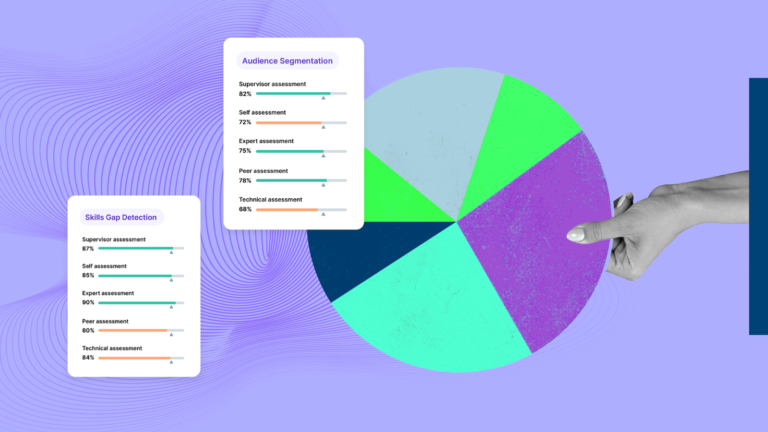
Readiness scores are only useful if they connect to action. Strong succession management software ties every identified gap to a concrete development plan, whether that’s a training module, a stretch assignment, or a mentoring relationship. SkillPanel’s multi-source assessment model, which triangulates self-assessments, peer reviews, manager input, and technical evaluations into a dynamic skills map , generates a more accurate picture of readiness than any single input could provide on its own.
This kind of gap analysis pays off in measurable ways. SkillPanel’s skills gap analysis work with one organization produced a 25% reduction in time-to-competency for new hires and a 15% increase in overall productivity, both attributed to better alignment between required skills and actual workforce capability. Another client used the same approach to identify critical shortages on a development team and address them with targeted training and strategic hiring, accelerating their product development cycle by 30%. These figures come from SkillPanel’s own client engagements rather than independent audits, a caveat worth keeping in mind alongside the third-party statistics cited elsewhere in this guide.
Real-time dashboards, analytics, and reporting
Static succession plans age quickly. Real-time dashboards keep leadership informed about pipeline health without waiting for an annual review cycle. These dashboards typically show bench strength by role, readiness distribution across the workforce, and flight-risk indicators for key positions, giving executives a living view rather than a snapshot.
Built-in reporting also matters for justifying the investment. Interactive skills maps and analytics provide a real-time view of organizational capability, highlighting where expertise and gaps concentrate across teams. SkillPanel offers a board-ready scorecard that ties verified skills data and performance benchmarks to outcomes, helping HR leaders prove ROI on capability-building initiatives rather than relying on anecdote.
Integrations with HRIS, performance, and learning systems
Succession data becomes stale fast if it sits in isolation from the rest of the HR stack. The strongest succession platforms connect to HRIS systems, performance management tools, and learning management systems so that ratings, goals, and completed training automatically feed into readiness assessments. SkillPanel is built to connect with existing HRIS and payroll systems without replacing them, and it integrates with learning providers so assessment results directly drive personalized development plans and learning recommendations.
These connections extend to recruiting as well. SkillPanel’s ATS integrations let teams send assessments and track candidate results without leaving their existing workflow, which matters when succession planning and external hiring need to work from the same skills data rather than parallel, disconnected systems.
Must-have features when evaluating succession planning tools
Not every succession platform is built for the same use case. Some prioritize enterprise-wide governance, others focus on skills intelligence, and others are essentially bolt-ons to a broader HCM suite. Knowing which features actually move the needle will save months of evaluation and prevent buying more platform than the organization is ready to use.
Configurable succession plans and org charts
Every organization structures roles differently, so rigid succession templates tend to create friction rather than clarity. Configurable succession plans and org charts let HR teams model reporting lines, critical roles, and successor candidates in a way that mirrors how the business actually operates, rather than forcing a generic template onto a unique structure.
9-box grids and readiness assessments
The nine-box grid remains a standard for calibrating performance against potential, and most credible succession planning tools include some version of it, often with drag-and-drop calibration for talent review sessions. Paired with readiness assessments that classify successors as ready now, ready soon, or future-ready, these grids give leadership a shared visual language for debating who’s actually prepared to step up.
Ai-driven skills matching and recommendations
AI has moved succession planning from subjective nomination toward evidence-based matching. SkillPanel’s AI analyzes skills, experience, performance history, career trajectory, and mobility preferences to recommend best-fit successors with match percentages, and its multi-source assessment data helps surface non-obvious candidates who might otherwise be overlooked by manager intuition alone.
The broader research backs this shift. A 2025 empirical study on machine learning models in skills-based succession planning within the hospitality sector found that AI models reached 91% and 89% predictive accuracy in identifying future leaders using ANNs and XGBoost, outperforming traditional HR succession practices. A 2026 systematic review similarly concluded that AI-driven models make succession more objective and proactive , largely by forecasting talent needs and screening high- potential employees more consistently than manual review. Vendor case data reinforces the pattern too: IBM’s AI-supported succession pipeline reportedly produced a 15% improvement in engagement and retention among pooled employees, while Microsoft’s internal AI talent-matching platform is credited with a 30% increase in top- talent retent ion and a 20% improvement in leadership development outcomes.
Organizational psychologist Tomas Chamorro-Premuzic, writing in Forbes , argues that AI-driven talent identification can expand candidate pipelines and surface “hidden gems” from different backgrounds and geographies, making leadership transitions smoother and fairer than senior-manager nomination alone. SkillPanel’s own client data supports this directly: after implementing its assessment platform, one company filled 146% more technical positions while conducting 39% fewer interviews, screening out 83% of candidates before the first interview based on objective skills fit rather than resume impressions.
Flight-risk and retention alerts
Succession planning and retention are two sides of the same coin. If a high-potential successor is quietly job hunting, the pipeline is weaker than the org chart suggests. Gallup’s latest workplace data shows that 51% of employees are watching or actively seeking a new job , the highest self-reported turnover risk since 2015. In a related 2024 study, 42% of voluntary leavers said their manager or organization could have done something to prevent their departure, and 45% reported that no one had proactively discussed how their job was going in the three months before they left.
These findings suggest that simple, measurable signals, like disengagement or absence of stay conversations, can function as predictive risk flags. A 2026 analytics summary drawing on Gartner research notes that predictive attrition analytics adoption is rising about 35% year over year , and organizations running strong continuous listening programs see 12-18% lower turnover as a result. Succession platforms that build flight-risk alerts directly into successor profiles give managers a chance to intervene before a pipeline candidate walks out the door.
Role-based access, governance, and audit trails
Succession data is sensitive. It names who’s being groomed for leadership and, implicitly, who isn’t. Role-based access controls, clear governance structures, and audit trails matter both for confidentiality and for defensibility, particularly when succession decisions face scrutiny from boards or regulators. Treating succession data as a strategic asset with defined ownership over plan updates also reinforces executive seriousness about the process rather than letting it drift into an ignored HR exercise.
DEI and bias-reduction overlays
Many succession platforms now market bias-detection features, DEI reporting, and skills-based matching as ways to reduce favoritism in leadership pipelines. It’s worth being candid here: there isn’t yet strong primary research directly measuring whether these overlays change actual promotion equity outcomes. The available evidence is mostly vendor claims and practitioner guidance rather than controlled studies. What is better supported is the general logic that replacing subjective nominations with validated skills data makes bias more visible and, at least in principle, more correctable. Buyers should treat DEI overlays as a useful feature to evaluate, not a guaranteed fix.
That said, a 2025 empirical study on AI-enabled succession planning and retention intention found that AI tools supporting transparent, merit-based succession correlate strongly with employees’ intention to stay, with a correlation coefficient of 0.72 between perceived fairness and retention. Whatever the mechanism, employees do seem to respond positively when succession decisions look data-driven rather than political.
Vendor comparison
The following vendors are compared on the same criteria: pricing, ratings, strengths, and limitations. SkillPanel is included alongside its enterprise competitors so readers can weigh it on equal terms rather than treating it as a given.
SAP SuccessFactors
SAP SuccessFactors’ Succession & Development module remains one of the most comprehensive enterprise options, with AI capabilities expanding quickly. In the second half of 2025, SAP introduced AI-generated successor recommendations, surfacing up to ten candidates per role based on job profiles and work history with clear rationale. By the first half of 2026, it added a Succession Planning Agent that continuously evaluates plan health, flagging critical positions with no successors or weak bench strength. On G2, the product holds a solid rating around 4.0 out of 5 from over 1,200 reviews, with praise for its integrated talent pools and succession dashboards, though reviewers consistently note a steep learning curve and some gap between marketed AI features and everyday usability. Pricing is premium and typically bundled into the broader HCM suite, with enterprise estimates around $10-15 per user per month plus implementation costs often exceeding $100,000.
Cornerstone OnDemand
Now marketed as Cornerstone Galaxy, this platform ties succession directly to learning and skills intelligence through its AI Skills Graph, which maps employee skills to succession-critical roles and recommends learning paths. Features include color-coded talent pools, a configurable nine-box grid with multi-rater calibration, and “what-if” scenario modeling across organizational levels. Pricing is custom, generally landing around $15-25 per user per month, and a 2026 analysis rated its total cost of ownership as “higher” once implementation, customization, and maintenance are factored in. Reviewers frequently flag a dense, non-intuitive UI and note some roadmap uncertainty following the consolidation of Saba, EdCast, and Grovo into the Galaxy platform.
PageUp
PageUp’s succession module consolidates performance, learning, and talent data into an interactive nine-box grid with drag-and-drop calibration, talent pools with readiness tracking, and dashboards built for manager-friendly, guided workflows. Pricing isn’t published, with independent estimates ranging from roughly $10 to $25 per employee per month plus implementation fees. On G2, PageUp holds a strong 4.4 out of 5 rating across 130-plus reviews, with customers praising customer support and configurability, though a steep learning curve and limited reporting flexibility come up repeatedly for organizations without dedicated administrators.
PeopleFluent
PeopleFluent offers drag-and-drop succession scenario modeling, visual org-impact mapping, nine-box grids, and a built-in LMS connecting development plans directly to succession paths. Pricing is enterprise-focused and quote-based, with analysts noting higher total cost of ownership than mid-market alternatives. A 2026 succession-software roundup citing G2 places PeopleFluent at roughly 3.9 out of 5 from over 80 reviews, among the lower ratings in its comparison set, with reviewers citing difficult navigation and a dated interface that requires significant training investment.
UKG pro
UKG Pro’s succession capabilities center on talent pools, career path mapping, and using performance data to identify internal successors, all inside a broader HCM suite that shares a single employee record across payroll, performance, and workforce management. Pricing isn’t published; one user-reported estimate puts costs around $26-37 per employee per month, though this figure isn’t official. Reviews note the succession module can feel inflexible relative to leadership expectations, and broader feedback on UKG Pro repeatedly mentions cluttered navigation and inconsistent customer support.
TalentGuard
TalentGuard runs succession planning on a single skills ontology and its ESTRI Readiness Engine, combining verified skills proficiency, behavioral assessments, and 360-degree feedback into a continuous, auditable readiness score designed for defensible, board-ready decisions. The platform offers a free competency management tier, with custom-priced bundles for full succession capabilities typically ranging from $3-10 per user per month, or enterprise deals near $25,000 annually. Features include unlimited configurable talent pools, an AI layer called WorkforceGPT for role recommendations, and a Risk Mitigation Center that flags roles simultaneously critical, high-turnover, and lacking qualified successors. Reviewers consistently call out a dated UI, though TalentGuard has reportedly committed to a redesign.
iMocha
iMocha positions succession planning as fundamentally a skills intelligence problem, building unified successor profiles from skills, experience, and AI insights rather than nomination lists. It draws on a library of over 2,500 skills assessments and offers predictive analytics for future leadership needs. Pricing isn’t published for succession use specifically, though broader platform pricing reportedly starts around $400 per month, positioning it at the higher end for enterprise deployments. Reviews describe iMocha as strong in assessment depth but not a full HCM suite, lacking built-in LMS or performance review functionality, making it best suited to organizations with 5,000-plus employees needing objective, assessed skills data.
Sumtotal
SumTotal’s succession module sits inside a broader talent development suite, offering competency-based pipelines, dynamic talent pools, and an n-box grid for visualizing potential against readiness. Pricing starts around $10,000 per year according to Software Advice, with a 2024 analysis estimating three-year total cost of ownership in the $300,000 to over $1 million range for enterprise deployments. A 2026 roundup cites a G2 rating of 3.3 out of 5 from 42 reviews, reflecting mixed satisfaction; users value the unified functionality but frequently flag a clunky interface and steep learning curve.
Plum
Plum focuses on psychometric assessment and behavioral fit as inputs to succession planning, offering social intelligence testing, match-criteria surveys, and candidate comparison tools. G2 shows a strong 4.4 out of 5 rating, with Capterra Canada reporting 4.7 out of 5 from a smaller sample of 19 reviews. Pricing isn’t disclosed publicly. The main limitation is scope: Plum has no hard-skills library and limited coverage of technical competencies, making it a better fit for behavioral succession criteria than technical role readiness.
EmpXtrack
Empxtrack offers a cloud-based succession planning module supporting up to three different succession timelines per role, embedded within a broader HRMS covering performance, learning, and competency management. Pricing is available on request, though 2026 reviews describe it as good value relative to enterprise alternatives, with Capterra showing a 4.3 out of 5 rating from 13 reviews. The interface is often described as dated, and custom workflows typically require vendor support, extending implementation timelines for smaller HR teams.
SkillPanel
SkillPanel takes a skills-intelligence-first approach to succession, building talent pools and readiness scores from multi-source assessments rather than manager nomination lists alone. Pricing sits far below the enterprise suites above, with public references citing costs from roughly $1 per employee per month , positioning it as a lightweight complement to an existing HRIS rather than a full HCM replacement. Ratings are strong: Capterra shows a 4.8 out of 5 rating from 54 reviews , with sub-scores of 4.7 for ease of use and customer support, while a broader 2026 comparison cites 4.6 out of 5 on G2 . The tradeoff is scope: SkillPanel doesn’t offer native payroll, time tracking, or the deep nine-box and talent-review workflows built into suites like SAP SuccessFactors or Cornerstone, and its public review base is far smaller than those entrenched enterprise platforms, meaning organizations needing an all-in-one succession and HCM system will likely need to pair it with a broader suite.
How to choose the right succession planning solution for your organization
With this many succession planning solutions on the market, the right choice depends less on which platform has the longest feature list and more on fit with your organization’s size, complexity, and internal capacity to manage the tool.
Match features to company size and complexity
An enterprise with thousands of employees across multiple business units needs different governance and configurability than a mid-sized company managing succession for a few dozen critical roles. Platforms like SAP SuccessFactors and Cornerstone Galaxy are built for the former; leaner tools like Empxtrack, Plum, or SkillPanel often suit smaller organizations or those pairing skills data with an existing HRIS. Buying more platform than you can staff and configure tends to produce shelfware rather than results.
Evaluate total cost of ownership and implementation timeline
List price is rarely the real cost. A 2026 pricing analysis found that a 1,000-employee company deploying a full HCM suite can face $250,000-500,000 in first-year total cost of ownership, with implementation alone often running $100,000-500,000 for mid-market deployments. Timeline matters just as much as cost: TalentGuard’s 2026 vendor guide notes that typical enterprise implementations take 12-16 weeks from contract signing to production use, but full organizational rollout across all critical roles usually takes 12-18 months. Budget and plan for both numbers, not just the first one.
Assess vendor support and customer success track record
Support quality shows up in the details: how quickly a vendor resolves configuration issues, whether onboarding sessions actually drive adoption, and how responsive the team is once the contract is signed. SkillPanel’s own customer outcomes illustrate what strong support and onboarding can produce. Beyond the Orange case study’s high completion rates, clients using SkillPanel’s assessment tools have saved 3 hours per candidate on technical screening while improving match quality, and another reduced time-to-hire by 50% with 90% fewer technical interviews. A third client saved 24 days per hire, translating to over 200,000 days of work saved annually across roughly 100 technical hires. These figures reflect SkillPanel’s own client engagements rather than independent third-party audits, worth keeping in mind alongside the vendor-reported figures throughout this guide.
Request a demo and pilot before committing
No amount of vendor marketing substitutes for watching the tool handle your actual org chart and real successor data. Request a pilot with a handful of critical roles before signing a multi-year contract. This surfaces configuration friction, reporting gaps, and adoption barriers while the stakes are still low.
Building a succession management strategy around your software
Software alone doesn’t build a leadership pipeline. It’s a tool that either amplifies or exposes the quality of the underlying succession management strategy.
Aligning succession planning with business strategy
Succession planning and talent management work best when tied explicitly to where the business is headed, not just which roles happen to be open. SkillPanel’s guidance on this point is direct: HR should articulate the succession business case in executive language , framing it around risk mitigation, cost avoidance, and strategic execution rather than presenting it as a standalone HR initiative. Concrete risk assessments, such as retirement eligibility and bench strength gaps, tend to move executives more effectively than general arguments about “developing talent.”
The financial case is substantial. Harvard Business Review’s analysis of S&P 1500 companies, cited in multiple 2026 guides, estimates that poorly managed leadership transitions destroy about $546 billion in value annually through lost intellectual capital and underperforming replacements. On the other side of that ledger, Heidrick & Struggles’ Route to the Top 2025 report found that leaders treating CEO succession as a continuous, strategic process more often report higher financial performance than their peers.
Establishing data-driven performance and talent reviews
A succession planning framework only stays credible if it’s grounded in objective, current data rather than annual guesswork. This is where the integration between succession software and performance management systems earns its keep: ratings, goals, and manager feedback should flow directly into readiness assessments rather than requiring separate manual updates. SkillPanel’s succession workflow connects skills gaps directly to role requirements and surfaces best-fit internal successors based on assessed capabilities, anchoring readiness scores in evidence rather than impression.
Quarterly succession reviews, where leadership evaluates progress and recalibrates readiness assessments, help keep this data current. Best practices content emphasizes multi-source assessments involving manager, peer, self, and HR data as a way to engage managers directly in objective evaluation while reducing individual bias.
Securing executive buy-in and manager adoption
Succession planning tools fail more often from a lack of sustained executive ownership than from bad software. Framing succession purely as an HR compliance exercise tends to produce nominal endorsement and weak engagement rather than genuine sponsorship. A more effective approach connects succession directly to language executives already track: leadership continuity risk, the cost of external hiring versus internal development, and pipeline depth as a driver of organizational resilience.
Practical steps that build sustained buy-in include a defined governance structure with clear cadence for succession reviews, formal sponsorship from the CHRO and CEO, and making succession a standing agenda item in leadership meetings rather than an annual event. Requesting specific executive commitments, such as succession committee participation, mentoring time, and direct involvement in candidate assessments, gives sponsorship concrete shape instead of leaving it as a vague expectation.
Common implementation pitfalls and how to avoid them
Even well-chosen succession management software can underdeliver if the rollout mishandles a few predictable failure points.
Poor data hygiene and fragmented talent signals
Succession decisions are only as good as the data feeding them, and that data is often messier than teams expect. A 2026 annual report on HR analytics adoption found that 74% of organizations cite data quality as a primary barrier to successful analytics implementation, pointing to scattered data across HRIS, ATS, LMS, and payroll systems along with inconsistent formats and manual-entry errors. The upside is real, though: organizations that implement structured data governance, validation, and regular audits see 67% higher success rates in their analytics initiatives. Treating data hygiene as a prerequisite, not an afterthought, pays off directly in succession decision quality.
Low user adoption across managers
Managers who see succession planning as an extra chore rather than a core leadership responsibility will quietly disengage from the tool, no matter how good it is. Integrating succession reviews into existing talent review meetings, rather than creating a separate calendar burden, tends to increase adoption meaningfully. Starting with the three to five highest-risk critical roles, instead of trying to map succession for every position at once, also keeps the initial ask manageable for busy line leaders.
Overcomplicating the rollout
Ambitious organizations sometimes try to launch full nine-box calibration, AI-driven matching, and DEI overlays simultaneously across every department in month one. That’s a recipe for stalled adoption. A phased rollout, starting with the most critical roles and expanding as managers build comfort with the process, tends to succeed where a big-bang launch struggles. This mirrors what SkillPanel has seen in practice: strong onboarding completion rates and high engagement, like the 98% completion rate and 95% skills-mapping participation seen in the Orange case study, come from a deliberate, well-supported rollout rather than an all-at-once mandate.
Frequently asked questions
What is the difference between succession planning and replacement planning?
Replacement planning identifies an immediate backup for a specific role, typically for emergency continuity. Succession planning in HR takes a broader, longer view, building talent pools of multiple potential successors across various readiness horizons and tying their development explicitly to business strategy, not just crisis coverage.
How often should succession data be updated?
Quarterly reviews are a common best practice, allowing leadership to recalibrate readiness assessments and adjust development plans based on fresh performance and skills data. Fast-moving industries or organizations with high turnover in critical roles may need more frequent check-ins to keep the pipeline accurate.
What security and compliance standards should succession software meet?
Given how sensitive succession data is, buyers should expect vendors to demonstrate compliance with widely recognized frameworks. GDPR sets the baseline for data privacy in the EU and UK and is increasingly treated as global best practice, requiring measures like encryption, data minimization, and breach notification within 72 hours. SOC 2 Type II attests that a vendor’s security controls are operated effectively over time, covering access controls, incident response, and monitoring. ISO 27001 and its privacy extension, ISO 27701, round out the picture, covering systematic information security management and privacy controls aligned with GDPR. Vendors unable to speak clearly to these standards deserve extra scrutiny before handling your leadership succession data.
How does AI improve succession planning outcomes?
AI’s biggest contribution is replacing subjective, relationship-based nomination with skills and performance data. A 2026 systematic review found that AI-based predictive analytics for talent identification produced up to a 30% increase in internal promotions when it replaced more subjective judgment in succession decisions. AI also improves accuracy: SkillPanel’s own client data shows that AI-powered skill inference and matching lead to 10-20% higher accuracy in hiring, training, and retention decisions compared with traditional approaches, largely because the system infers skills from resumes, project work, and learning records to build a defensible skills graph rather than relying on manager memory.
Building your leadership pipeline: Next steps
Choosing succession management software is really the beginning of a longer commitment, not the finish line. Start by defining which roles genuinely qualify as critical to the business, then evaluate platforms against your actual complexity rather than an aspirational feature checklist. Prioritize integration capabilities with your existing HRIS and learning systems, since disconnected data undermines even the best succession planning tools. Pay close attention to user experience and reporting quality during your pilot, since these are what determine whether managers actually adopt the tool day to day. Above all, remember that the technology amplifies whatever succession management strategy you already have. A platform without executive sponsorship, clean data, and a phased rollout plan will underdeliver regardless of its feature list. Get those fundamentals right, and the right succession platform, whether an enterprise suite or a focused tool like SkillPanel, becomes a genuine multiplier for building the leadership bench your organization needs in 2026 and beyond