

Every performance conversation eventually arrives at the same question: where does this person need to grow? Yet too often, that conversation stalls because managers either avoid the topic or handle it so bluntly that employees walk away discouraged instead of motivated. Getting this right matters more than ever as organizations compete for talent and rely on skilled, adaptable teams to hit ambitious goals. This guide breaks down what areas of improvement actually mean in 2026, walks through 25 concrete employee areas of improvement examples, and shows you how to turn feedback into a real action plan for work improvement.
What ‘areas of improvement’ really means in 2026 performance conversations
So what is areas of improvement, exactly? At its core, identifying areas of improvement means recognizing specific skills or behaviors that employees can sharpen to perform better and contribute more to their teams. It’s not a euphemism for failure. It’s a forward-looking practice built around growth rather than blame.
The framing has shifted noticeably over the past few years. Where “areas of improvement” once carried the weight of a warning, today’s best managers use the phrase to open a dialogue about capability building. The goal is actionable feedback that gives employees ownership over their own development, rather than a list of complaints handed down from above. This mindset matters because the pace of change at work keeps accelerating, and employees who can adapt and learn continuously are the ones who keep organizations competitive.
Why identifying employee areas of improvement matters
Identifying areas of improvement isn’t just a box to check during annual reviews. It’s a foundational part of building a culture where people actually want to grow. When done well, it clarifies expectations, strengthens trust, and gives employees a real sense of direction rather than vague notions of “doing better.”
Clarity drives engagement and retention
When employees understand exactly what’s expected of them and how they can develop, they tend to stay more engaged and more loyal. Vague feedback like “be more proactive” leaves people guessing. Specific employee improvement areas, on the other hand, give people something concrete to work toward, which builds confidence and reduces the frustration that often drives turnover.
Feedback builds trust between managers and employees
Regular, constructive feedback creates a safer space for honest conversations. When employees know that feedback is meant to help them grow rather than catch them out, they’re far more willing to raise concerns, ask for help, and take feedback seriously. That trust pays off in stronger team dynamics and better collaboration across departments.
25 Employee areas of improvement (with examples)
Below are 25 development areas at work examples, grouped into six broader categories. These cover the areas of improvement for employees that come up most often across industries, whether you’re managing a sales floor, an engineering team, or a customer support desk.
Communication and interpersonal skills
Communication sits at the core of nearly every workplace interaction, which makes it one of the most common areas of improvement for employees at any level. Strengthening how people listen, write, present, and empathize pays dividends across every other skill on this list.
Active listening
Employees who actively listen catch nuances in conversations that others miss, which cuts down on misunderstandings and strengthens collaboration across teams. Picture a project coordinator who consistently misses details from client calls, causing rework later. A manager might set a simple goal: summarize each call in three bullet points and send it to the client within the hour. Within a few weeks, fewer details fall through the cracks and client confidence goes up.
Written communication
Clear, concise writing ensures that emails, reports, and messages get understood the first time, saving everyone the back-and-forth that comes from ambiguous wording.
Verbal and presentation skills
Strong verbal communicators can convey complex ideas simply and keep an audience engaged, whether they’re in a client pitch or a weekly team update.
Empathy and emotional intelligence
Employees who build empathy connect better with colleagues and clients alike, which tends to lift team morale and smooth over friction before it escalates.
Accepting and giving feedback
A workplace where feedback flows both ways, not just top-down, creates a culture of continuous improvement that benefits everyone involved.
Time management and organization
Poor time management quietly erodes productivity, and it’s one of the development areas for employees that shows up in nearly every review cycle. Getting this right prevents burnout and missed deadlines before they become chronic problems.
Prioritization
Employees who can distinguish urgent tasks from important ones consistently get more done with less stress, because they’re not reacting to whatever lands in their inbox first. Take a sales rep who spends most of the week chasing low-value leads while high-intent prospects go cold. A SMART goal here might be: rank the pipeline by deal size and close probability every Monday morning, then work top-down for the first two hours of each day. After a month, the rep typically closes more of the deals that actually move the needle.
Goal setting
Setting SMART goals, ones that are specific, measurable, achievable, relevant, and time-bound, gives employees a clear way to track their own progress instead of relying on gut feeling.
Organization and file management
Simple organizational habits, like consistent file naming and folder structures, save employees real time they’d otherwise spend hunting for documents.
Collaboration and teamwork
No employee works in a vacuum, so collaboration skills directly affect how well teams hit their targets. This is one of the areas of improvement that shows up as much in peer feedback as it does in manager reviews.
Cooperation and trust-building
Teams that trust each other move faster because people aren’t second-guessing intentions or duplicating work out of caution.
Conflict resolution
Employees trained to handle disagreements constructively keep small tensions from snowballing into larger workplace disputes.
Delegation
Effective delegation isn’t just about offloading tasks, it’s about developing other people’s skills while freeing up time for higher-value work. A team lead who insists on reviewing every line of code personally, for instance, often becomes the bottleneck on delivery. Assigning ownership of two smaller modules to junior engineers, with a check-in at the halfway point, tends to speed up delivery while building bench strength for the next project.
Leadership and decision-making
Leadership development isn’t reserved for managers. These employee areas of improvement examples apply to anyone stepping into more responsibility, whether formally or informally.
Accountability and ownership
Employees who take ownership of their outcomes, good or bad, build credibility fast and tend to earn more autonomy over time.
Strategic thinking
Connecting day-to-day tasks to bigger organizational goals helps employees make smarter decisions without needing constant direction.
Decision-making under pressure
Training employees to make sound calls quickly, even under stress, builds the kind of confidence that shows up in high-stakes moments.
Problem-solving and critical thinking
Strong problem solvers don’t just fix what’s broken, they spot patterns others miss. This category covers some of the most valuable common areas of improvement for employees who want to move into more complex roles.
Analytical thinking
Employees who think analytically can break down messy situations into their component parts, making root causes easier to identify and address. A support agent who treats every ticket as a one-off, rather than noticing that the same bug keeps generating complaints, is missing this skill. Asking them to tag recurring issues for a month often surfaces a pattern that engineering can fix once, instead of the team fielding the same complaint fifty times.
Creativity and innovation
Encouraging creative thinking opens the door to better processes and products, especially when employees feel safe proposing ideas that challenge the status quo.
Adaptability and continuous growth
Adaptability has become one of the defining employee development needs of the current work environment, given how quickly roles and tools continue to shift.
Flexibility with change
Employees who adjust quickly when priorities shift keep their teams moving instead of stalling out during transitions.
Proactiveness
A proactive employee spots problems before they escalate and takes initiative without waiting to be told what to do.
Learning new skills
Employees who commit to ongoing learning stay relevant as job requirements evolve, which benefits both their careers and the organization’s long-term capability.
Professionalism and work attitude
Professionalism shapes how employees are perceived day to day, and it’s often the deciding factor in who gets trusted with bigger opportunities.
Patience and self-control
Employees who manage stress well keep their composure in tense situations, which sets a tone that others on the team tend to follow.
Customer service orientation
A strong customer service mindset means prioritizing client satisfaction even when it requires extra effort, which builds lasting relationships over time.
Attention to detail
Careful attention to detail reduces costly errors and consistently raises the quality bar on finished work.
How to identify the right improvement areas for each employee
Generic feedback rarely sticks. Identifying areas for improvement that actually resonate with an employee requires looking at real data, gathering perspectives from multiple sources, and connecting development to what the employee actually wants out of their career.
Use performance data and metrics
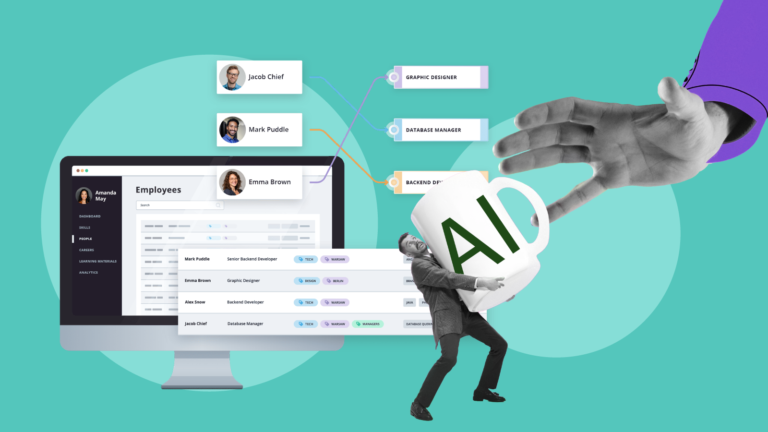
Hard data removes the guesswork from performance reviews. Looking at concrete metrics helps managers spot patterns, where an employee consistently excels and where they might be struggling, so that development priorities are grounded in evidence rather than impressions. This is where a platform like SkillPanel becomes useful: it pulls real-time data from existing HR systems and turns it into a skills gap heatmap by role, so a manager can see at a glance which teams are strong in a given competency and where a gap needs attention. In the interest of transparency, SkillPanel is the platform behind this article, and we built it around exactly this kind of skills mapping.
Gather 360-degree feedback
Relying solely on a manager’s perspective leaves blind spots. Feedback from peers, direct reports, and cross-functional collaborators rounds out the picture, often surfacing employee development needs that a single manager might miss entirely.
Align improvement areas with career goals
Development sticks better when it connects to something the employee actually cares about. Tying improvement areas to career aspirations, whether that’s a promotion, a lateral move, or a new specialization, makes the effort feel worthwhile rather than imposed.
How to write areas of improvement in a performance review
Documenting areas of improvement performance review comments requires a careful balance. Too soft, and the feedback gets ignored. Too harsh, and it damages the relationship without changing behavior.
Example phrases that balance honesty and encouragement
The best performance review development areas focus on observable behaviors and their impact, not personality judgments. Instead of writing “you need to communicate better,” a more useful phrase is: “Improving the frequency of your project updates will enhance team alignment and reduce confusion.” This approach names the behavior, explains the impact, and points toward a clear fix.
How many improvement areas to include per review
Resist the urge to list everything at once. Limiting feedback to one or two areas for improvement performance review comments keeps things manageable, giving employees a realistic chance to actually improve instead of feeling buried under a long list of shortcomings.
How to discuss areas of improvement without hurting morale
How you deliver feedback matters just as much as what you say. A poorly framed conversation can undo months of trust-building in a matter of minutes.
Frame feedback around growth, not blame
Positioning suggestions for improvement in the workplace as opportunities rather than criticisms changes how employees receive them. The difference between “you failed to hit your targets” and “here’s where we can help you hit your targets next quarter” is entirely about framing, and it changes the emotional tone of the entire conversation.
Ask questions before giving solutions
Before jumping to solutions, ask the employee how they see the situation. This two-way dialogue often reveals context a manager wouldn’t otherwise know, and it gives employees a sense of ownership over their own development path.
Turning feedback into a development plan
Feedback without follow-through rarely leads to lasting change. Turning identified improvement areas into a structured development plan is what separates conversations that actually move the needle from ones that get forgotten by the next quarter.
Set specific, time-bound goals
Vague intentions to “get better at delegation” go nowhere. Specific, time-bound goals, like practicing delegation on two projects over the next month, give employees a clear target and a deadline to work against.
Schedule check-ins to track progress
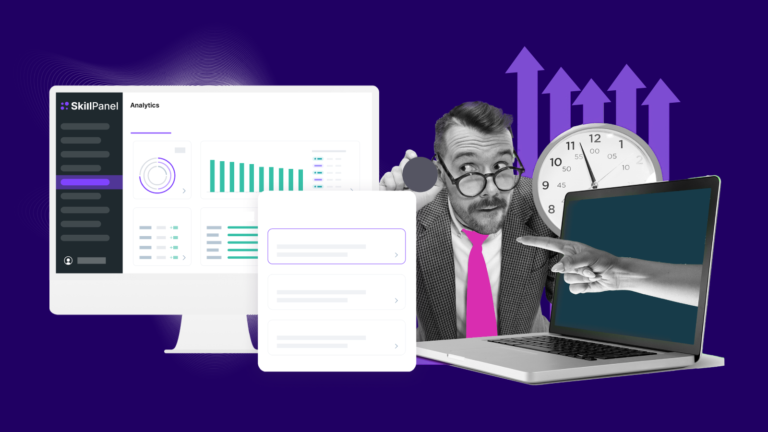
Development plans need regular check-ins, not just a single conversation at review time. These touchpoints let managers offer support, celebrate small wins, and adjust the plan if priorities shift. Tools that centralize training requests and track progress against a personalized development plan, like the dashboards built into SkillPanel that show team-level competency scores over time, make this ongoing process far easier to manage across larger teams.
Common mistakes that undermine improvement feedback
Even well-intentioned feedback can fall flat if it’s handled poorly. Vague comments, such as telling someone to “be more strategic” without explaining what that looks like in practice, leave employees without a clear path forward. Failing to follow up is another common misstep. Feedback delivered once and never revisited signals that the manager didn’t really mean it. Piling on too many improvement areas at once overwhelms employees instead of motivating them, and framing feedback as a personal failing rather than a growth opportunity tends to shut down the very openness that makes development conversations useful in the first place.
FAQs about employee areas of improvement
What are the most common areas of improvement for employees?
Communication skills, time management, and collaboration top the list. These directly affect workplace relationships and productivity, which is why they show up so consistently across performance reviews and 360-degree feedback.
What’s the difference between an area of improvement and a performance issue?
Areas of improvement focus on building skills for future growth. Performance issues, on the other hand, point to a failure to meet minimum job standards and usually require more immediate, formal intervention.
How often should improvement areas be reassessed?
Improvement areas shouldn’t sit untouched until the next annual review. Reassessing them during regular check-ins keeps development aligned with shifting priorities and gives employees timely feedback while it’s still relevant.
Who should own employee development: Managers or HR?
Both play a role. Managers typically handle the individual, day-to-day conversations and coaching, while HR oversees the broader process, ensuring development efforts align with organizational strategy and workforce planning.