
The gap between employees who thrive alongside AI and those who get left behind is widening. It has nothing to do with who can code. It has everything to do with who can think critically, adapt fast, and use AI tools to outperform the person sitting next to them. Heading into 2026, the question isn’t whether AI will change your role, because it already has. What matters now is whether you’ve got the skills to stay valuable as the tools get sharper and the competition gets tighter.
This article covers the ten skills reshaping careers right now, why they matter, and how to start building them.
Why AI is redefining what skills matter
AI isn’t just automating tasks anymore. It’s rewriting the criteria for what makes someone good at their job. Skills that felt essential five years ago are quietly fading in relevance, while new competencies are climbing to the top of every hiring manager’s list. What counts as “qualified” is being redefined.
The organizations getting this right understand something simple: AI works best when it amplifies human judgment rather than replacing it. Companies developing people who partner with AI, instead of hiring to compete against it, are building the durable advantages in an increasingly automated market. Still, AI fluency alone won’t carry a career. A prompt engineer with no marketing background, or a data-literate analyst with no financial context, still needs the underlying domain expertise to make good use of AI output. The skills below work best stacked on top of what you already know, not swapped in as a replacement for it.
How the future of work with AI is shifting job requirements
Compare any job posting today to one from a few years back and the language has shifted noticeably. Work built around AI now gets framed as collaboration rather than replacement. As routine, rule-based tasks get automated away, employers are prioritizing human insight, creative problem-solving, and emotional intelligence over rote technical execution.
Job descriptions increasingly ask candidates to “leverage AI tools” or “work alongside automated systems.” Employees are expected to be technically fluent enough to use AI well, while staying flexible enough to adjust as those tools change. This is becoming the new baseline across most white-collar sectors, though the pace varies a lot by industry, and not every job is changing on the same timeline.
What makes a skill ‘AI-proof’ versus automatable
Not every skill ages the same way under AI pressure. AI-proof skills tend to involve nuanced human interaction, strategic thinking, or creative problem-solving, work where context and judgment matter more than raw speed. Emotional intelligence, original thinking, and complex decision-making fall into this bucket because AI still struggles to replicate real human nuance.
Automatable skills, by contrast, tend to be repetitive and rule-based. Data entry, basic scheduling, and formulaic reporting are prime examples of tasks AI handles well, often better than a person can. Recognizing this distinction is the first step toward building a career that complements automation instead of competing against it.
The 10 skills you need
Here are the ten competencies that matter most as we head into 2027.
1. AI And Data Literacy
Understanding how AI systems process and interpret data is no longer optional. As organizations lean harder into data-driven decisions, professionals need to read trends, catch anomalies, and explain what they found to non-technical stakeholders. A financial analyst might use AI-generated forecasts as a starting point but still needs to know which underlying assumptions to question before presenting numbers upward. This skill is foundational because nearly everything else on this list builds on it.
2. Prompt Engineering And AI Tool Interaction
Knowing how to talk to AI tools is quickly becoming as valuable as knowing how to use them. Crafting precise, well-structured prompts determines whether you get generic output or something genuinely useful. A marketer who refines a campaign brief through several rounds of prompting, instead of settling for the first draft, ends up with copy that actually reflects brand voice and audience nuance rather than generic filler. This is what separates people who use AI casually from those who use it as a real productivity multiplier.
3. Critical Thinking And AI Output Evaluation
AI generates content and recommendations faster than any human can match, so the bottleneck has shifted to evaluation. Professionals now need sharp critical thinking to judge whether AI-generated information is accurate, relevant, and safe to act on. Catching a fabricated statistic or a misapplied assumption in an AI-drafted report before it reaches a client is exactly the kind of scrutiny this requires. Skip this step, and costly mistakes slip through.
4. Machine Learning And Automation Fundamentals
You don’t need to build machine learning models to benefit from understanding how they work. A working knowledge of automation fundamentals helps professionals engage meaningfully with AI systems, spot their limitations, and apply them intelligently within their own field.
5. Creativity And Innovation Alongside AI
AI can generate ideas, but it can’t replace genuine human creativity. The professionals who stand out use AI-generated insights as a starting point, then push further to develop original solutions AI couldn’t have reached on its own.
6. Emotional Intelligence And Human Connection
As AI absorbs more routine tasks, the human ability to build trust and connect authentically only grows more valuable. This is one of the clearest examples of an AI-proof skill: no algorithm can replicate genuine interpersonal rapport.
7. Adaptability And Continuous Learning
The tools you’re using today will look different in eighteen months. Professionals who thrive treat learning as an ongoing habit rather than a one-time certification. This adaptability is what keeps a career resilient through constant technological change.
8. AI Ethics And Responsible Use
As AI gets embedded deeper into business operations, understanding its ethical implications becomes a core professional responsibility. That means watching for bias, protecting privacy, and staying accountable when AI systems shape real decisions about real people.
9. Cross-disciplinary And Systems Thinking
The most valuable professionals connect dots across departments and disciplines. This kind of systems thinking helps teams solve problems that don’t fit neatly into one function, which happens more and more as AI blurs the lines between traditional job roles.
10. Ai-augmented Communication And Collaboration
Translating complex AI insights into clear, actionable strategies is its own skill set . Teams that communicate well around AI-enhanced workflows move faster and make fewer mistakes than teams where AI output gets lost in translation between departments.
Which AI skills are most in-demand by industry
The answer shifts quite a bit depending on the industry, though data fluency and human judgment show up as themes everywhere.
Technology and software development
In tech, AI programming , data analysis, and machine learning expertise remain the most sought-after competencies. Companies need people who can build, manage, and refine AI systems as they scale, and that technical bar keeps rising.
Marketing, sales, and customer experience
Marketing teams are prioritizing data analysis, customer insight generation, and automated communication strategy. Professionals who use AI tools to personalize campaigns and improve customer engagement have a clear edge over those relying on manual, one-size-fits-all approaches.
Healthcare and finance
Healthcare organizations need people skilled in data management and ethical AI deployment as AI reshapes patient care and operational workflows. In finance, understanding how AI supports risk assessment and predictive analytics has become essential for sound, informed decision-making.
Operations, manufacturing, and logistics
AI is streamlining supply chains and production processes, and that’s pushing up demand for automation know-how and process optimization skills. Professionals who can weave AI into logistics and manufacturing workflows are becoming increasingly critical to operational efficiency across these sectors.
How to upskill in AI starting today
Knowing which skills to prioritize is only half the equation. The other half is building an actual plan to develop them, which is where most people get stuck.
Assess your current skill gaps
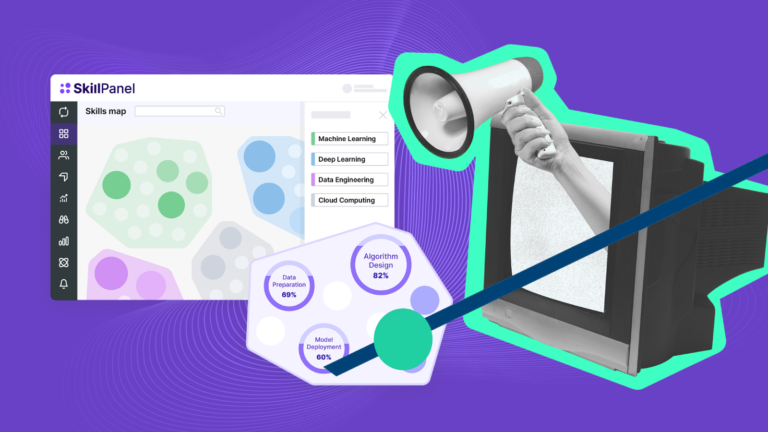
Before you can close a gap, you need to know it exists. Self-assessment is the logical starting point for figuring out where your abilities stand and which skills deserve attention first. This is exactly where a platform like SkillPanel becomes valuable. Its dynamic skills map and predictive gap analysis give both individuals and organizations a clear, data-backed picture of where skills currently stand and where the biggest development opportunities lie.
Choose between self-paced courses, certifications, and hands-on practice
There’s no single best way to build these competencies that works for everyone. Some people absorb concepts best through structured certifications, others through self-paced online courses, and plenty through direct, hands-on practice with real tools. The right combination usually blends all three, pairing theory with practice.
SkillPanel supports this by integrating with online learning providers and centralizing training requests, so employees and managers aren’t juggling five different systems just to track development progress. Combined with personalized development plans built from real assessment data, the platform turns vague learning intentions into a concrete, trackable path forward.
Build a learning habit that keeps pace with AI change
Treat this as an ongoing habit rather than a project with an end date. AI tools and best practices shift quickly, and professionals who set aside regular time to explore new methodologies stay ahead of those who treat learning as a one-off event. Even thirty focused minutes a week adds up significantly over a year.
Future-proofing your career beyond 2027
The skills that matter in 2026 won’t be identical to the skills that matter in 2029, which is exactly why adaptability sits near the top of this list. Careers that compound in value tend to belong to people who stay proactive instead of waiting to react. Keep building AI-proof skills alongside technical AI fluency, and treat both as permanent parts of your professional development rather than optional extras.
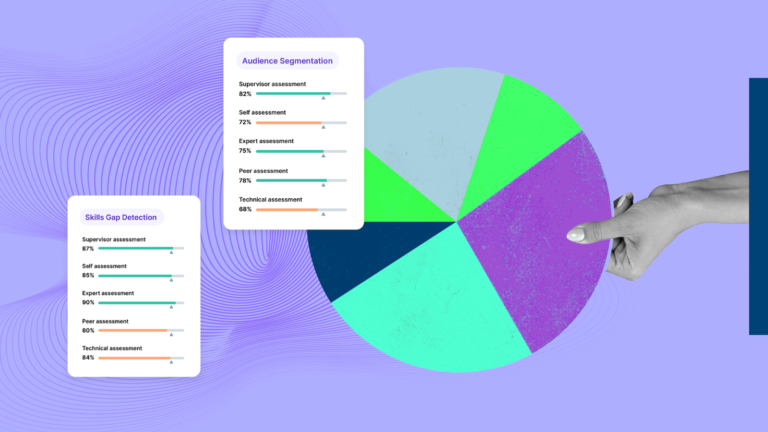
Networking, mentorship, and ongoing professional development all play a role here too. For organizations, workforce-wide visibility matters most. SkillPanel’s approach, combining self-assessments, peer reviews, manager input, and technical evaluations, gives companies a genuinely thorough view of workforce capability rather than a partial snapshot. That kind of clarity lets businesses plan upskilling initiatives strategically, support internal mobility, and align employee growth with where the organization is actually headed, not just where it’s been.
Frequently asked questions about AI skills
Do i need a technical background to learn AI skills?
No. While technical knowledge helps in certain roles, many AI competencies, including data literacy, critical thinking, and ethical evaluation, can be developed through non-technical training. You don’t need to write code to become AI-literate.
Which AI skill should I learn first?
Start with AI and data literacy. It gives you the foundational understanding of how AI systems operate and how they’re applied across industries, which makes every other skill on this list easier to pick up afterward.
How long does it take to become proficient in AI skills?
It depends on the complexity of the skill and where you’re starting from. Someone with strong analytical habits may pick up data literacy quickly, while prompt engineering might take longer to master through repeated practice. A consistent commitment to continuous learning is what speeds up progress across the board.