Is your business one resignation away from a leadership crisis?
| Reading time:


Most companies don’t discover they have a leadership continuity problem until a key executive walks out the door. By then, the damage is already in motion: projects stall, teams lose direction, stakeholders grow uneasy, and competitors take notice. Leadership continuity risk is one of the most consequential vulnerabilities a business can carry, yet it remains chronically underprepared for across industries, company sizes, and sectors.
The numbers tell a sobering story. Over 2,200 CEOs departed in 2024, a 16% increase from the prior year, driven by economic uncertainty and growing activist pressure on boards. More than 11,200 Baby Boomers turn 65 every day between 2024 and 2027, representing the largest leadership exit wave in U.S. history. These transitions aren’t hypothetical future events. They’re happening now, and most organizations are not ready.
This article is a practical guide for leaders, boards, and HR professionals who want to understand, assess, and actively manage leadership continuity risk before it becomes a crisis.
Why leadership continuity risk is a strategic blind spot for most companies
There’s a peculiar paradox at the heart of succession planning: most leaders know it matters, yet few act on it with the urgency it deserves. 86% of global business leaders acknowledge succession planning as critical to organizational success, yet 70% of those same leaders believe long-term succession planning feels futile in today’s fast-changing environment. That tension, between intellectual acknowledgment and practical inaction, is precisely what makes leadership continuity risk so dangerous.
Part of the problem is how organizations classify succession planning. Many treat it as an HR administrative task rather than a board-level strategic priority. Plans get created, filed away, and rarely revisited. When leadership changes do occur, those static documents provide little practical guidance. Competing demands further crowd it out: AI governance, regulatory pressures, and immediate operational concerns capture executive attention while longer-term continuity planning sits idle.
The result is an organization that feels prepared because a document exists, but is functionally exposed because that document is outdated, incomplete, or entirely disconnected from how the business actually operates today.
What leadership continuity risk actually means
Leadership continuity risk is the probability that an organization’s performance, strategy, or stability will be materially disrupted when a key leader exits, whether that departure is expected or not. It’s not simply about replacing a CEO. It encompasses every role where the sudden or poorly managed absence of a leader would create operational gaps, knowledge loss, or strategic drift.
Understanding this risk requires looking beyond titles and org charts. It demands an honest assessment of where institutional knowledge lives, which roles carry disproportionate influence, and whether the organization has the bench strength to absorb leadership change without losing momentum.
The difference between expected and unexpected leadership transitions
Planned transitions, such as scheduled retirements, promotions, or announced departures, give organizations time to prepare. There’s runway for knowledge transfer, successor development, and stakeholder communication. The transition can be structured to preserve continuity of culture, strategy, and relationships.
Unplanned transitions operate on entirely different terms. A sudden resignation, health crisis, or termination compresses that preparation window to near zero. Without a ready successor, organizations default to reactive measures: rushed external searches, interim appointments, or distributing responsibilities across an already stretched leadership team. Each of these carries real costs, and none of them replicate the stability of genuine readiness.
The challenge is that even planned transitions frequently go wrong. Organizations groom the wrong successors, underinvest in development, or fail to communicate clearly during handoffs. A transition labeled “expected” can still produce unexpected disruption if the planning behind it was superficial.
Why this risk is underestimated until it’s too late
Short-term thinking is the core driver. When leadership appears stable, the incentive to invest in succession planning weakens. Boards and executives focus on quarterly performance, near-term strategy, and visible operational risks. Leadership continuity sits in the background, a future problem that feels manageable until it suddenly isn’t.
There’s also a psychological dimension. Many senior leaders are uncomfortable engaging directly with succession planning because it requires confronting their own replaceability. CEOs, in particular, may resist transparency around successor development, inadvertently leaving their organizations exposed.
77% of organizations lack sufficient leadership depth at all levels. That gap is not hidden or difficult to detect. It’s quantifiable, predictable, and often ignored until the vacancy arrives.
How to assess your organization’s exposure
Assessing your organization’s actual exposure to leadership continuity risk is more structured than most leaders expect. It begins not with a high-level survey, but with a granular analysis of where the organization would be most vulnerable if specific leaders were no longer available.
This exercise should examine role criticality, successor readiness, knowledge dependencies, and pipeline health simultaneously. The goal is not to produce a document but to generate an honest picture of where gaps exist and how severe they are.
Key questions to evaluate your current vulnerability
Start with the foundational questions your leadership team should be able to answer clearly and quickly. Do you have an identified successor for every critical leadership role? If your top five leaders departed in the next 90 days, which functions would be most destabilized? Are potential successors actively being developed, or are they simply names on a list? Does your succession strategy reflect where the business needs to go, not just where it has been?
Beyond the CEO, ask whether only 35% of organizations maintain formalized succession processes for critical roles beyond the top position. If your organization falls in the majority, every role beneath the C-suite is operating without a net.
Warning signs your leadership pipeline is weaker than it looks
A leadership pipeline can look healthy on paper while being structurally compromised in practice. High rates of external hiring signal internal development failures. When external CEO appointments in the S&P 500 nearly doubled from 18% to 33% between 2024 and 2025, reaching the highest level in eight years, it reflected organizations unable to produce ready internal candidates.
Other warning signs include reliance on a handful of people to carry critical knowledge, low employee engagement scores, and leadership development programs that generate credentials without producing capable successors. If your organization uses generic training programs and lacks structured processes for identifying high-potential employees, less than 45% of companies have formal mechanisms for this, your pipeline is weaker than it looks regardless of how it’s described in internal reports.
The real costs of poor leadership continuity
Leadership gaps carry tangible costs that ripple across the organization in multiple dimensions. The mistake most companies make is treating these costs as hypothetical until they materialize. By then, they’re paying them.
Consider a composite scenario that plays out across industries with notable frequency: a mid-size manufacturing firm loses its COO to an unexpected resignation midway through a plant modernization program. There’s no ready successor, no documented handover plan, and no succession framework beyond the CEO level. Within weeks, vendor negotiations stall, the project timeline slips by months, and three members of the operations leadership team begin interviewing elsewhere, unsettled by the uncertainty. The cost of an external search, combined with delayed revenue from the modernization project and accelerated attrition, far exceeds anything the organization would have invested in proactive succession planning. This pattern, not the exception but the norm in underprepared organizations, illustrates why reactive succession is so costly.
Operational and financial disruption
When a critical leader exits without a prepared successor, operational disruption follows quickly. Projects tied to that leader’s decision-making authority stall. Teams that relied on their direction become uncertain of priorities. Knowledge that existed largely in that person’s head, about relationships, processes, context, and strategy, doesn’t transfer automatically.
The financial dimension of these disruptions is difficult to isolate but consistently significant. Proactive succession planning has been described as capable of avoiding up to $1 trillion annually in failed CEO and C-suite transitions across the S&P 1500. That figure reflects not just search costs, but lost productivity, strategic delays, and the organizational drag that accompanies leadership instability.
Strategic momentum loss
Leadership continuity underpins strategic continuity. Multi-year initiatives, transformation programs, and competitive positioning efforts all depend on consistent leadership vision and execution capacity. When a leader who champions a major initiative departs, the initiative itself becomes vulnerable, even if the underlying strategy remains sound.
Poor leadership succession also creates a credibility gap with external stakeholders. Investors, customers, and partners pay close attention to leadership stability. Frequent or poorly managed transitions signal organizational fragility, which can affect valuations, contract renewals, and strategic partnerships.
Cultural and morale impact
The cultural costs of leadership disruption are frequently underestimated. Employees derive significant psychological security from stable leadership. When that stability breaks down, anxiety spreads, and with it, disengagement. Talented people, who have the most options, are often the first to leave when organizational direction becomes unclear.
A poorly managed succession also sends a message about how the organization values its people. If leadership transitions are characterized by confusion, inconsistent communication, and visible unpreparedness, employees draw rational conclusions about the company’s ability to manage change. That perception is difficult to reverse and directly affects retention.
The most common leadership continuity risks — and how to address them
Leadership continuity risk doesn’t have a single origin. It emerges from a pattern of structural and behavioral failures that compound over time. Understanding the most common failure modes makes them easier to prevent.
No formal succession plan in place
The most basic form of exposure is having no succession plan at all. Only 21-22% of HR leaders report having a formal succession plan, with over half citing time and resource constraints as the reason. Among small businesses, 65% lack a documented succession plan, and only 30% successfully transition ownership.
The fix is not to create a document and file it. It’s to build a living succession framework that is reviewed regularly, updated as the business evolves, and connected to active talent development. Treating succession planning as a quarterly governance discipline rather than a one-time deliverable changes its effectiveness entirely.
Overreliance on a single leader or small leadership cluster
When institutional knowledge, decision-making authority, and stakeholder relationships concentrate in one or two individuals, the organization becomes structurally fragile. This is particularly common in founder-led businesses, high-growth startups, and organizations where a transformational leader has become synonymous with the brand.
Building distributed leadership strength requires deliberately developing multiple individuals across critical functions, not waiting for a vacancy to identify the need. Talent pools should contain multiple candidates for each critical role, not one-to-one replacement charts that provide no flexibility when a designated successor leaves or underperforms.
Neglecting internal talent development
The surge in external hiring reflects a deeper failure: most organizations struggle not because they lack talented people, but because they lack the systems to develop that talent into leadership-ready candidates. Generic development programs rarely produce capable successors because they are disconnected from specific role requirements and organizational strategy. Only 11% of executives believe their leadership development interventions actually achieve and sustain desired results, according to McKinsey, a striking indictment of how most programs are designed and deployed.
Effective internal development requires identifying high-potential employees early, building individual development plans with clear milestones, and creating experiential opportunities, such as cross-functional assignments and mentoring relationships, that stretch capabilities in relevant directions. Only 32% of companies use targeted internal rotations for leadership development, despite rotations being among the most effective tools for building enterprise leadership readiness.
Poor alignment between successor candidates and future strategy
One of the most consequential mistakes in succession planning is developing successors for the organization as it exists today rather than where it needs to go. A candidate who excels in the current operating environment may lack the capabilities required to lead through a digital transformation, a market expansion, or a significant strategic pivot.
Succession planning must be forward-looking. That means defining the leadership competencies the future business will require, assessing current candidates against those future requirements, and shaping development accordingly. Selecting successors who fit the current culture without examining future fit creates misalignment that becomes visible only after the transition occurs.
Communication failures during leadership transitions
Even well-prepared transitions can unravel through poor communication. When employees, customers, and partners don’t receive clear, timely, and consistent information about leadership changes, they fill the gap with speculation. That uncertainty is corrosive to trust, morale, and external confidence.
Communication planning should be an integral part of every succession process. This includes internal messaging to employees at all levels, transparent stakeholder communication, and a narrative that connects the transition to organizational continuity and strategic direction. Organizations that manage the communication dimension well retain far more stability during transitions than those that treat it as an afterthought.
Building a resilient leadership succession plan
A resilient leadership succession plan is not a static document. It’s a dynamic system that integrates talent intelligence, development infrastructure, and governance accountability. Building one requires deliberate effort across several interconnected areas.
Identify critical roles beyond just the C-suite
Leadership continuity risk does not stop at the executive suite. Revenue-generating functions, operational infrastructure, and key client relationships can be just as susceptible to disruption when mid-level or technical leaders exit unexpectedly. A genuine succession strategy accounts for every role where a vacancy would create material risk to the organization’s performance or strategic execution.
Conducting an enterprise-wide role inventory, assessing each position’s contribution to revenue, strategic initiatives, and competitive advantage, gives organizations the full picture of where succession planning is genuinely required. This analysis often surfaces roles that had never been considered succession-critical but carry significant organizational dependency.
Define what future leadership needs to look like
Organizations frequently make the mistake of defining successor profiles based on the attributes of the leaders they’re replacing. That approach anchors succession planning to the past rather than the future. Instead, organizations should articulate what capabilities, mindsets, and behaviors will be required to lead effectively given the strategic direction of the business over the next five to ten years.
This forward-looking definition should be documented clearly, communicated to potential successors, and embedded into development planning. It also guards against bias: when competency requirements are explicit and future-oriented, it becomes easier to evaluate candidates on relevant criteria rather than personal familiarity.
Build and develop a pipeline of ready successors
Pipeline depth is the practical measure of succession readiness. A healthy pipeline contains multiple candidates for each critical role, assessed at different readiness levels such as ready now, ready in one to two years, or ready in three to five years. This structure provides flexibility, reduces dependency on any single candidate, and enables organizations to adapt when circumstances change.
Building that pipeline requires investment in mentoring programs, structured development assignments, and formal performance tracking. Development plans should include clear quarterly milestones tied to specific capabilities, not vague aspirations. Progress should be reviewed regularly through talent review processes that include both executive leadership and board visibility.
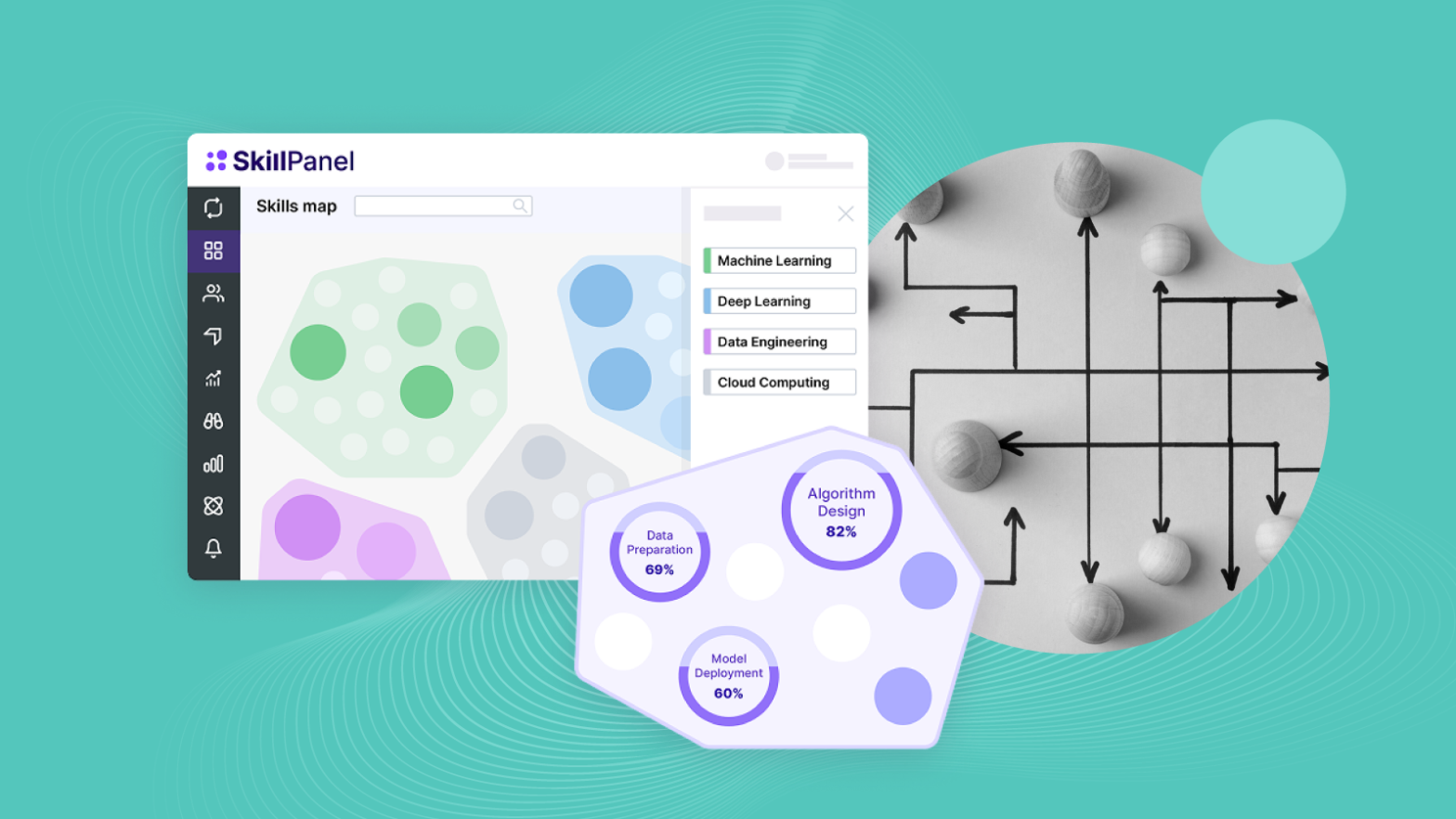
The pipeline depth problem described above, where organizations have names on a list but no actual readiness data, is precisely the gap that platforms like SkillPanel are designed to close. As the publisher of this article, SkillPanel replaces static spreadsheets with succession depth charts that show readiness levels, flag development gaps, and update automatically as employees grow. Through automatically updated skills databases, interactive 9-box performance grids, and AI-powered promotion forecasting, the platform gives HR and leadership teams visibility into actual candidate readiness rather than assumptions. That shift, from intuition-based to evidence-based succession, is what converts a paper plan into a functional one.
Structure the transition process to protect momentum
The handover period is where even well-prepared successions can lose momentum. A structured transition process defines clear timelines, formalizes knowledge transfer responsibilities, and establishes support mechanisms for incoming leaders. It protects strategic initiatives in progress, ensures stakeholder continuity, and gives the successor the context they need to lead confidently from day one.
Formal mentoring arrangements between outgoing and incoming leaders, documented institutional knowledge, and progressive delegation during transition periods all contribute to smoother handoffs. The goal is not just to fill the role but to preserve organizational momentum while giving the new leader space to establish their own direction.
Embed succession planning into ongoing governance
Succession planning that lives only in HR processes rarely achieves the discipline required for genuine resilience. When it becomes a standing item in board governance, with regular reviews, updated readiness assessments, and direct executive involvement, it transforms from a reactive exercise into an ongoing organizational capability.
Boards should review internal successor readiness at least annually, with CHROs providing objective, data-driven assessments that enable informed decisions. Dedicated succession committees with clear charters and regular meeting cadences formalize accountability and ensure the process doesn’t atrophy between reviews. When independent directors lead succession planning, organizations treat it as a top priority at significantly higher rates than when the CEO leads, making structural governance design an important factor in sustaining the discipline over time.
Who should own leadership continuity planning
Ownership of leadership continuity planning is a shared responsibility, but accountability structures matter enormously. The board of directors carries primary responsibility for CEO succession, with strong evidence that board-led succession processes produce better outcomes than those delegated entirely to executive leadership.
The CHRO plays a critical supporting role, one that extends well beyond administration. Directors increasingly view CHROs as more influential than CEOs in defining succession criteria, evaluation processes, and development priorities. The CHRO brings objectivity, cross-functional perspective, and data-backed talent intelligence that the board needs to make sound succession decisions without defaulting to internal politics or familiarity bias.
CEOs should be meaningfully involved, contributing to successor development through mentoring, strategic briefings, and direct talent investment, but should not control the selection process. When CEOs resist transparency around succession, CHROs have a specific responsibility to reframe the conversation: succession planning is not a challenge to leadership authority, it’s a strategic investment in the organization’s long-term resilience.
Business unit leaders also have a role to play. Siloed HR efforts that exclude operating leadership produce succession plans that lack contextual accuracy and organizational buy-in. Integrating business unit input into talent assessments ensures that succession readiness reflects actual role requirements rather than generalized competency frameworks.
Turning leadership continuity risk into a competitive advantage
Organizations that treat succession planning as a strategic discipline rather than a compliance task gain measurable advantages over those that don’t. Proactive, continuous succession planning enables faster strategic adaptation, stronger talent retention, and greater organizational resilience during periods of market volatility or competitive disruption.
According to McKinsey research, organizations excelling in people development, including structured succession and talent practices, are 4x more likely to outperform peers financially and 1.5x more likely to sustain top-tier performance year over year. Well-prepared businesses also command 20 to 30% higher valuations, reflecting investor recognition that leadership depth is a genuine enterprise asset.
There’s a talent dimension as well. High-potential employees want to work in organizations that invest in their development and provide visible career progression. A robust leadership succession plan signals that the organization is serious about growing people, which directly supports retention of exactly the individuals most critical to future leadership strength.
For organizations ready to treat leadership continuity as a competitive differentiator, this is also where SkillPanel addresses the readiness visibility problem directly. Its customizable analytics dashboards forecast promotion readiness, identify emerging skill gaps, and project future leadership talent needs based on performance patterns. Rather than discovering succession gaps when a departure happens, leadership teams can see where development investment is most needed and act before the risk materializes.
Is your business prepared? Next steps to take now
Turning intention into action requires a concrete starting point. Rather than attempting to build a complete succession system overnight, organizations should focus first on identifying where their actual exposure is highest. Conduct a succession risk assessment that maps critical roles against current successor readiness, beginning with positions where a vacancy would cause the most immediate operational or strategic disruption.
From there, evaluate your current talent pool honestly. Are high-potential employees identified through formal processes or informal reputation? Are development plans in place with clear milestones, or are they aspirational documents with no accountability structure? Only 46% of business owners have a formal succession plan in development. Moving from the unprepared majority to the prepared minority does not require a complete organizational overhaul. It requires consistent, disciplined investment in a few core areas.
Establish clear governance by assigning ownership, forming a succession committee with defined responsibilities, and scheduling regular reviews. Build development infrastructure by pairing high-potential employees with executive mentors, creating experiential stretch assignments, and documenting institutional knowledge that would otherwise be lost. Ensure your succession planning reflects both where the business is today and where it needs to go.
Leadership continuity is not a passive outcome. It’s the result of deliberate choices made long before a transition occurs. The organizations that make those choices now, building the systems, visibility, and talent pipelines required for genuine resilience, will be the ones that navigate leadership change with confidence rather than crisis.