Employee succession planning: The best practices keeping great organizations one step ahead
| Reading time:


SkillPanel, an AI-powered skills intelligence platform, developed this guide. Where SkillPanel is referenced as a solution, it reflects the platform’s own capabilities.
Most organizations think they have succession planning covered. A Robert Half survey found that 87% have some form of it. Yet only 52% have a comprehensive, documented strategy, and 11% have no formal plan at all. The gap between having a plan and having an effective one is wider than most leadership teams realize.
This guide breaks down what employee succession planning actually involves in 2026, why it matters more than ever, and how to build a framework that creates real leadership depth across your organization.
What employee succession planning actually means (and why most organizations get it wrong)
The phrase “succession planning” gets used in a lot of different ways, which is part of the problem. Before you can build a strong programme, you need to be clear on what it actually means, and what it isn’t. Succession planning is important because it helps maintain operational stability, minimizes disruptions during leadership transitions, and supports a strong company culture by ensuring that internal talent is ready to step into critical roles.
Succession planning is a strategic priority for organizations that want to ensure leadership continuity and minimize risk. Aligning succession planning with the organization’s talent strategy and company culture is essential for long-term business success and the organization’s future, as it ensures that leadership pipelines support both current and future business objectives.
The difference between succession planning and replacement planning
Replacement planning is reactive. You identify one person who could step into a role if the current occupant leaves. There’s no development, no pipeline, no real readiness. It’s a name on a spreadsheet.
Employee succession planning is something fundamentally different. It’s a strategic process focused on identifying and developing internal talent for critical positions and key roles across the organization. This systematic approach prepares employees to fill these essential roles over time, typically across a 3-5+ year horizon. The goal isn’t just to avoid a gap. It’s to ensure business continuity, strategic alignment, and organizational growth through planned leadership transitions.
According to SkillPanel, succession planning “goes beyond simply naming replacements.” It involves building multiple prepared candidates, creating talent pipelines across different organizational levels, and integrating leadership development with data-driven workforce planning. Replacement planning names a backup. Succession planning builds a bench.
This distinction matters because a lot of what passes for succession planning in organizations is, in reality, just replacement planning with a better name. A single name attached to a role, with no development plan, no readiness assessment, and no pipeline depth, doesn’t protect the organization from risk. It just creates the illusion of coverage.
Why succession planning is a strategic priority, not an HR formality
One of the most persistent mistakes organizations make is treating succession planning as an HR checkbox rather than a business imperative. This is reflected in the data. Corporate boards rank CEO succession planning as the most critical governance practice needing improvement in 2026, ahead of workforce agility and talent shortages. Meanwhile, 42% of talent management executives cite creating a formal succession strategy as a top focus area this year.
When succession planning is treated as a strategic priority, it connects directly to workforce planning, organizational design, and long-term business goals. A proactive approach is essential, focusing on business-critical and key leadership roles across all business functions to ensure continuity and effective leadership transitions. It forces leadership teams to think deliberately about the skills, roles, and capabilities the organization will need in three to five years, not just the ones it needs today.
The business case: What effective succession planning delivers
Building the business case for succession planning means understanding the range of outcomes a well-executed programme drives. These extend well beyond filling vacancies smoothly. Effective employee succession planning involves building a robust talent pipeline and developing potential future leaders to ensure a steady supply of future talent. Identifying and nurturing talent is essential for preparing high-potential employees for future leadership roles.
Organizational continuity and reduced leadership risk
Leadership transitions are high-risk moments for any organization. Research shows that up to 40% of leaders fail within the first 18 months of a role transition. When those transitions happen without adequate preparation, the failure rate climbs. Identifying successors for senior leadership positions and key leader roles is essential to ensure leadership continuity and organizational stability. Succession planning reduces that risk by ensuring successors enter critical roles with relevant experience, developed capabilities, and organizational context already in place.
Without a strong programme, organizations also face costly external searches. According to SHRM’s 2025 Benchmarking Reports, executive hires average $35,879 in cost-per-hire, roughly seven times higher than nonexecutive hires. Organizations with strong internal pipelines avoid that expense regularly.
Employee retention and engagement benefits
People stay where they see a future. When employees understand there’s a pathway to advancement and that the organization is actively investing in their development, engagement improves and attrition slows. Effective employee succession planning supports employee engagement by providing clear career paths and aligning development opportunities with individual career goals, helping employees understand how they can advance within the organization. Fostering a culture of continuous learning and development is essential for engagement and retention, as it provides clear career growth opportunities. CHROs consistently prioritize leadership and manager development, with 46% citing it as a top focus area. Mentorship and sponsorship programs central to succession pipelines also boost employee motivation 1.5x when it comes to facing career challenges.
Long-term cost savings over external hiring
The financial argument for internal development is strong. Beyond cost-per-hire savings, internal successors typically onboard faster, understand organizational culture, and carry lower performance risk than external candidates. While there is an initial succession planning cost, effective employee succession planning can reduce long-term hiring and operational costs by minimizing downtime and the need for expensive external recruitment. The challenge is that only 20% of organizations currently track quality-of-hire in a way that captures this difference, meaning most aren’t measuring the full return on internal talent investment.
DEI impact: Building more inclusive leadership pipelines
Effective succession planning is one of the most powerful tools available for building diverse leadership teams. When selection is structured, criteria are transparent, and pipelines span multiple levels of the organization, diversity improves organically. Research cited by McKinsey consistently shows that diverse leadership teams outperform peers on both profitability and innovation. Without intentional succession planning, organizations default to familiar patterns, replicating existing leadership profiles rather than broadening them.
The employee succession planning process: A step-by-step framework
A practical succession planning process doesn’t need to be overly complex. What it does need is structure, consistency, and genuine commitment from leadership. Using HR databases and analytics can be a useful starting point for identifying potential succession candidates across the organization. The following six-step framework covers the core succession planning steps every organization should follow.
Step 1: Identify critical roles and vulnerability gaps
Start with a role criticality assessment. Work with HR, business leaders, and senior management to map which roles carry the highest strategic impact, the greatest risk of vacancy, and the longest lead time to fill. This isn’t just an executive exercise. Mid-level roles in operations, technical functions, and customer-facing teams often carry significant vulnerability that goes unnoticed until someone resigns.
As part of this process, identify business critical roles and clearly define their core responsibilities and technical competencies. Incorporate workforce analytics, such as retirement eligibility, to help spot potential talent risks early. Leverage workforce intelligence dashboards to bring together data on skills, mobility patterns, performance signals, and readiness levels, enabling HR to track bench strength and identify roles with limited coverage.
The output should be a documented role inventory, updated at least annually or after major restructuring, that includes competency profiles outlining the skills, experience, and leadership capabilities each role requires.
Step 2: Define future role requirements (not just current ones)
One of the most common traps in the succession planning process is designing for the role as it exists today rather than as it will need to function in three to five years. Organizational strategy shifts. Technology changes what roles require. The competencies that make someone successful now may differ significantly from what the next leader in that position will need.
Effective succession planning means building role profiles that reflect future requirements, including emerging skill areas, leadership expectations, and strategic priorities tied to where the organization is heading. This involves clearly defining future leadership roles and future leadership positions in alignment with the organization’s future direction. AI-driven skills gap analysis helps HR see where employees already align with these future roles and where targeted development is needed for upcoming leadership positions.
Step 3: Assess internal talent and identify high-potential employees
Once roles are defined, the focus shifts to talent assessment using a combination of complementary tools. The 9-box grid is the most widely used starting point: it plots employees on a 3×3 matrix where the Y-axis measures potential (low, medium, high) and the X-axis measures performance (low, medium, high). Each quadrant signals a different development and investment decision. Employees in the high-potential, high-performance box are your primary succession targets. Those in high-potential, mid-performance positions are developmental priorities. Low-potential, high-performance employees are strong role contributors but not succession candidates. The grid forces calibrated, comparative conversations rather than anecdotal impressions.
Competency frameworks work alongside the grid to provide role-specific benchmarks, measuring whether a candidate’s skills actually match what the target role requires. Three-hundred-sixty-degree feedback serves a different purpose: it surfaces behavioral and leadership patterns that performance data alone can’t capture, drawing on input from peers, direct reports, and managers. Use competency frameworks when assessing technical and role-specific skill gaps; use 360 reviews when evaluating leadership readiness, interpersonal effectiveness, and behavioral fit. The most reliable evaluations combine all three, and structured talent reviews using these tools should happen at least twice per year to maintain current visibility into succession depth.
As part of this process, organizations should focus on identifying potential successors for key positions and developing talent to ensure a strong pipeline of potential future leaders. This proactive approach to talent management helps nurture high-potential employees and supports leadership continuity.
The goal is to identify multiple candidates per critical role, typically two to three, each assessed at different readiness levels. This builds real bench strength rather than a single-point dependency. SHRM advises HR teams to measure outputs including mentorship, coaching, overall performance, and leadership metrics as part of an integrated assessment process.
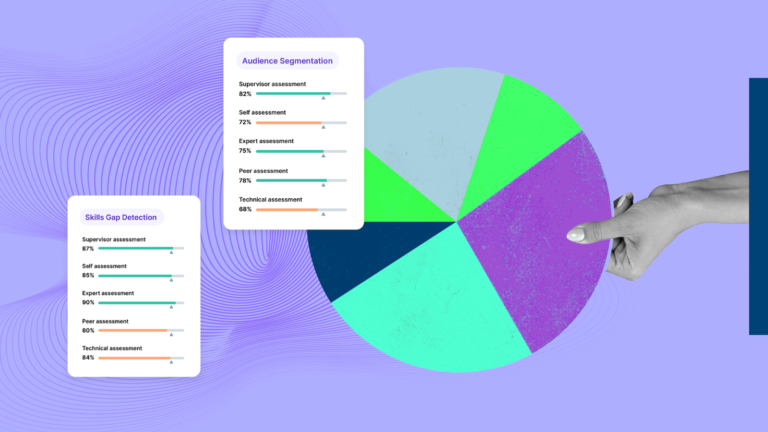
SkillPanel enables multi-source assessments that combine self-evaluations, peer reviews, manager input, and technical validations to create objective, multi-dimensional skill profiles. This approach grounds candidate selection in capability data rather than subjective impression.
Step 4: Build individual development plans for succession candidates
Identifying candidates is only the beginning. The development phase is where succession planning either delivers results or stalls. Create personalized development plans for each succession candidate tied directly to the competency gaps identified in their assessment. These plans should include specific milestones, mentoring relationships, training initiatives, stretch assignments, and coaching. Integrating talent development, career development, professional development, and leadership training into succession planning ensures a comprehensive approach to preparing employees for future leadership roles. Organizations that invest in employee development through structured learning programs and mentorship initiatives are better positioned to prepare employees for future leadership opportunities. Progress should be tracked during performance review cycles, with development activities connected to learning systems where possible.
SkillPanel supports this stage through personalized development plans linked to role requirements, with automated tracking of development activities and integration with existing HR and learning management systems, so nothing falls through the cracks.
Step 5: Execute transitions with structured knowledge transfer
When transitions happen, organizations without structured knowledge transfer face significant disruption. Even well-prepared successors can struggle if institutional knowledge walks out the door with the departing leader.
Build transition timelines that include documented knowledge capture, stakeholder introductions, shadowing periods, and clear handover processes. A transition playbook that outlines critical relationships, ongoing projects, decisions in flight, and organizational context significantly reduces the risk of continuity gaps.
Step 6: Review, measure, and continuously refine the plan
Succession planning is not an annual event. It’s an ongoing process that requires regular calibration. Conduct quarterly operational reviews to monitor candidate progress and update readiness assessments. Run annual strategic reviews to assess whether the role profiles still reflect organizational needs, whether the pipeline has adequate depth, and whether development plans are producing measurable results. Document outcomes in a succession health report shared with senior leadership.
How to identify and evaluate succession candidates
Getting candidate identification right is critical. Organizations that rush this stage tend to default to familiarity rather than evidence, which narrows the talent pool and undermines the entire programme. Incorporating mentorship programs and strategies to prepare employees for future leadership roles is essential, as these initiatives nurture talent, provide direct guidance, and support skill development for succession planning.
Performance vs. potential: Why the distinction matters
High performance in a current role does not automatically signal readiness for a more senior one. Strong individual contributors frequently struggle when moved into leadership positions without adequate development and support. Succession planning requires assessing both dimensions separately. Performance captures what someone delivers today. Potential reflects the capacity to grow into greater scope, complexity, and responsibility.
Fewer than 25% of organizations believe their succession plans are effective for critical leadership roles, and a significant part of that gap is selecting candidates based on performance alone.
Avoiding common bias traps in candidate selection
Cognitive bias is one of the most significant threats to effective succession planning. Gallup research identifies several bias patterns that undermine succession decisions, including in-group bias, which causes leaders to favor candidates who are similar to themselves, confirmation bias, which leads evaluators to seek evidence that validates preexisting impressions, and loss aversion, which results in high-potential talent being assigned to low-risk roles rather than developmental ones.
Additionally, unconscious bias in succession discussions tends to favor candidates with shared backgrounds, narrowing leadership diversity and missing innovative perspectives. Mitigation requires structured evaluation criteria, diverse selection committees, and deliberate bias awareness training for all leaders involved in calibration sessions.
Leadership development within succession planning
Succession planning and leadership development are inseparable. Identifying candidates without investing in their development produces a plan that looks good on paper but fails in practice. Developing future leaders through workforce development initiatives is essential for building a strong leadership team that ensures business continuity and aligns with overall corporate strategy.
Stretch assignments, mentoring, and job rotations
The most effective development tools are experiential. Stretch assignments place candidates in roles or projects that require capabilities they haven’t yet fully developed, creating learning through doing. Mentoring connects candidates with experienced leaders who can provide perspective, sponsorship, and guidance through organizational complexity. Job rotations expose future leaders to different functions, geographies, or business units, building the breadth of understanding that senior roles demand.
Research on coaching and leadership readiness shows that structured developmental programs can drive meaningful improvements in team engagement and performance within relatively short timeframes. The key is that development must be deliberate and connected to specific future role requirements, not generic.
Aligning development plans with organizational goals and future roles
Development plans that aren’t connected to organizational strategy produce leaders who are capable in the abstract but unprepared for the specific challenges the business faces. Every development plan should include a clear line of sight between the candidate’s growth areas and the strategic priorities they’ll need to advance. This also means developing not just current competency gaps, but capabilities tied to where the role is heading, including future-oriented skills around digital fluency, strategic thinking, cross-functional leadership, and organizational change.
Platforms like SkillPanel support this through dynamic skills mapping that identifies not just current gaps but emerging competency needs, so development plans reflect where the organization is going, not just where it’s been.
Succession planning goals, KPIs, and how to measure success
Without clear goals and measurement, succession planning becomes an activity rather than a strategy. Defining what success looks like, and tracking it consistently, is what separates programmes that deliver lasting value from those that exist only on paper.
Leading indicators: Bench strength, readiness ratios, development progress
Leading indicators tell you how healthy your pipeline is before you need to draw on it. Bench strength measures how many ready or near-ready successors exist for each critical role. Readiness ratios track the percentage of key positions with at least one identified successor at each readiness tier. Development progress monitors how candidates are advancing against their individual plans, capturing milestones completed, skills acquired, and learning activities undertaken.
These indicators are the early warning system of succession planning in HR. When bench strength is thin or development progress is slow, it’s a signal to intervene before a vacancy creates a crisis.
Lagging indicators: Internal promotion rates, time-to-fill critical roles
Lagging indicators show outcomes. Internal promotion rates reflect whether succession planning is actually producing the leadership transitions it’s designed to support. Time-to-fill critical roles captures whether the organization can move quickly when vacancies occur. Strong succession planning typically compresses this to a 12-to-36-month preparation window, meaning successors can be deployed with confidence rather than urgency.
Reporting succession planning outcomes to leadership
Senior leadership and corporate boards need regular visibility into succession health. This means producing a clear, concise succession health report that covers pipeline depth by role tier, development progress for key candidates, risk areas where coverage is thin, and trends in promotion rates and readiness ratios over time.
Real-time dashboards offered by platforms like SkillPanel make this reporting continuous rather than periodic, giving HR and executives up-to-date visibility into bench strength, pipeline health, and readiness indicators at any moment.
Common succession planning mistakes and how to avoid them
Even well-intentioned succession planning efforts fail when common pitfalls go unaddressed. These are the patterns that consistently undermine programme effectiveness.
Treating it as a one-time event rather than an ongoing process is perhaps the most common failure mode. Succession planning built during an annual offsite and then filed away until next year isn’t succession planning. The business changes, people develop, roles evolve, and strategies shift. A static plan becomes irrelevant quickly.
Focusing only on the C-suite while ignoring mid-level roles creates a false sense of security. Some of the most consequential leadership gaps occur at the director and senior manager level, where institutional knowledge, team management, and strategy execution happen daily.
Keeping plans hidden from the employees they involve is counterproductive. Employees who know they’re being developed for future roles are more engaged, more motivated, and more likely to stay. Transparency about the process, including individual career development conversations, builds trust and aligns candidate aspirations with organizational needs.
Failing to integrate succession planning with performance management, learning and development, and HR data systems produces a programme that operates in a silo. When it’s connected across talent management functions, candidate development accelerates, data quality improves, and succession decisions reflect a fuller picture of organizational capability.
Succession planning best practices for 2026
Building a high-performing succession planning programme in 2026 requires adapting to both the pace of organizational change and the new tools available to surface and develop talent. Successful succession planning involves clearly defined strategies, the use of succession planning tools to identify and develop high-potential employees, and ensuring the organization can efficiently fill key roles to maintain leadership continuity and organizational stability.
Embed succession planning into annual talent review cycles
The most effective approach integrates succession planning directly into existing talent review processes. Using 9-box grids, competency assessments, and 360-degree feedback during scheduled talent reviews ensures that succession data is current and that high-potential employees are consistently identified and tracked. The best programmes don’t treat succession as a separate exercise but as a permanent lens applied to every talent conversation.
Prioritize transparency and two-way communication with candidates
One of the clearest succession planning best practices is making the process visible. Senior leaders should actively sponsor the programme and signal its strategic importance. Individual employees should have annual conversations about their career ambitions, development progress, and the organization’s expectations of them. This two-way communication builds the kind of trust that sustains long-term pipeline development.
Use technology and AI to surface talent and track readiness
The role of AI in succession planning is expanding rapidly. A 2026 Robert Half survey found that 84% of employers report AI impacting their succession planning, with 54% accelerating promotions for AI-savvy talent. Organizations using AI-powered platforms report that these tools reduce hiring time by 40% and boost succession accuracy by 30%. Machine learning models are now capable of predicting turnover and leadership potential with greater than 80% accuracy, reducing the subjectivity that has historically undermined succession decisions.
Yet despite this potential, only 20% of leaders currently use AI for workforce change monitoring, even though 52% see it as critical for future success.
SkillPanel directly addresses this gap. The platform’s AI-driven predictive analytics identify potential leaders while actively working to reduce bias and support diversity goals. Its dynamic skills mapping visualizes workforce capabilities across roles and departments, identifying successors based on actual capability matches rather than job title or tenure.
Keep plans flexible to adapt to organizational change
Rigid succession plans built for a static organizational context fail when strategy shifts, markets change, or new capabilities become critical. By 2026, AI enables what researchers describe as “living portfolios,” dynamic succession frameworks that update automatically as employee capabilities evolve and organizational needs shift, while keeping humans firmly in control of final decisions.
Real-world succession planning examples
Understanding how succession planning works, or fails, in practice is essential for building a programme that delivers results.
What strong succession planning looks like in practice
Some of the most instructive examples come from companies that have made internal leadership development a core organizational discipline.
When IBM transitioned from Ginni Rometty to Arvind Krishna in 2020, the handover reflected years of deliberate internal grooming. According to succession planning analyses at iMocha and OrgVue, IBM identified and developed Krishna through structured talent pathways, enabling a seamless transition during a period of significant business transformation. The result was organizational stability at a moment when external disruption was already high.
Microsoft’s transition from Steve Ballmer to Satya Nadella, while predating the 2020s, remains one of the most frequently cited succession planning cases in current HR literature. The company identified Nadella as a high-potential leader early, supported him through mentorship and performance tracking, and built a long-term pipeline rather than scrambling when the top role became available. The outcome has been well-documented: market capitalization grew more than three times over the course of Nadella’s tenure, reflecting how a well-executed internal transition can compound strategic momentum.
JPMorgan Chase offers a different but equally instructive example. The firm has prioritized succession planning for years, maintaining internal leadership stability through deliberate development investment rather than reactive external recruitment. In 2025, the bank recorded $54 billion in profit, a figure that reflects not just financial performance but the compounding value of leadership continuity sustained over time.
What these organizations share is consistent: critical roles were profiled well in advance of any anticipated vacancy, multiple candidates existed at different readiness levels, and transitions happened with context already in place rather than assembled on the fly.
Lessons from organizations that got it wrong
The aggregate costs of inadequate succession planning are substantial. Research suggests that poor CEO transitions across S&P 1500 companies result in nearly $1 trillion in annual market value loss. The fact that 52% of FTSE 100 CEOs are externally recruited is itself a signal, reflecting how frequently organizations arrive at a leadership transition without a prepared internal successor.
The structural conditions that lead to failure are consistent across industries: organizations wait until a departure is imminent, then scramble for a replacement rather than activating a prepared successor. Succession is treated as a senior executive privilege rather than an organization-wide process. HR data is disconnected from development plans. And the programme is never actually measured, so no one knows whether it’s building readiness until a crisis reveals it isn’t.
Building your succession planning framework: Where to start
Starting a succession planning programme can feel overwhelming, particularly in organizations that have operated without one. The most effective approach is to start focused and build scope over time.
Begin with a thorough assessment of your current workforce and the roles carrying the most strategic risk. Use that to create your initial role inventory, along with competency profiles that define what each role actually requires in the context of where the organization is heading. Then identify candidates using a structured process, combining performance data, potential assessments, and multi-source feedback to build an objective baseline.
From there, build development plans for your first cohort of succession candidates, integrate them into your existing talent review cycle, and establish your measurement framework before you need to report outcomes. Engage key stakeholders early, including board members, the executive team, and business unit leaders, so succession planning is owned across the organization rather than delegated entirely to HR.
Technology accelerates every stage of this. SkillPanel offers a suite of capabilities specifically designed to support succession planning programmes, from dynamic skills mapping and predictive gap analysis to personalized development plans and real-time succession dashboards. The platform integrates with existing HRIS, payroll, and learning systems, so implementation doesn’t require wholesale infrastructure change. Templates for role requirements, candidate assessments, development plans, and transition checklists are also available to help organizations get structured quickly without building everything from scratch.
Whether you’re formalizing an existing informal process or starting from the ground up, the goal is the same: build a system that continuously identifies, develops, and prepares internal talent, so the organization is never caught unprepared by a leadership transition.
Frequently asked questions about employee succession planning
Who is responsible for succession planning?
Succession planning works best as a shared responsibility. HR leads by developing standardized frameworks, assessment tools, and development programmes. Senior executives provide strategic direction, sponsor key candidates, and ensure the programme reflects business priorities. A cross-functional succession planning committee, comprising HR leaders, senior managers, and business unit heads, provides the governance structure that keeps the process accountable and aligned. Rotating committee membership periodically prevents insularity and keeps diverse perspectives in the room.
How often should succession plans be updated?
Succession planning is most effective when treated as a continuous process rather than an annual event. Formal strategic reviews should happen annually to align the plan with business strategy, but operational reviews of candidate progress, readiness, and pipeline health should occur quarterly. Specific trigger events, including leadership departures, restructurings, significant strategy shifts, or major market changes, should prompt immediate off-cycle reviews to ensure plans remain current and relevant.
What tools support succession planning?
A range of succession planning tools exists to support different aspects of the process. Top-rated platforms in 2026, based on G2 ratings, include SAP SuccessFactors HCM for enterprise-scale talent assessments and development planning, OrgChart for dynamic visual org structure charting, Neobrain for skills intelligence and talent mobility, UKG Pro for comprehensive talent reviews with high user satisfaction, and Cornerstone OnDemand for deep workforce planning and learning integration.
SkillPanel complements these with skills intelligence capabilities specifically designed for succession planning, including dynamic skills mapping, predictive gap analysis, multi-source assessments, and real-time readiness dashboards. Its integration with existing HR technology stacks means it can function alongside other tools already in use.
How does succession planning differ for small businesses vs. large enterprises?
The core succession planning definition and objectives remain consistent regardless of organization size. The difference is in scope, formality, and resources. Large enterprises typically maintain formal succession planning committees, dedicated HR resources, and technology platforms that track pipelines across thousands of employees. Small businesses often focus on a smaller number of critical roles, rely more heavily on owner-led or manager-led development conversations, and may use lighter-touch tools.
What matters most, regardless of size, is that succession planning is deliberate and ongoing rather than reactive. A small business that has identified its critical two or three roles, assessed its internal talent honestly, and built simple development plans for successors is far better positioned than a large enterprise with an elaborate framework that never gets reviewed or acted on.