Why HR teams that still avoid online tools are falling further behind every single day
| Reading time:


HR teams have always been at the center of organizational life, yet for decades, the work itself stayed painfully manual. Spreadsheets tracked employee data. Paper forms managed compliance. Hiring depended on email chains and gut instinct. That model simply does not hold up anymore. Workforce complexity is growing, employee expectations are rising, and business leaders expect HR to deliver measurable outcomes while online tools help the hr department transform operations, not just provide administrative support. The case for why HR should use online tools is no longer just about convenience. It is about survival, strategy, and scale.
Why HR teams are moving to online tools
The push toward digital HR tools is not a trend driven by technology vendors. It reflects a fundamental change in what HR is expected to do. HR professionals are increasingly asked to serve as strategic advisors, workforce planners, and culture architects, all while keeping daily operations running smoothly. That dual responsibility is nearly impossible without the right technology behind it.
Around 62% of organizations globally are now using cloud-based HR software to manage employee data, payroll, and compliance. For human resources teams, these cloud-based platforms also support seamless teamwork across locations. Cloud-based platforms have removed the infrastructure barriers that once made HR technology the exclusive domain of large enterprises. Today, even growing teams can access powerful, integrated systems at a fraction of what legacy software once cost.
Beyond access, the deeper driver is expectation. Employees expect consumer-grade digital experiences at work. Managers expect instant access to workforce data. Business leaders expect HR to justify decisions with evidence. Online HR tools make all of that possible by converting fragmented, manual processes into streamlined, data-rich workflows that save teams valuable time by automating tasks.
Core benefits of using online HR tools
The key benefits of adopting digital HR tools reach across every layer of the HR function, from day-to-day administration to long-term workforce planning , including cost savings for HR departments. While each category of tool brings its own specific advantages, the cumulative effect is an HR function that operates faster, smarter, and with far greater confidence.
Increased efficiency through automation
Time is the most constrained resource in any HR team, and automation is the most direct way of automating tasks across core HR processes. When routine tasks like payroll calculation, recruitment support, onboarding document distribution, and absence tracking are automated, HR professionals stop reacting to administrative backlogs and start working on things that matter.
A Forrester Total Economic Impact study found that implementing automated online payroll cut labor for payroll processing by 90% and reduced time spent correcting errors by 85%, saving approximately 2,600 hours annually for HR and accounting teams combined. That is not marginal improvement. It is a structural transformation in how work gets done, with automated processes also reducing errors in payroll and data management.
The automation opportunity extends well beyond payroll. McKinsey’s 2025 AI research estimates that by 2030, AI could automate up to three hours of work per day per person. Many of these tasks, including data entry, scheduling, document preparation, and basic case handling, sit squarely within HR operations.
Smarter, faster hiring
Online recruitment tools change the hiring equation significantly, and in talent acquisition an Applicant Tracking System streamlines the hiring process. Applicant Tracking Systems allow HR teams to manage job postings, screen candidates, schedule interviews, and communicate with applicants through a single platform, eliminating the fragmented workflows that slow hiring down.
Around 61% of firms are already adopting AI-driven recruitment , reflecting how quickly this space is maturing. AI-assisted screening automates résumé screening to identify suitable candidates and reduces time-to-hire by flagging top candidates early, while automated scheduling removes one of the most frustrating friction points for both HR teams and applicants. Video conferencing platforms also make global interviews more efficient.
Improved employee experience and engagement
Employee experience is increasingly recognized as a business-critical metric. Online HR tools contribute directly by giving employees self service portals to manage personal information and routine requests independently, along with access to their own data, benefits information, pay history, and development resources. For new hires, this can also improve employee onboarding by making key information and support easier to access from day one. A Rippling PEO implementation at Strive Health achieved a 40% reduction in HR support requests after configuring self-service workflows, freeing the People Ops team for more strategic work. When employees feel informed and supported through these tools, their connection to the organization deepens and employee satisfaction often improves.
Better data visibility and decision-making
HR decisions made without data are rarely as good as they need to be. Online HR tools help teams access and analyze data through real-time workforce metrics, whether that is headcount trends, turnover patterns, skill gaps , or training completion rates, creating a foundation for evidence-based decisions. They also support analyzing workforce data to identify trends and forecast talent needs.
Deloitte’s 2024 Global Human Capital Trends research found that higher trust in how organizations manage worker data raises the probability of improved business growth by roughly 50%. Interactive dashboards help HR leaders view quantifiable metrics and use digital platforms’ robust analytics to measure the ROI of HR initiatives. That link between data governance and business outcomes is why workforce analytics has become a strategic priority, not just an operational convenience.
In practice, the impact of skills intelligence is measurable. Organizations using skills intelligence platforms report a 34% reduction in time-to-fill for critical roles , a 28% improvement in internal mobility rates , and an average savings of $18,500 per role filled internally rather than externally. A Forrester-style economic impact study puts the average three-year ROI at 287% , with payback typically achieved in 14 to 22 months.
SkillPanel has produced these outcomes in client environments by mapping verified skills across roles and departments and connecting that data directly to workforce planning decisions. In one engagement, a 400-person professional services firm used SkillPanel’s skills mapping to discover that 60% of project managers lacked a critical emerging capability. That gap, invisible in their existing systems, enabled L&D to redirect $80,000 in training budget toward targeted development within six weeks, rather than continuing to fund broadly subscribed but low-impact programs. The insight did not come from a survey or an annual review cycle. It came from continuous, structured skills data that surfaced a specific, actionable gap at the right moment.
Stronger compliance and reduced risk
Compliance failures are expensive. Payroll errors, missed documentation, and labor law violations expose organizations to penalties, litigation, risk management challenges, and reputational damage. Online HR tools reduce that exposure by automating error-prone processes, supporting compliance management, protecting sensitive employee data, and embedding regulatory rules directly into system logic. Cloud-based storage improves data security and makes audits easier.
Modern HR systems that digitize leave requests, time tracking, and approvals are increasingly considered essential , especially for small and mid-sized businesses, making benefits transparent and accessible while reducing dependence on paperwork.
Cost savings at scale
The financial case for online HR tools is clear, even when upfront investment looks significant. Osso VR switched HR platforms and saved over $80,000 in the first year while reducing the HR and recruiting headcount needed to manage its entire workforce by 50%. Compass Mining saved 100 hours per year on payroll processing alone after adopting an integrated platform. These outcomes represent what well-chosen HR software delivers when implemented thoughtfully, regardless of company size, and those savings matter especially for small hr teams that need to scale output without adding headcount.
Key categories of online HR tools every team should know
The market for digital HR solutions is broad, and not every organization needs every category of tool at once. Understanding what each type does, and where it fits, is the starting point for building a smart, connected technology stack.
Applicant tracking systems (ATS) for recruitment
An ATS manages the end-to-end recruitment process and supports talent acquisition from job posting through offer letter. Modern platforms use AI to rank candidates, automate screening communications, and integrate with interview tools and background check providers. ATS platforms significantly improve hiring speed, though teams with low or inconsistent hiring volume may find the configuration overhead outweighs the benefit until they reach a consistent hiring cadence that justifies the setup investment.
HRIS and HRMS platforms for core HR operations
A Human Resource Information System or Human Resource Management System serves as the operational backbone of the HR function, a core software program for centralizing employee records, benefits administration, compliance documentation, managing employee data, and attendance tracking, with secure storage for employee data and performance reviews. Integration capability is the most critical evaluation dimension here. The platform you choose for core operations will connect with your payroll system, ATS, and LMS, and the quality of those connections determines how much value the data inside can generate while reducing manual work; many also support processing payroll and compensation management. That said, HRMS implementations frequently run longer and cost more than initial estimates when organizations underestimate the complexity of data migration and system integration, and some teams also overlook the demands of tracking attendance, making realistic scoping essential before selecting a vendor.
Performance management tools
Performance reviews and annual reviews are giving way to continuous performance conversations, and performance management software is the infrastructure that makes that shift practical. These tools help managers and employees set goals, exchange feedback, track progress, and evaluate and improve employee performance in real time, aligning individual objectives with organizational goals while creating a documented feedback trail that supports fair, evidence-based decisions. They also help track employee goals and feedback through performance management systems that support continuous feedback, and some AI tools analyze key performance indicators to improve evaluations and support employee retention.
Learning and development (LMS) platforms
Learning Management Systems have become a high-priority category largely because workforce skills have become a boardroom-level concern, and LMS ROI depends heavily on whether learning content supports continuous learning. Platforms requiring manual content curation often see engagement drop within 6 to 12 months without dedicated L&D ownership, making content governance a defining factor in long-term success.
SkillPanel integrates with major online learning providers, connecting role-level skill gap data directly to targeted training recommendations. Learning management systems also support employee training and development through structured training programs tied to specific capability gaps. Rather than offering generic course catalogs, this approach means employees receive development opportunities relevant to their actual capability gaps and growth plans, driven by verified skills data rather than assumptions. A 41% reduction in irrelevant training consumption is among the outcomes cited when skills-based targeting replaces generic course assignment, translating to significant redeployable L&D budget for mid-market organizations.
Payroll and benefits administration software
Payroll software automates compensation calculation, tax withholding, deductions, direct deposit, and benefits administration such as health insurance while maintaining the audit trail compliance requires. These tools belong in every HR toolset because the consequences of getting payroll wrong are immediate and damaging. Automated payroll reduces both error rates and the time HR teams spend correcting mistakes, freeing capacity for higher-value work.
Employee engagement and communication tools
Employee engagement tools give HR teams structured ways to measure how employees feel, surface concerns before they escalate, and recognize contributions in real time. Pulse survey tools provide real-time visibility into workplace morale. What makes these tools particularly valuable is the data they generate, and enterprise communication hubs streamline messaging, support team building, and enhance communication by enabling quick sharing of information. Regular engagement signals let HR teams identify patterns across teams, demographics, or business units, turning employee sentiment from a qualitative impression into a measurable, trackable metric.
Workforce analytics and reporting tools
Workforce analytics platforms synthesize data from across the HR technology stack into dashboards and reports that support strategic planning, including analysis of labor costs alongside other workforce metrics. Analysts increasingly emphasize real-time, skills-aware analytics that allow organizations to reconfigure talent rapidly around changing business priorities, with predictive models using employee data to flag attrition risk and inform workforce planning decisions tied to budgets.
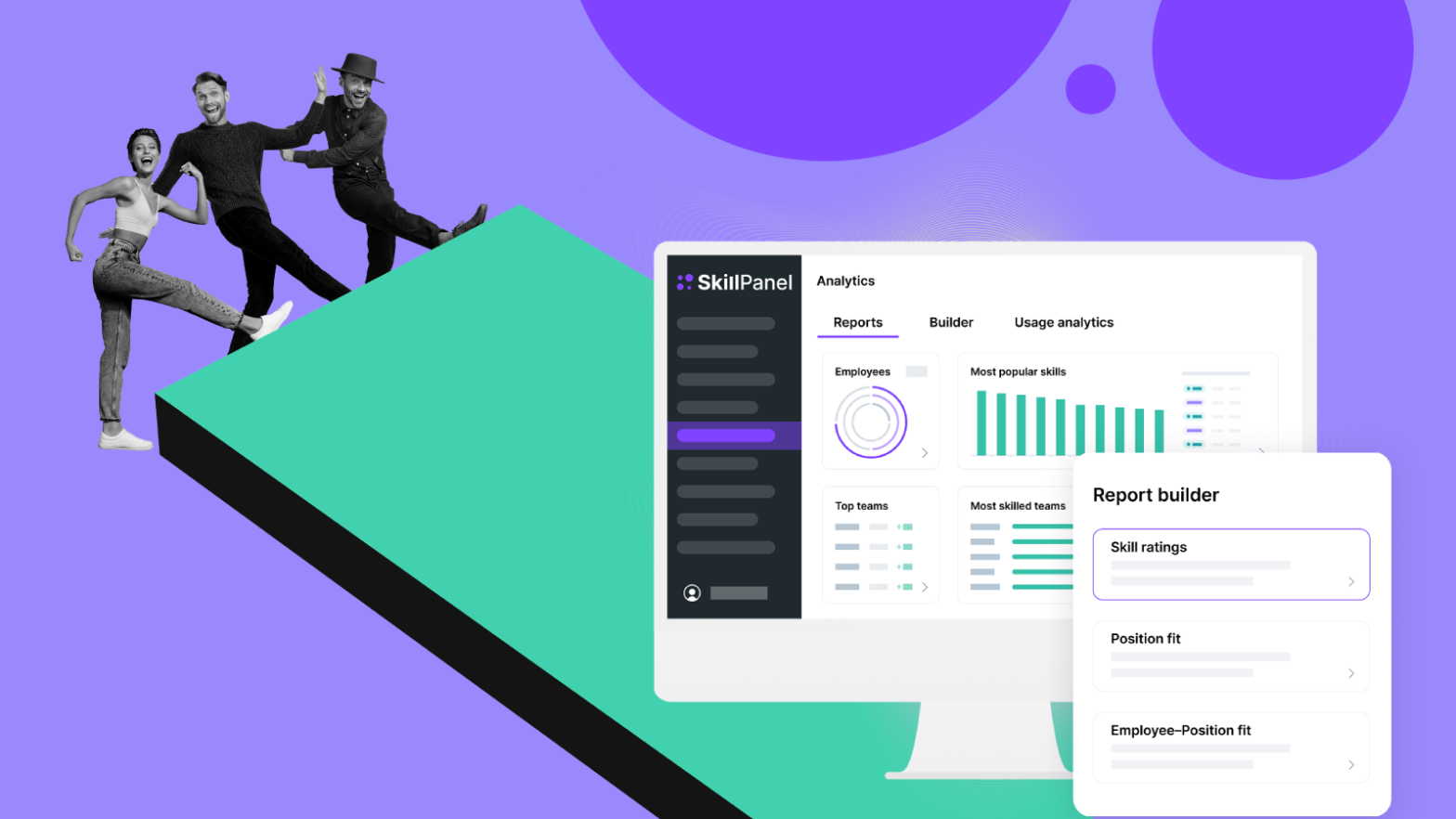
SkillPanel is built squarely in this space, providing HR leaders and executives with dynamic skills maps, predictive gap analysis, and benchmarks connecting workforce capability directly to business outcomes. Organizations using daily skills analytics see 27% fewer unplanned talent gaps compared to those relying on quarterly review cycles, directly lowering emergency hiring and project delay costs.
How AI is changing what online HR tools can do
Artificial intelligence is reshaping what HR technology can actually do, and the change is accelerating. Nearly 40% of enterprise organizations now use AI in HR. The IBM Institute for Business Value’s 2024 study found that 44% of executives identified scaled employee experience as a top benefit of agentic AI systems, with 42% citing improved talent retention as a significant outcome. AI-enabled workflows are expected to grow from 3% of organizational activity today to 25% by the end of 2025.
The returns depend on how AI is introduced. The Deloitte 2026 Global Human Capital Trends report found that companies intentionally redesigning roles and workflows to support human-AI collaboration are more likely to exceed expectations on AI investment returns. Organizations taking a purely tech-first approach were 1.6 times more likely not to realize AI returns exceeding expectations. This is one way AI is transforming HR, from chatbots that answer employee questions about HR policies to algorithms that recommend internal job opportunities and mentorship pairings, while some organizations also train custom AI agents to assist during onboarding. The lesson is clear: AI amplifies HR capability when HR teams are designed around it, not just handed it.
SkillPanel’s approach, combining self-assessments, peer reviews, manager input, and technical evaluations with a comprehensive skills library, represents exactly the kind of structured AI adoption that drives measurable outcomes.
Online HR tools for small and mid-sized businesses
Smaller organizations often assume that enterprise-grade HR technology is out of reach. That assumption is increasingly outdated. The modern market includes scalable, affordable options specifically designed for small HR teams.
The evidence from real-world deployments makes this case powerfully. Strive Health, with over 600 employees across 33 states, initially had no internal HR function at all and built its People Ops capability almost entirely through digital tools. For small and mid-sized businesses, the priority categories to implement first are typically core HRMS functionality, payroll automation, and an ATS if hiring volume justifies it, and smaller businesses should evaluate HR tools based on company size and budget. From that foundation, engagement tools and analytics capabilities can be layered in as the organization matures.
The same phased logic applies to skills intelligence. SMEs using skills intelligence typically achieve payback in 14 to 18 months. SkillPanel recommends starting with two to three KPI categories and simple skills framework s, then expanding as data maturity grows, with scalability remaining crucial for long-term growth plans. That approach lets smaller organizations capture genuine value without overextending their implementation capacity.
How to choose the right online HR tools for your organization
Choosing HR technology is a consequential decision. The wrong choice does not just waste budget. It creates adoption friction, generates distrust in data, and can set back an HR digitalization effort significantly.
Identify your biggest HR pain points first
Every tool selection process should begin with an honest internal assessment. Where does your HR team spend the most time on work that adds the least value? Where do errors happen most frequently? Where are employees most frustrated? SkillPanel’s content framework explicitly recommends mapping current systems across HRIS, LMS, and ATS before making new tool decisions, identifying gaps in the existing stack rather than assuming new technology is automatically the answer.
Evaluate integration, scalability, and security
No HR tool operates in isolation. Prioritizing tools with prebuilt connectors, open APIs, and documented integration patterns with your existing systems protects you from creating a patchwork of siloed data that undermines the value of each individual platform. The Gartner 2024 Market Guide for Workforce Management Applications highlights integration breadth and standardized APIs as key evaluation dimensions. On security, SHRM’s HR tech buying guidance recommends requiring SOC 2 Type II audit reports as a baseline assurance on vendor security posture.
Assess total cost of ownership
Subscription cost is only part of the financial picture. Implementation fees, integration development, data migration, internal IT time, training, and change management support all add up. SHRM’s guidance explicitly instructs organizations to account for all of these factors rather than making decisions based on headline license pricing alone. A platform with a higher license fee but faster implementation and better integrations may deliver significantly better ROI than a lower-cost option requiring extensive customization.
Run a pilot before full rollout
Even well-evaluated tools can perform differently in your specific environment than in a demo. SHRM’s HR tech buying guidance recommends conducting demos, trials, or pilot programs with end users specifically to validate fit before full commitment. The pilot phase is also the best time to refine training materials, identify configuration gaps, and build the internal advocates who will champion adoption at scale.
Common mistakes to avoid when adopting HR technology
Most HR technology implementations do not fail because of the software itself. They fail because of how the implementation is managed.
The single biggest failure factor, according to SHRM’s 2024 analysis , is low adoption driven by inadequate training and change management. When employees and managers do not understand why a new system is being introduced or how to use it confidently, they work around it. This problem is compounded by a data quality issue that frequently goes unaddressed: around 70% of HR professionals identify poor data management as a primary barrier to analytics success, and predictive models built on flawed data produce unreliable recommendations that accelerate stakeholder disengagement.
A closely related failure is misalignment between the technology strategy and the broader business strategy. Research from ISG, cited in PeopleStrong’s 2023 analysis , identifies this as a primary cause of implementation failures, often compounded by inadequate budgeting for ongoing improvement after go-live. Change management deficiencies specifically drive 37% of all HR tech implementation failures , with new platforms fading into the background when post-launch engagement is not sustained deliberately.
There is also an adoption culture challenge that goes beyond training. Up to 49% of organizations cite resistance to analytics adoption as a primary barrier, with managers accustomed to intuition-based decisions viewing data-driven approaches as a challenge to their judgment. Addressing that cultural resistance explicitly, not just the technical onboarding, is what separates implementations that deliver lasting value from those that plateau after launch.
Avoiding these pitfalls requires treating every HR technology adoption as a change management project first and a technology project second. Stakeholder mapping, communication planning, training design, and post-launch reinforcement are not optional extras. They are the conditions under which any digital HR platform actually delivers its promised value.
Frequently asked questions
What HR tools should a small business implement first? Start with core HRIS functionality and payroll automation. These solve the highest-risk problems, compliance exposure and processing errors, with the fastest ROI. If you are hiring regularly, add an ATS next. Skills intelligence and advanced analytics can be layered in once you have stable data foundations in place.
How long does HR software implementation typically take? It varies by platform complexity and organizational readiness, but most mid-market HR software implementations run between three and nine months from selection to full deployment. Implementations frequently run longer than initial estimates when organizations underestimate data migration complexity and integration scope, so building contingency into your timeline is essential.
What is the average ROI of HR automation and skills intelligence? A Forrester-style economic impact study puts the average three-year ROI of skills intelligence platforms at 287%, with payback achieved in 14 to 22 months. The primary value drivers are reduced external hiring costs through better internal mobility, faster time-to-fill, lower training waste, and reduced regrettable attrition.
How does AI improve HR decision-making? AI-powered platforms can verify employee capabilities across a workforce, model futu re skill needs against business plans, and surface internal mobility opportunities that manual analysis would miss. The key is structured implementation. Organizations that redesign workflows around human-AI collaboration are significantly more likely to realize returns, while purely tech-first approaches consistently underperform, according to Deloitte’s 2026 Global Human Capital Trends .
Getting started: Next steps for HR teams ready to go digital
The transition to digital HR does not require a complete overhaul on day one. Start with an honest assessment of the entire employee lifecycle. Map the systems you already have, identify where the biggest friction points exist, and pinpoint th e decisions you are currently making without sufficient data. SkillPanel’s data-driven HR guides and 90-day roadmaps offer structured approaches to this kind of assessment, walking HR and L&D teams through evaluating their current capability before selecting new tools.
From there, prioritize the one or two categories that address your most acute pain points, starting with the HR tasks creating the most friction. If hiring is your bottleneck, start with an ATS. If workforce planning visibility is what the business is demanding, a skills intelligence platform like SkillPanel gives you the data foundation that analytics requires.
Engage stakeholders early and continuously. The HR technology strategy needs buy-in from IT, finance, legal, and business unit leaders. Involve end users in pilots and communicate the rationale clearly at every stage. IBM’s Institute for Business Value research projects that HR functions implementing AI comprehensively will achieve a 35% productivity leap over the next two years. Teams that move deliberately on their digital HR journey will compound those gains. Those that wait will find the gap harder and harder to close.