
Career goals are no longer a box to check before an annual review. They are the difference between showing up and actually growing. Employees who set clear, structured goals develop faster, contribute more, and stay longer because those goals provide clarity and purpose in their professional life. Those without them tend to drift, and organizations feel that drift in their retention numbers and skill gaps. If you want practical career goals examples for employees, a working framework to set them, and real examples by category, stage, and timeline, this guide covers all of it.
Why career goals still matter for employees
The data on why this matters is hard to ignore. According to Gallup,42% of employee turnover is preventable, and a primary driver is the absence of meaningful conversations about growth and future opportunities before people walk out the door. The engagement picture reinforces the same point. Gallup’s meta-analysis shows that teams in the top quartile of engagement, where learning and professional growth opportunities are a defining factor, have 23% higher profitability and 21–51% less turnover than the least engaged teams, and companies that champion career development retain top talent at a 67% rate.
Structured, goal-driven development compounds those results further. Research cited by Qooper from Dr. Gail Matthews at Dominican University finds that employees who write SMART goals down increase accountability, and that SMART goals are42% more likely to achieve them than vague or unwritten intentions. And the promotion premium for structured development is significant: employees with mentors and defined development plans are reported to be promoted 5x more often than those developing informally.
Setting career goals for 2026 means more than writing a few aspirations in a document. It means building structured, skills-based objectives that connect who you are becoming to what your organization actually needs. That is the foundation of employee career goals worth pursuing.
What makes a career goal worth setting
Consider a mid-career marketing analyst at a 400-person SaaS company. She had a vague sense she wanted to “move into strategy,” but nothing concrete to show for it at review time. When she restructured that ambition into a specific goal, completing a data analytics certification in six months and applying it to a live campaign attribution project, her manager sponsored her for a cross-functional strategy initiative the following quarter. The promotion conversation that had stalled for two years reopened within eight months. What changed was not her ambition. It was the specificity of her goals.
Not all goals are created equal. Vague intentions like “get better at communication” or “develop leadership skills” sound reasonable, but they are almost impossible to act on. The best career goals are defined by a specific set of characteristics that make them actionable rather than aspirational.
A strong goal describes a concrete behavior or outcome, and the same is true of effective professional goals because specific targets help clarify each step in career development. “Complete a Google Analytics certification by Q3” is actionable. “Improve my data skills” is not. Effective goals also include observable metrics, clear time frames, and a grounding in your actual role, values, and current career stage. Goals that are realistic yet challenging enough to require genuine effort hit the right balance. And critically, they should be things you control. Aiming for a promotion is a result that depends on many variables. Aiming to develop the capabilities that make you ready for one is something you can own.
Strategic alignment matters too. Good goals should connect to your longer-term career direction while also aligning individual ambition with enterprise strategy, not just what seems impressive right now. Before locking in any goal, it helps to ask: Does this fit where I want to go, and does it reflect what the market and my organization actually value?
SMART career goals: The framework that actually works
SMART goals remain the most reliable structure for goal setting for career development: SMART stands for Specific, Measurable, Achievable, Relevant, Time-bound. They provide a clear direction for professional growth. Specific goals eliminate the ambiguity that causes most well-intentioned efforts to fade. Measurable goals give you a way to know whether you are making progress and when you have succeeded. Achievable goals push you without setting you up to fail. Relevant and time-bound goals make objectives more useful by connecting them to your broader career aspirations and organizational context while defining when you will evaluate results.
The framework works because it forces clarity at every stage, and setting specific goals increases the likelihood of achieving them by 42%. Rather than deciding in December that you want to “grow professionally next year,” a SMART approach asks you to define a career goal example using a specific measurable achievable relevant structure, what resources and timeline you need, and how it connects to your role and career path. That precision is what separates career goals and objectives that produce results from those that remain intentions.
Short-term vs. long-term career goals: How to balance both
Career goals short term and long term serve different but connected purposes: short-term goals should be achievable within 12 months, while long-term goals typically span 1 to 5 years. Short-term goals build momentum for long-term career objectives by closing immediate skill gaps, creating visible contributions, and offering practical goal examples that show progress is happening. Long-term goals provide direction. They define who you are aiming to become and what kind of impact you want to have.
The key is alignment. Each short-term goal should function as a building block toward a longer-term ambition. If your five-year goal is to lead a product team, your short-term goals might involve completing a project management certification, volunteering to run a cross-functional working group, or developing your stakeholder communication skills. Regularly revisiting both ensures that your short-term priorities do not drift away from your longer-term vision, and that your long-term vision still reflects where you actually want to go.
Career goals examples by category
Knowing how to set long-term and short-term goals is one thing. Having concrete examples to draw from is another. The following categories reflect the skill areas that matter most to employees and organizations heading into 2026, grounded in current workforce research.
Leadership and management goals
Leadership development is among the highest-priority skill areas for organizations right now, with a significant share of talent development departments naming it a top investment. The LinkedIn Workplace Learning Report highlights management, inclusive leadership, and people management as skills where capability gaps are hitting hardest.
The most effective place to start is identifying one specific leadership behavior you want to develop, whether that is coaching direct reports, running better meetings, or managing upward, and building a goal around it rather than pursuing “leadership” broadly.
Strong leadership career goals might look like: completing leadership training or a formal coaching or management program within the next six months; setting a SMART goal to improve leadership skills through a cross-departmental project from scoping through delivery; establishing a monthly one-on-one cadence with direct reports to build coaching ability, strengthen leadership capabilities, and mentoring junior colleagues; or taking on a team lead role for a specific initiative by Q3 to build management skills, demonstrate initiative, and gain practical team leadership experience. Managers who complete training in coaching and management best practices have seen up to 22% higher engagement in themselves and up to 18% higher engagement in their teams, according to Gallup’s State of the Global Workplace 2025 report.
Technical skills and digital literacy goals
Technical literacy has moved from a differentiator to a baseline expectation. The LinkedIn Workplace Learning Report positions generative AI skills and broader digital fluency as “proxy future-facing skills” that signal readiness for the demands ahead. According to ATD’s 2025 State of the Industry data,55% of organizations now offer AI technical skills training and an equal share offer practical AI skills training, with nearly two-thirds planning to expand these programs.
A useful starting point is identifying one tool or capability that your team currently lacks and that you can realistically build within six months, then anchoring your goal to a concrete deliverable that demonstrates the skill in practice and helps you build new skills that stay relevant in the current job market.
Practical goals in this category include earning a relevant data analytics or AI tool professional certification by a set deadline, which can significantly enhance job prospects, completing a structured course in prompt engineering or machine learning fundamentals, building proficiency in a specific platform your role depends on, or using automated tools to streamline workflow and reduce administrative task time as part of a measurable process improvement goal. These are career aspirations examples that also happen to be directly tied to where hiring and promotion decisions are heading.
Communication, influence, and visibility goals
Communication is not just a soft skill. It is a strategic capability. The LinkedIn Workplace Learning Report consistently flags communication, interpersonal skills, and the ability to influence stakeholders as core capabilities for navigating AI-driven change and effective hybrid work. Strengthening soft skills also improves communication, conflict resolution, and networking ability. Internal visibility compounds those skills by shaping how opportunities are distributed. Employees who are known, trusted, and connected inside their organizations are more likely to be considered for stretch assignments and cross-functional projects that accelerate growth.
A practical way to begin is to identify one recurring situation where your communication is not yet landing the way you intend, a senior stakeholder meeting, a written update, a team facilitation, and design a goal specifically around improving that moment.
Goals in this area might include delivering three internal presentations by mid-year to build confidence and stakeholder visibility, since public speaking skills often improve through practice at team meetings or local events; completing a business writing course and applying it to two major documents within 90 days; attending two industry events per quarter and following up with at least three connections from each to build a professional network; publishing one thought leadership piece monthly on LinkedIn; or developing structured negotiation skills through a targeted workshop. Cultivating a robust professional network can support career advancement by opening access to mentorship, collaboration, and new career opportunities. Each goal is specific, time-bound, and directly tied to outcomes others will notice.
Learning, certifications, and education goals
Structured learning goals represent one of the clearest career development goal examples because they are measurable and time-bound by nature. ATD research shows thatbridging skills gaps through upskilling is among the top three priorities for a significant share of talent development departments. As Cypher Learning notes, when development follows a structured path, “training efforts are more focused, skills gaps get filled faster, and employees grow in ways that actually support the business.” Companies with strong learning cultures are 92% more likely to innovate, which is why structured professional development and continuous learning goals matter.
Start by identifying the single largest gap between your current skills and your next target role, then research which credential or course would close it most directly before committing to a timeline.
Examples include completing a specific certification program within six months; finishing a structured online course series and applying the learning to a real project; enrolling in a part-time postgraduate program aligned with a long-term career direction; or committing to reading and summarizing one industry report per month. Goals like these directly address skill gaps while producing tangible evidence of development.
Collaboration and emotional intelligence goals
As teams become more distributed and cross-functional, the ability to work with people effectively, manage conflict, and build psychological safety becomes increasingly valuable. The LinkedIn Workplace Learning Report consistently highlights teamwork, relationship building, and interpersonal skills as critical capabilities for navigating organizational change.
The most accessible starting point is an emotional intelligence self-assessment, which surfaces specific behaviors to target rather than leaving “collaboration” as an abstract aspiration.
Meaningful goals here include completing an emotional intelligence assessment and creating a development plan based on the results; actively practicing active listening in weekly team meetings over a 90-day period; volunteering to lead a team retrospective or feedback session; or establishing a peer mentoring exchange with a colleague in a different department.
Work-life balance and sustainability goals
Ambitious career goals and sustainable work patterns are not opposites. In fact, building goals around wellbeing directly supports long-term performance and a healthy work life balance. Setting boundaries reduces burnout risk and supports long-term productivity. Without deliberate boundaries, employees risk what researchers describe as the “adrenalin trap”: running on urgency while postponing rest, which leads to burnout and high-achieving but unsustainable careers.
Practical sustainability goals include establishing a consistent end-of-workday routine and protecting it for at least two months; blocking non-negotiable recovery time in your calendar each week; communicating capacity limits clearly in project planning conversations; completing a stress management course and applying one practice daily; or adding personal development work tied to clear personal productivity goals so progress is sustainable over time.
Short-term career goals examples (under 12 months)
Short-term career goals should address immediate skill gaps, build visible contributions, and set the stage for longer-term advancement, with goals that are achievable within 12 months. The following examples reflect what employees at most career stages can realistically pursue within a twelve-month window.
Complete a relevant industry certification, such as PMP, Google Data Analytics, or an AI fundamentals credential, by a defined date. Lead at least one cross-functional project from kickoff to delivery before year-end. Improve public speaking confidence by presenting at a minimum of three internal forums by Q3. Build a working knowledge of a specific tool or platform your team uses, demonstrated through a completed project. Establish a monthly mentorship or coaching relationship with a senior professional in your field. Set up a consistent personal routine for professional development goals, committing to a defined amount of structured development time per week. These career aspirations short term are achievable, measurable, and directly relevant to most roles.
Long-term career goals examples (1–5 years)
Long-term goals for employees typically span 1 to 5 years and define the arc of a career rather than just the next quarter. These 5-year goals examples and broader long-term ambitions define professional direction and major milestones, supporting long-term planning for professional success while staying grounded in your values and current trajectory.
Move into a people management role by building the leadership, coaching, and project ownership skills required over the next two to three years. Develop deep expertise in a high-demand specialization such as AI implementation, data science, or change management, with a recognized credential to validate it. Transition into a different function or industry by building transferable skills over 18 to 24 months and establishing a targeted network in that space. Progress from individual contributor to a senior or principal-level role by taking on increasingly complex responsibilities and sponsoring others’ development. Build enough strategic influence to shape team or departmental direction, contributing to business decisions rather than just executing them. In some cases, a long-term goal may be preparing to launch your own business after building the right experience, network, and financial stability. These are what are some career goals examples that truly define a five-year vision.
Career goals examples for performance reviews
Performance reviews are one of the best opportunities to make career goals visible and accountable, especially since tracking progress increases the likelihood of achieving them. They create a structured moment to connect your development to organizational priorities, get manager input, use key performance indicators and productivity metrics to improve efficiency and overall impact in your role, and secure support for what you want to build next.
How to frame goals for a performance review conversation
Framing career goals for a performance review requires connecting backward and forward simultaneously. Start by referencing specific achievements from the past period and the skills you applied to deliver them. Then link those strengths to where you want to grow, tying each goal to a business outcome or team need the organization already cares about. This makes the conversation collaborative rather than aspirational. Avoid abstract language. “I want to grow as a leader” is a conversation-stopper. “I want to lead a cross-functional project in Q2 to develop my stakeholder management and delegation skills” is a conversation-starter.
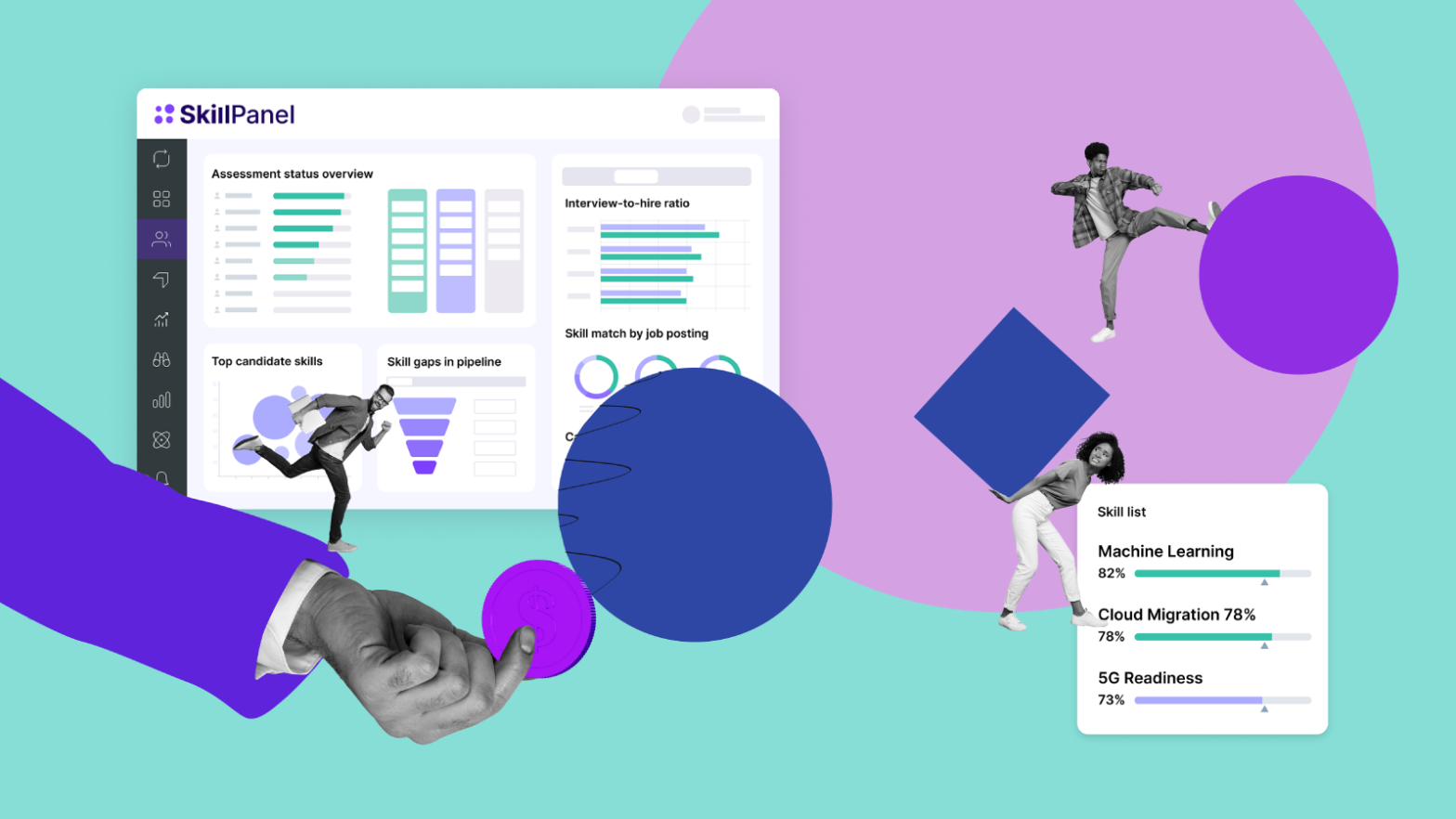
Platforms like SkillPanel help make these conversations more substantive by mapping your current skills against role requirements and surfacing specific gaps, so both you and your manager enter the review with shared, data-backed context rather than subjective impressions.
Sample career development goals for performance review
These career goals examples for performance review are specific, role-relevant, and structured for productive discussion. Complete a leadership development program in the first half of the year and apply a specific technique in team management within 60 days of finishing. Improve stakeholder communication by delivering structured project updates to senior leadership on a defined monthly cadence. Build technical proficiency in a specific analytics platform by completing a structured course and demonstrating it on a live project by Q3. Expand internal visibility by presenting at one cross-departmental meeting per quarter. Develop a junior team member through structured mentoring, with progress reviewed at mid-year. For customer-facing roles, set a goal to improve customer satisfaction scores by 8% over the next two quarters. Another useful example is to track customer satisfaction scores as a measurable service metric and use that data to set professional development goals that align with team priorities. Regular check-ins boost goal completion rates by 50%, so these goals should be revisited during the year.
Career goals examples by career stage
What constitutes a great goal varies significantly depending on where you are in your career. The priorities, skill gaps, and strategic opportunities at each stage are distinct.
Entry-level employees
For employees at the start of their careers, career readiness is the foundation. The focus should be on demonstrating core competencies, building baseline skills, and gaining visibility through reliable execution. According to the LinkedIn Top Companies 2026 Report, leading organizations are expanding entry-level hiring and training specifically because career paths are becoming less linear and more driven by demonstrable skills.
Strong entry-level goals include completing all onboarding training and applying key concepts within the first 90 days, seeking a mentor in the first month and establishing a quarterly development check-in, contributing to a team project within the first six months by owning a defined deliverable, and building proficiency in the tools and platforms central to your role. These foundational goals create the conditions for everything that follows.
Mid-career professionals
Mid-career professionals face a different challenge. The skills that got you here are not necessarily the ones that will take you further. This is the stage where many employees need to choose between deepening a specialization, broadening their skill set, or making a lateral move toward a function that fits better.
Goals at this stage might include pursuing an advanced certification that positions you for a senior role within two years, taking on a leadership responsibility for a new initiative that requires managing a small team, building a cross-functional network by collaborating with two departments you have not worked with closely before, or exploring an internal mobility opportunity that expands your scope. The 2026 LinkedIn Talent Velocity Report notes that organizations seeing the best career outcomes enable employees to steer their own development through personalized skill-building and internal mobility, which makes this the right moment to take the initiative.
Senior and leadership-track employees
Senior professionals and those on a leadership track are responsible not only for their own development but for enabling others. Goals at this stage should reflect strategic influence, organizational impact, and legacy-building.
Meaningful goals include sponsoring the career development of at least two junior colleagues through structured mentorship this year, contributing to the organization’s skills strategy by partnering with HR or L&D on a capability initiative, driving a change management or AI adoption project that reshapes how a team operates, and building thought leadership through speaking at an external event or publishing a perspective piece. The LinkedIn Talent Velocity Report explicitly identifies senior leaders as those who sponsor career transformation and embed talent priorities into operating rhythms, which makes these goals both personal and organizational.
Career development plan: Turning goals into action
Setting goals is only the beginning. A career development plan example worth following turns a personal development plan into a structured pathway, treating career development goals as professional development goals and specific development milestones with defined timelines, with accountability built in from the start. Here is how to make that happen.
Step 1: Audit your current skills and gaps
Before setting goals, you need an honest picture of where you stand. A skills audit involves comparing your current capabilities against the requirements of your target role or next career milestone, including reviewing job descriptions for that role to identify the required skills. This is not about cataloging everything you can do. It is about identifying the specific gaps between your current state and where you want to be.
SkillPanel supports this process by combining self-assessments, peer reviews, manager input, and technical evaluations to give employees a multi-source, data-backed view of their skills. The platform maps current capabilities against role requirements and surfaces gaps in a structured format, which turns a vague sense of “I need to improve” into a specific development roadmap. This is the kind of clarity that makes the difference between a development plan that gets executed and one that collects dust.
Step 2: Align goals with your role and company direction
Individual development goals are most powerful when they serve both your ambitions and your organization’s priorities. Goals that exist only for personal advancement may not get the support they need. Goals that connect your growth to a team challenge, a strategic initiative, or a business capability gap are far more likely to earn investment, visibility, and sponsorship.
As SkillPanel emphasizes, the most effective career development connects goals to skills and business priorities, not just annual review cycles. When your goals are tied to what your organization is trying to build, you become part of the solution rather than a separate agenda.
Step 3: Build a timeline with milestones
A goal without a timeline is a wish. Break each objective into smaller milestones with specific dates attached. If the goal is to complete a certification within six months, the milestones might include researching options in week one, enrolling by week three, completing module one by the end of month two, and sitting the exam in month five. Smaller milestones create progress signals, which sustain motivation and allow early course correction if something is not working.
Step 4: Track progress and adjust quarterly
Quarterly reviews prevent goals from becoming static documents. Schedule a check-in every three months to assess what has been achieved, what has stalled, and what needs to be adjusted. Career conditions change. Organizational priorities shift. New opportunities emerge. Goals that were set in January may need to be recalibrated by April based on what has happened in the business or your own role.
SkillPanel is designed to make this process continuous rather than annual, converting assessments and feedback into trackable progress that both employees and managers can see. That visibility is what transforms scattered development conversations into a structured, measurable growth process.
Common mistakes employees make when setting career goals
Even well-intentioned employees fall into predictable traps when setting career goals. Recognizing these patterns is the first step toward avoiding them.
The most common mistake is setting vague, aspirational goals without the structure to act on them. “Become a better communicator” is not a goal. Without specific behaviors, a measurement approach, and a timeline, it never gets traction. A closely related problem is setting overly aggressive stretch goals without safeguards. Ordóñez, Schweitzer, Galinsky, and Bazerman’s foundational research in the Academy of Management Perspectives (2009) identified this as the “Goals Gone Wild” effect: high, aggressive targets without revision points can narrow focus, erode intrinsic motivation, and increase the likelihood of rushed or unethical decisions when goals feel out of reach. Pairing outcome goals with process-focused learning goals helps buffer against this.
Another common trap is optimizing for short-term title or pay rather than long-term trajectory. Accepting whatever role is offered without clarifying how it builds the capabilities you need can lead to careers that simply continue rather than compound. Related to this is the tendency to chase external expectations, pursuing the conventional ladder rather than asking whether that path still aligns with your values and evolving strengths.
Finally, neglecting wellbeing when setting ambitious goals creates a sustainability problem. Goals that implicitly demand chronic overwork may produce short-term results while quietly building toward burnout. The most effective career goals and objectives include realistic constraints on time and energy alongside the stretch objectives.
Frequently asked questions
What are good career goals examples for employees?
Good career goals are specific, measurable, and tied to both personal growth and organizational value. Strong examples include completing a relevant certification by a defined date, leading a cross-functional project to develop stakeholder management skills, building proficiency in a specific tool or platform, and establishing a mentoring relationship with a senior professional in your field. The best career goals always answer the questions: what exactly will I do, how will I know I have succeeded, and by when?
How do I write career goals for a performance review?
Writing career goals for a performance review means connecting your development to business outcomes the organization already cares about. Start with a specific skill or capability you want to build, then describe a concrete action you will take, a measurable outcome you will produce, and a timeline. For example: “I will complete a data analytics course by Q2 and apply the skills to the team’s quarterly reporting process, reducing report preparation time by 20%.” This approach makes the examples of career goals for performance review both compelling and easy to track.
What is the difference between short-term and long-term career goals?
Short-term career goals focus on immediate skill development and contributions, typically achievable within twelve months. They build momentum and close specific gaps in your current role. Long-term career goals define your broader direction over one to five years, outlining the kind of professional you want to become and the impact you want to have. Career goals short term and long term work best together when each short-term goal is designed as a deliberate step toward a longer-term ambition.
How many career goals should I set at once?
Most employees perform best by setting 2–3 short-term goals at a time and one to two long-term goals simultaneously, which is the recommended range for effective progress. Setting too many goals divides attention and reduces the quality of execution. Prioritizing a small number of meaningful objectives helps employees stay focused and make real progress, especially when each goal requires genuine time investment in learning, practice, or relationship-building.
Can soft skills count as career development goals?
Absolutely. Soft skills such as communication, collaboration, emotional intelligence, and adaptability are identified by the LinkedIn Workplace Learning Report as critical capabilities for navigating AI-driven change and effective hybrid work. The key is making them concrete and measurable. Instead of setting a goal to “improve communication,” set a goal to “deliver structured project updates to senior stakeholders monthly and receive feedback scores averaging 4 out of 5 by Q3.” That specificity turns a soft skill aspiration into a trackable career development goal.